- 01Symptoms point, tests decide
SIBO symptoms are the same as those of IBS, food intolerances and celiac disease, so they can only raise the question. A breath test, read by a clinician, is the usual answer, and blood tests can show SIBO's footprint (low B12 with high or high-normal folate) without diagnosing it.
Small intestinal bacterial overgrowth (SIBO) means too many bacteria are living in the small intestine, the long stretch of bowel between the stomach and the colon that normally carries very few. Those extra bacteria ferment food before it is absorbed, which is why the symptoms sit in the gut and show up soon after meals. The key fact for anyone searching their symptoms: the feelings point toward SIBO, and only testing, read by a clinician, can separate it from the conditions that feel the same.
What is SIBO?
The American College of Gastroenterology (ACG) defines SIBO as at least 1,000 colony-forming units of bacteria per milliliter (CFU/mL, a count of living bacteria) in fluid drawn from the small intestine 1. The colon holds billions of bacteria per milliliter; the small intestine stays sparse because several defences work together: stomach acid kills bacteria on the way in, bile slows their growth, a valve (the ileocecal valve) keeps colon contents from flowing backward, and the immune system patrols the lining 8.
The most important defence is a sweeping wave of muscle contractions called the migrating motor complex. Between meals, roughly every 90 minutes to two hours, these cleaning waves push leftover food and bacteria down into the colon. When the waves slow, or surgery leaves a pocket where contents pool, bacteria get time to settle and multiply 1.
How slow cleaning waves turn into SIBO symptoms
SIBO symptoms, in the gut and beyond
Most people with SIBO notice gut symptoms first. Bloating is the most common, often with a belly that looks visibly swollen by evening. Symptoms beyond the gut usually mean heavier overgrowth or a nutrient shortfall that has had months to build 8. Blood in the stool, black stools, weight loss you did not try for and anemia are not explained by SIBO alone; they need a clinician within days, whatever a SIBO test shows.
| Symptom | What people notice | Why it happens | How common |
|---|---|---|---|
| Bloating and distension | Fullness 30 to 90 minutes after eating, worse as the day goes on | Bacteria ferment carbohydrates and make gas | Very common |
| Gas and belching | More wind than usual, often smelly | Fermentation gases | Very common |
| Belly pain | Cramping, usually around the middle | Gas stretches the bowel wall | Common |
| Diarrhea | Loose, urgent stools | Hydrogen-type overgrowth; poorly absorbed fat and bile acids draw in water | Common |
| Constipation | Hard, slow stools | Methane slows gut movement | Common with methane |
| Fatigue and brain fog | Tiredness, poor focus | Often linked to B12 or iron shortfall; direct evidence is thin | Often reported |
| Unintended weight loss | Clothes looser without trying | Calories and fat not absorbed | Less common, heavier cases |
| Pale, greasy, floating stools | Stools that are hard to flush | Bile acids broken down, so fat escapes absorption | Less common |
| Tingling or numbness | Pins and needles in hands or feet | Vitamin B12 deficiency | Less common |
Hydrogen, methane and hydrogen sulfide: why two people with SIBO feel different
The gas the microbes make shapes the bowel pattern. Hydrogen-producing overgrowth tends to go with loose stools. Methane is made by archaea, single-celled microbes that are a separate branch of life from bacteria (mainly Methanobrevibacter smithii), so the ACG calls a methane-positive result intestinal methanogen overgrowth, or IMO 1. Methane slows the gut, and methane on a breath test goes with constipation 1. A mixed pattern often swings between the two.
| Gas | Made by | Typical bowel pattern | Breath-test cutoff | Guideline status |
|---|---|---|---|---|
| Hydrogen | Bacteria | Diarrhea or loose stools | Rise of 20 ppm or more above baseline within 90 minutes 2 | SIBO in ACG and consensus criteria |
| Methane | Archaea | Constipation | 10 ppm or more at any point 2 | Called IMO by the ACG 1 |
| Hydrogen sulfide | Bacteria | Often diarrhea | No US cutoff yet | Newer; not in US guidelines |
Is it SIBO or IBS?
SIBO and irritable bowel syndrome (IBS) look nearly identical from the outside. Pooled across studies, about 31% of people with IBS tested positive for SIBO, roughly 3.7 times the odds seen in healthy controls 4. The overlap runs both ways: a positive breath test does not mean IBS is ruled out, and IBS does not rule out SIBO.
Other look-alikes include lactose or fructose malabsorption, celiac disease, inflammatory bowel disease and a pancreas that makes too few digestive enzymes. Increased gut permeability gets blamed for the same symptoms online; our page on leaky gut covers what the evidence on that idea shows.
What causes SIBO, and who is more likely to get it
Common causes of SIBO, most likely first
Most SIBO has an underlying cause that slows the gut, lowers stomach acid or changes the bowel's shape 1 8.
- 01Slow gut movement with IBS
IBS, especially after a bout of food poisoning, can weaken the cleaning waves.
Can be linked with IBS
- 02Acid-lowering medicines
Long-term proton pump inhibitors (PPIs, such as omeprazole) lower stomach acid, and pooled studies link them to higher SIBO odds.
- 03Older age
Stomach acid and gut movement both tend to decline with age.
- 04Opioid pain medicines
Opioids slow the whole gut, including the cleaning waves.
- 05Diabetes with nerve damage
Long-standing high blood sugar can damage the nerves that drive gut movement.
Can be linked with Type 2 diabetes
- HbA1c
- high: diabetes, which can slow the gut
- 06Underactive thyroid
Low thyroid hormone slows gut movement.
Can be linked with Hypothyroidism
- TSH
- high: an underactive thyroid
- 07Abdominal surgery
Roux-en-Y gastric bypass, removal of the ileocecal valve and scar-tissue adhesions can leave loops where contents pool.
- 08Celiac disease
Celiac disease damages the small-bowel lining and is linked to SIBO.
Can be linked with Celiac disease
- tTG-IgA
- high: points to celiac disease
- 09Chronic pancreatitis, cirrhosis or scleroderma
Fewer digestive enzymes, liver disease or a stiffened bowel wall all raise the odds.
- Fecal elastase-1
- low: the pancreas is short of enzymes
These are things a symptom like this can be linked with, not a diagnosis. Several can sit together, and a clinician who knows your history puts them in order for you.
How SIBO is tested: the breath test
The most accurate SIBO test is a culture of fluid drawn from the small intestine during an endoscopy (a camera tube passed through the mouth), which is invasive and rarely done 1. In practice, clinicians use a breath test. You drink a sugar solution, either 75 g of glucose or 10 g of lactulose, then breathe into a tube every 15 to 20 minutes for about two hours 2. Bacteria that reach the sugar early make hydrogen or methane, which passes into the blood and out in the breath, where it is measured in parts per million (ppm).
A rise of ≥20 p.p.m. from baseline in hydrogen by 90 min should be considered a positive test to suggest the presence of SIBO.North American Consensus on hydrogen and methane breath testing, Rezaie et al., Am J Gastroenterol 2017
Example: hydrogen rise within the first 90 minutesppm
How to prepare for a SIBO breath test
- 1Four weeks beforeThe consensus advises no antibiotics in the four weeks before the test 2.
- 2About a week beforeLaxatives and promotility drugs (medicines that speed the gut) are usually paused where it is safe; ask the prescriber before stopping any medicine 2.
- 3The day beforeMany labs ask for a low-fermentation evening meal, such as plain rice and meat or eggs, and no fiber-rich foods.
- 4The morning of the testFast for 8 to 12 hours beforehand, and skip smoking and hard exercise on test day 2.
How accurate the breath test is
Compared with small-bowel culture, the glucose breath test caught about 63% of SIBO cases (sensitivity) and correctly cleared about 82% of people without it (specificity); the lactulose test caught about 52% and cleared about 86% 3. Fast gut transit can push lactulose into the colon early and fake a positive result, and glucose is absorbed high in the bowel, so overgrowth further down can be missed. A breath test result is one piece of evidence for a clinician to weigh. Stool microbiome tests measure bacteria in the colon and cannot diagnose SIBO; our guide to the gut microbiome test covers what they can show.
Blood tests that point to SIBO
No blood test diagnoses SIBO, but the overgrowth leaves a recognisable footprint. Bacteria in the small intestine consume vitamin B12 and make folate, so low B12 next to normal or high folate is a classic clue 8. A high serum folate on its own is usually about diet or supplements; the pattern matters. Methylmalonic acid confirms a B12 shortage at the tissue level, and our B12 deficiency page explains what follows from it. Bile-acid damage can lower vitamins A, D and E, while vitamin K usually holds up because the bacteria make it 8. In severe cases albumin and total protein fall, and iron absorption can suffer, a pattern our iron deficiency page reads in full.
The blood tests that show SIBO's footprint
Before or alongside a breath test, clinicians often order tests that rule out the look-alikes: tTG-IgA for celiac disease, fecal calprotectin for bowel inflammation such as IBD, TSH for the thyroid, HbA1c for diabetes, and fecal elastase-1 for the pancreas. MCV and ferritin sit on a standard blood count and iron panel; our CBC guide explains each line.
Tests that rule out look-alikes

How SIBO is treated
Treatment is decided with a clinician, and it has two jobs: reduce the overgrowth and fix whatever let it grow. Antibiotics are the main treatment; rifaximin, which stays mostly inside the gut, is the most studied. Methane-positive overgrowth is often treated with a combination of antibiotics 1. Correcting low B12, iron or vitamin D and addressing the cause (a medicine, slow motility, a surgical loop) matter as much as clearing the bacteria.
| Approach | What the evidence shows | Quality of evidence | The catch |
|---|---|---|---|
| Antibiotics (rifaximin most studied) | Cleared overgrowth in about 71% across 32 studies and 1,331 patients 6 | Many studies, varied design | Prescription only; SIBO often returns 7 |
| Elemental diet (pre-digested liquid formula) | Breath test normal in 80% of 93 patients after 14 days, 85% after 21 9 | One uncontrolled study | Formula only for weeks; hard to follow; needs supervision |
| Herbal antimicrobials (blends including berberine) | Breath tests normal in 46% after herbs vs 34% after rifaximin 10 | One retrospective, non-randomised study of 104 people | Products vary; not proof the two are equal |
| Probiotics | Mixed results; not shown to clear overgrowth reliably 1 | Small, inconsistent trials | Some people report more bloating |
| Low-FODMAP eating | Used to ease gas and bloating | Studied in IBS more than SIBO | Eases symptoms; not shown to clear SIBO |
Supplements studied around SIBO
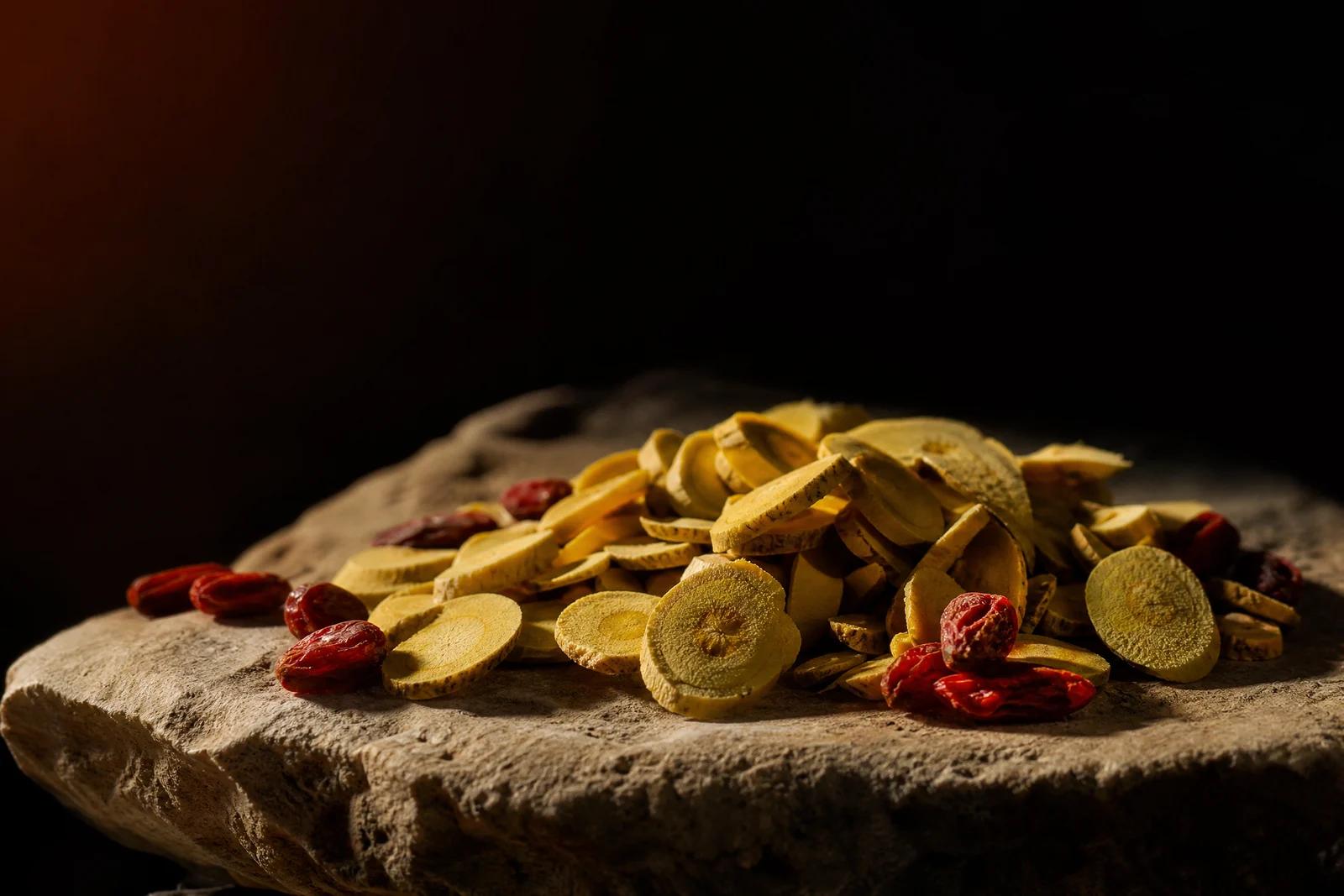 Early evidenceBerberineHerbal blends that included berberine were compared with rifaximin in one retrospective study; that design cannot show they work equally well.In our shop


For ongoing bloating while the cause is being worked out, our page on supplements for bloating grades the options by evidence.
Why SIBO often comes back
In that follow-up study, older age, a past appendix removal and long-term PPI use were linked to SIBO returning 7. Recurrence usually means the underlying cause is still there: the cleaning waves are still slow, the acid-lowering medicine continues, or the surgical loop remains. Clinicians tend to look at that cause first when symptoms return, and judge progress by how a person feels, since a breath test can stay positive or turn negative for reasons unrelated to symptoms.
When to see a doctor about SIBO symptoms
When to get help now
SIBO symptoms overlap with conditions that cannot wait. These signs need care regardless of any SIBO test.
- Vomiting blood or material that looks like coffee grounds
- Black, tarry stools or a lot of blood in the stool
- Severe belly pain with a hard, swollen abdomen
- Vomiting with no stool or gas passing
- Fainting or feeling faint with belly symptoms
- Weight loss you did not try for
- Any blood in the stool
- Anemia on a blood test
- Diarrhea that wakes you at night
- New bowel changes after about age 50
- A family history of bowel or ovarian cancer, IBD or celiac disease
- Fever with diarrhea
LifeFrom can't examine you or assess a symptom. If something feels seriously wrong, trust that and get care rather than waiting on a test.
Without those signs, bloating and bowel changes that have lasted a few weeks are worth raising with a primary care clinician, who can refer to a gastroenterologist if needed. A two-week note of what you ate, when the bloating starts and what your stools are like, plus a list of every medicine (including acid reducers and opioid painkillers), helps them choose between a breath test, the rule-out tests above or neither.

SIBO symptoms overlap with conditions that need prompt care, including bowel obstruction, inflammatory bowel disease, celiac disease and bowel cancer. Vomiting blood, black or tarry stools, severe belly pain with a hard swollen abdomen, or vomiting with no stool or gas passing need emergency care. Unintended weight loss, blood in the stool, anemia, diarrhea that wakes you at night, or new bowel changes after about 50 need a clinician within days. Testing, antibiotics, diet changes and supplements for SIBO belong in a plan made with a clinician who knows your history and medicines.
Citations
- Pimentel M, Saad RJ, Long MD, Rao SSC. ACG Clinical Guideline: Small Intestinal Bacterial Overgrowth. Am J Gastroenterol 2020;115(2):165-178.
- Rezaie A et al. Hydrogen and Methane-Based Breath Testing in Gastrointestinal Disorders: The North American Consensus. Am J Gastroenterol 2017;112(5):775-784.
- Khoshini R et al. A Systematic Review of Diagnostic Tests for Small Intestinal Bacterial Overgrowth. Dig Dis Sci 2008;53(6):1443-1454.
- Chen B et al. Prevalence and predictors of small intestinal bacterial overgrowth in irritable bowel syndrome: a systematic review and meta-analysis. J Gastroenterol 2018;53(7):807-818.
- Vasant DH et al. British Society of Gastroenterology guidelines on the management of irritable bowel syndrome. Gut 2021;70(7):1214-1240.
- Gatta L, Scarpignato C. Systematic review with meta-analysis: rifaximin is effective and safe for the treatment of small intestine bacterial overgrowth. Aliment Pharmacol Ther 2017;45(5):604-616.
- Lauritano EC et al. Small Intestinal Bacterial Overgrowth Recurrence After Antibiotic Therapy. Am J Gastroenterol 2008;103(8):2031-2035.
- Bures J et al. Small intestinal bacterial overgrowth syndrome. World J Gastroenterol 2010;16(24):2978-2990.
- Pimentel M et al. A 14-Day Elemental Diet Is Highly Effective in Normalizing the Lactulose Breath Test. Dig Dis Sci 2004;49(1):73-77.
- Chedid V et al. Herbal Therapy is Equivalent to Rifaximin for the Treatment of Small Intestinal Bacterial Overgrowth. Glob Adv Health Med 2014;3(3):16-24.
Educational context only, not medical advice or a diagnosis. Always discuss your results with a clinician.