
- 01Iron in your blood is not iron in the bank
A blood test can show plenty of iron circulating right now while your ferritin, the stored reserve, is nearly empty. A normal serum iron or a normal haemoglobin can sit on top of depleted stores, which is exactly the shortfall ferritin catches that the others miss.
- 02A high ferritin is not always high iron
Ferritin is an acute-phase reactant, a fancy way of saying it climbs with inflammation, infection or stress on its own. A high number can be your body reacting to something rather than iron piling up, so it is a reason to look further, not a verdict.
- 03“In range” is not the same as “optimal”
A reference range only describes where most people land, not where you feel best. The low end can sit close to depleted stores, so a technically-normal ferritin can still be worth a second look if you have symptoms.
Ferritin is one of the most useful numbers on a blood panel, and one of the most misread. It tells you how much iron your body has banked, the reserve, not the iron at work in your blood right now. Learn to read yours and a single figure on a lab report starts to mean something.
What ferritin actually is
Ferritin is a protein that stores iron. Think of it as your body’s iron pantry: rather than letting iron float around freely, where it can be reactive and harmful, your cells lock most of it away inside ferritin and release it as needed. A small, steady amount of ferritin also circulates in your blood, and that’s what a blood test measures. Because circulating ferritin tends to track with the size of your overall iron stores, it has become the standard first look at whether your body has enough iron banked, too little, or more than it comfortably needs.
That makes ferritin different from a marker like haemoglobin, which tells you about iron in action, carrying oxygen right now. Ferritin is closer to a savings-account balance: the reserve you draw on when day-to-day demand rises.

Why iron stores matter
Iron does quiet, essential work everywhere in the body. It helps carry oxygen in your blood, supports the energy production happening inside your cells, and contributes to normal cognitive function and immune health. When the reserve runs low, the effects can be diffuse and easy to attribute to something else: ordinary tiredness, a stressful few months, poor sleep.
Some of the things people notice when iron stores are running low include:
- Persistent fatigue that rest doesn’t fully fix
- Feeling short of breath during activity that used to feel easy
- Cold hands and feet
- Hair that seems to shed more than usual
- Poor concentration or a foggy feeling
- Restless legs, especially at night
None of these prove anything on their own. They overlap with plenty of other explanations. But paired with a ferritin result, they’re part of a picture worth discussing with a clinician rather than dismissing.2

When ferritin is higher than most
A higher-than-usual ferritin can reflect ample iron stores. But ferritin is also an acute-phase reactant: it rises with inflammation, infection, and stress, independently of how much iron you actually have banked. A recent illness, a hard training block, ongoing inflammation, or liver stress can all push it up. So a single high reading isn’t automatically a story about iron overload; it may be telling you about inflammation instead.3
Clinicians often read ferritin alongside other markers, such as transferrin saturation or an inflammatory marker like CRP, to tell the two stories apart. A genuinely elevated ferritin that reflects iron loading is worth taking seriously: the body has no efficient way to shed excess iron. Iron-loading conditions like haemochromatosis also run in families.4 The point isn’t to alarm you. A high number is a signal to look further, not a verdict on its own.
On its own, a ferritin number is a single data point. Read next to your symptoms, your transferrin saturation, and which way it’s trending, it starts pointing somewhere specific.
When ferritin is lower than most
A low ferritin is one of the more clear-cut readings, because, outside of inflammation masking it, little else drives ferritin down. A lower-than-most result usually points to depleted iron stores, whether from diet, blood loss, pregnancy, heavy periods, or absorption issues. It can show up well before anaemia does,2 which is part of what makes it valuable: the pantry can be nearly empty while haemoglobin still looks fine, so ferritin can flag a developing shortfall early.
Reference ranges hide a subtlety here. Because inflammation lifts ferritin, a value that looks reassuringly mid-range can sit on top of genuinely low stores. That doesn’t mean second-guessing every result; it means reading ferritin in context, and bringing your symptoms and the rest of the panel to a clinician.
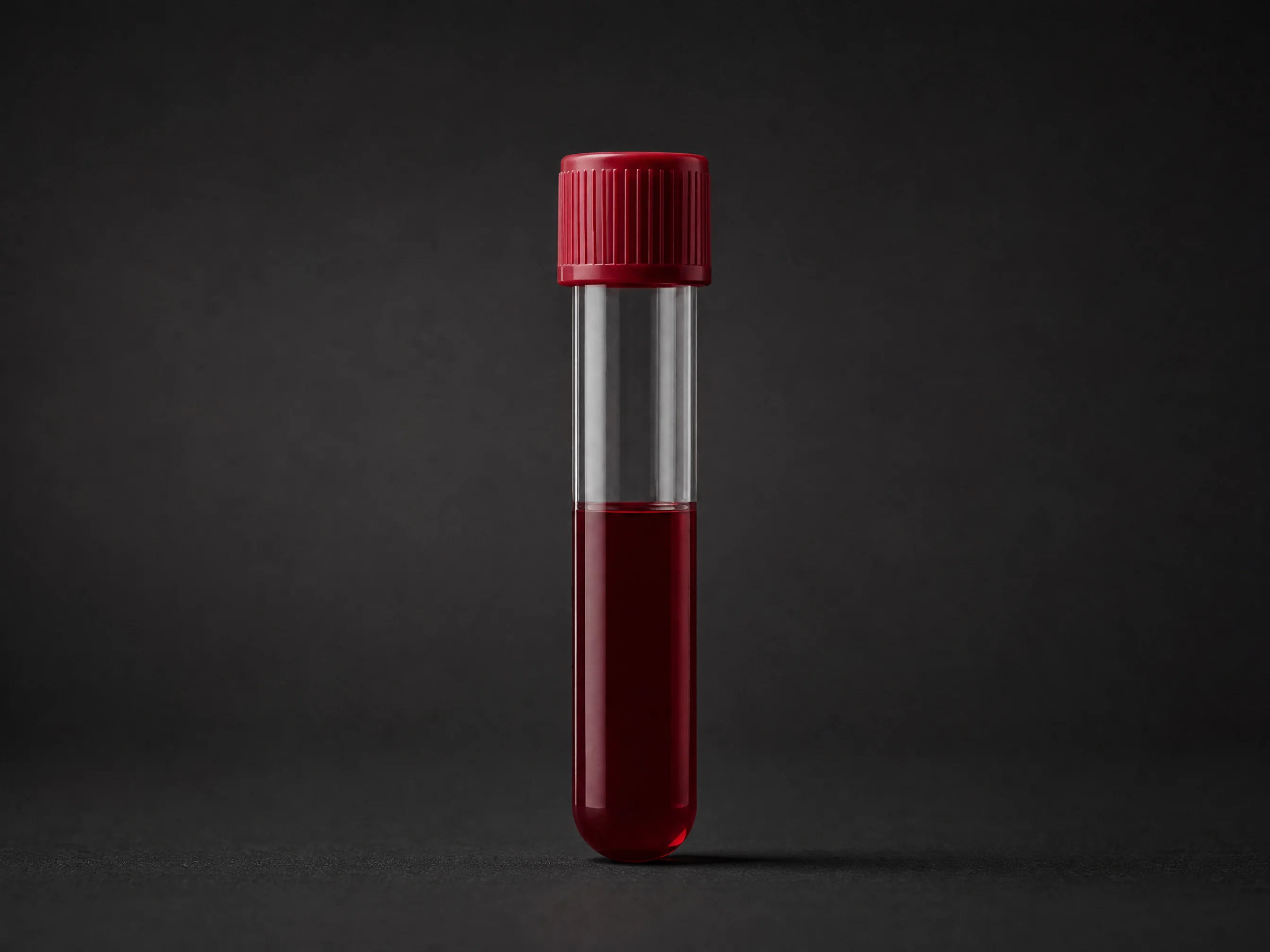
A normal haemoglobin can hide an empty tank.The case for checking ferritin
Where do your iron stores sit?
Enter your numbers. Nothing leaves your browser.
If your ferritin comes back low
Raising iron stores is less about one supplement and more about a short, ordered process. Roughly, it runs like this:
- 1Find the causeDiet, heavy periods, blood loss and absorption problems each point to a different fix, a conversation for your clinician, not a guess.
- 2Address the sourceTreating the reason stores dropped matters as much as the iron itself, or the tank just drains again.
- 3Rebuild the storesDietary iron, and supplements where a clinician advises them, taken in a way that helps absorption.
- 4Recheck, don’t assumeFerritin moves slowly. Re-test after a few months to confirm the reserve is actually refilling.

What counts as low ferritin for you
The low end of a reference range can sit surprisingly close to depleted stores, so a ferritin that is technically “in range” can still be worth a second look if you have symptoms.
Sex and life stage matter here, and it’s worth being honest about it. Ferritin tends to run lower in menstruating women, partly due to regular iron loss, and reference ranges are often set differently for women and men to reflect that. The World Health Organization has published thresholds used to identify depleted iron stores,1 and these differ by age and sometimes by sex, a reminder that there’s no single universal “right” number that applies to everyone. What counts as a comfortable reserve for one person may be low for another, which is exactly why your result deserves to be read against your own context rather than a one-size-fits-all line.
Rather than chasing a specific “optimal” figure you read online, understand where your ferritin sits, what could be nudging it up or down, and whether it fits how you actually feel. Then take that informed picture to someone who can help.
| Where it sits | Roughly means | What it’s pointing to |
|---|---|---|
| Low | Depleted iron stores, often before anaemia | Diet, blood loss, absorption, worth a clinician’s look |
| Low–normal | Reserve running lean; can hide low stores if inflamed | Read with symptoms + transferrin saturation |
| Comfortable | Adequate banked iron | Note the trend; recheck periodically |
| High | Ample stores, or inflammation lifting the number | Look further before assuming overload |
Go deeper
A few of the clearest explainers and references we’ve found, if you want to keep reading and watching.
paper · World Health OrganizationWHO guideline on ferritin to assess iron statusThe reference thresholds most labs draw on, and how they differ by age and sex.who.int podcast · The CurbsidersIron Deficiency Anemia with Dr. Tom DeLougheryA clinician-to-clinician deep dive on diagnosing and treating low iron, surprisingly listenable.thecurbsiders.com article · Harvard T.H. Chan School of Public HealthIron: The Nutrition SourceA plain-language guide to iron: what it does, where to get it, and how much you actually need.nutritionsource.hsph.harvard.eduReading your own ferritin, with context
You already have this number. It’s sitting in a PDF or a patient portal, wrapped in a reference range that knows nothing about you. Upload your report to LifeFrom and every marker, ferritin included, gets explained in plain language, grounded in a cited knowledge base, so you can see what your result points to and what’s worth watching. It won’t diagnose you or replace your clinician. It turns a lonely number into a clear question you can bring to a real conversation.
Citations
- World Health Organization. WHO guideline on use of ferritin concentrations to assess iron status in individuals and populations. Geneva: WHO, 2020.
- Camaschella C. Iron-deficiency anemia. New England Journal of Medicine, 2015;372:1832–1843.
- Kell DB, Pretorius E. Serum ferritin is an important inflammatory disease marker, as it is mainly a leakage product from damaged cells. Metallomics, 2014;6(4):748–773.
- Powell LW, Seckington RC, Deugnier Y. Haemochromatosis. The Lancet, 2016;388(10045):706–716.
Educational context only, not medical advice or a diagnosis. Always discuss your results with a clinician.
Associations to explore with a clinician, not a diagnosis from a single number.