- 01Burnout is defined by where it comes from, so the test is whether enjoyment survives outside work
Burnout has no blood marker and no brain scan signature; WHO defines it by its source, chronic work stress, and limits the word to work. Energy is a poor test, because in severe burnout it can stay low even on holiday. The better test is enjoyment: in burnout, interest and pleasure in life outside work usually survive, even when you are too tired to act on them. In depression, the loss of interest spreads to everything, including weekends, hobbies and people you love. If the flatness follows you everywhere, depression or a medical cause such as hypothyroidism, iron deficiency or sleep apnea becomes more likely, and that is worth taking to a clinician, who can use blood tests to rule the medical causes out. A lab can never rule burnout in.
Burnout is exhaustion, growing cynicism about your job and a falling sense that you do it well, caused by months of work stress that never comes back under control. It usually shows up as Sunday-evening dread, a body that is tired before the day starts, and a job you once cared about that now feels like something to get through. Below: what the WHO definition includes and leaves out, how to tell burnout from depression and medical look-alikes, and which part of the problem to change first.
What is burnout?
Burnout is a syndrome of exhaustion, detachment and lost effectiveness that builds when work stress runs high for months and the stress is never brought back under control. The World Health Organization added it to the 11th revision of the International Classification of Diseases (ICD-11, in force since 1 January 2022) under code QD85, in the chapter for factors that influence health, and classes it as an occupational phenomenon; WHO does not list it as a medical condition 1.
Burn-out is a syndrome conceptualized as resulting from chronic workplace stress that has not been successfully managed.World Health Organization, ICD-11 definition of burn-out, 2019
WHO names three dimensions, and the Maslach Burnout Inventory (MBI), the questionnaire most burnout research uses, measures the same three 1 5:
- Exhaustion: feeling drained of energy, physically and emotionally, with nothing left at the end of the day.
- Mental distance, or cynicism: pulling back from the job, the people and the purpose; caring less as a way to cope.
- Reduced professional efficacy: a sense that you no longer do the work well or that your work makes no difference.
How chronic work stress turns into burnout
Signs of burnout: what it feels like
Burnout signs group under the three dimensions, plus a set of body signs that come from months of running on stress. Early burnout tends to show as tiredness and irritability that a good weekend still fixes; later burnout shows as exhaustion a weekend no longer touches and a job you no longer care about.
| Dimension | Early signs | Later signs |
|---|---|---|
| Exhaustion | Tired by mid-afternoon, needing the weekend to recover | Waking up tired, dreading the week by Sunday afternoon, a week off barely helps |
| Mental distance | Irritability with colleagues or clients, more complaining | Not caring how things turn out, avoiding people, a cynical tone you do not recognize as your own |
| Reduced efficacy | Slower to start tasks, more mistakes | Feeling incompetent, procrastinating on work you used to do well |
| Body | Tension headaches, poorer sleep, more colds | Insomnia, frequent illness, stomach problems, aches, needing alcohol or screens to switch off |
Thinking often slows too. Trouble concentrating, forgetfulness and slower thinking are common in severe burnout, and Swedish studies of clinical exhaustion find these problems usually improve with recovery, though sometimes slowly 6. The brain fog guide covers the other causes of poor concentration.
Researchers score burnout with the MBI, which rates each dimension separately. The original version has 22 items, and a 16-item version exists for general jobs. It was built for research and has no agreed cutoff that turns a score into a diagnosis 5. That missing cutoff is one reason survey rates differ so much: across 182 studies of physicians, reported burnout prevalence ranged from 0% to 80.5%, mostly because studies defined it differently 7.
Is burnout a diagnosis?
Burnout is not a psychiatric diagnosis in the US. It does not appear in the DSM-5, and WHO states that the burnout label applies to the work context and should not be used for experiences in other areas of life 1. Sweden is the main exception: its doctors can diagnose exhaustion disorder, which needs at least two weeks of marked physical and mental exhaustion after six months or more of identifiable stress 6.
For a US reader, the practical meaning is that a clinician will usually record what burnout is doing to you (insomnia, anxiety, a depressive episode, an adjustment disorder) rather than burnout itself. Those diagnoses are what treatment plans and leave paperwork are built on.
What causes burnout (it's rarely only long hours)
Burnout comes from a mismatch between a person and their job, and long hours are one form of that mismatch among several. Maslach and Leiter group the mismatches into six areas of worklife; the more areas that are out of line, the higher the burnout risk 5. Two older models make the same point: high demands with little control over how to meet them (the demand-control model) 8, and high effort with little reward in pay, respect or security (effort-reward imbalance) 9.
| Area of worklife | What a mismatch feels like | A lever to ask for |
|---|---|---|
| Workload | More work than hours, no recovery between pushes | Agree what to drop or delay; a cap on after-hours messages |
| Control | Responsible for results with no say in how | Decision rights over your schedule, methods or priorities |
| Reward | Effort goes unnoticed, in pay or in plain recognition | Specific feedback, a pay or role review |
| Community | Isolation, conflict, no one to rely on | Regular contact with a supportive manager or peer group |
| Fairness | Favoritism, unclear decisions, unequal load | Transparent criteria for workload, promotion and schedules |
| Values | Asked to do work you think is wrong or pointless | A conversation about role fit, or a move to work that fits |
Personal factors amplify the work factors without replacing them. Perfectionism, rumination (replaying work problems in the evening), short sleep and heavy care duties at home all leave less room to recover. Sleep stands out: in a Swedish cohort, people who slept under six hours a night were more likely to develop clinical burnout later 10. Parents and family caregivers describe the same three dimensions about their care role; researchers use the terms parental and caregiver burnout, although WHO keeps its own definition to paid work.
What burnout does to your body
Burnout keeps the stress system switched on: the hypothalamic-pituitary-adrenal (HPA) axis, the brain-to-adrenal chain that releases cortisol, and the sympathetic nervous system, which drives heart rate and alertness. Burnout does not change cortisol in a consistent, predictable way. A 2011 systematic review of burnout biomarkers found no marker, cortisol included, that tracked burnout consistently across studies 3. Some later studies do find group differences: one found a lower cortisol rise after waking in both clinical and non-clinical burnout groups than in healthy controls 11. Those are averages across groups that overlap heavily, which is why a saliva cortisol kit cannot confirm or exclude burnout in one person.
The long-term health effects are better documented than the biology. A systematic review of 61 prospective studies, which followed people forward in time, linked burnout to later coronary heart disease, type 2 diabetes, high cholesterol, musculoskeletal pain, prolonged fatigue, headaches, insomnia, depressive symptoms and hospitalization for mental disorders 12.
Burnout is also different from adrenal fatigue, the claim that stress wears out the adrenal glands. A systematic review found no evidence that adrenal fatigue exists 13, and studies of people with burnout do not show adrenal glands that have stopped producing cortisol. As our adrenal fatigue guide puts it, the exhaustion is real, "and it usually has a testable cause such as low iron, an underactive thyroid, poor sleep, high blood sugar or depression." A low morning cortisol is a check for adrenal insufficiency (Addison's disease), not a measure of burnout; Cushing's syndrome, the opposite problem, needs different tests.
Burnout vs depression (and other look-alikes)
Burnout and depression share exhaustion, poor sleep and poor concentration. A 2019 meta-analysis put their correlation at about r = 0.52, with burnout and anxiety at about r = 0.46 2. On that scale, 0 means no link and 1 means the two always move together, so the states are clearly linked but separate. The clearest difference is scope. Burnout is tied to work, and enjoyment of life outside work usually survives; depression colors the whole of life, including weekends, holidays and things you used to enjoy, and by the DSM-5 definition lasts at least two weeks 14. Untreated burnout can slide into depression, which is why a low mood that starts spreading beyond work deserves a clinician's attention.
Several medical conditions cause the same tiredness and low drive. They matter because they are treatable and a change of job will not fix them.
| Condition | How it differs from burnout | What checks for it |
|---|---|---|
| Burnout | Tied to work; enjoyment outside work survives even when energy does not | History and questionnaires; no lab test |
| Depression | Low mood or loss of interest across all of life for 2+ weeks; guilt, hopelessness | Clinical assessment, often the PHQ-9 questionnaire |
| ME/CFS | Crashes 12 to 48 hours after effort (post-exertional malaise); unrefreshing sleep; does not lift with rest | Clinical criteria plus blood tests to exclude other causes |
| Hypothyroidism | Feeling cold, weight gain, constipation, dry skin; present on holiday too | TSH, then free T4 |
| Iron deficiency | Breathlessness on stairs, restless legs, heavy periods or a vegan diet in the history | Ferritin and a complete blood count |
Other look-alikes worth raising with a clinician: B12 deficiency (tingling hands and feet, memory trouble), vitamin D deficiency, sleep apnea (loud snoring, daytime sleepiness, morning headaches; ask about a home sleep study), perimenopause (night sweats and broken sleep in your 40s) and overtraining syndrome in people who train hard.
Can a blood test show burnout?
No blood test can show burnout, because no blood marker tracks burnout reliably 3. Salivary cortisol curves, DHEA-S (an adrenal hormone) and inflammatory markers appear in burnout research, where they differ on average between groups, but none separates one burned-out person from one healthy person. What blood tests do well is rule out the medical causes of exhaustion in the table above. The UK National Institute for Health and Care Excellence (NICE) lists a full blood count, ferritin, thyroid function, HbA1c (average blood sugar over about 3 months), C-reactive protein (an inflammation marker) and other tests to exclude other causes before long-lasting fatigue is put down to ME/CFS 15.
A rule-out panel for exhaustion (not a burnout test)
What to do next: if you have not had these in the last year, ask your clinician for TSH, ferritin, a complete blood count, vitamin B12, vitamin D, HbA1c and CRP. A low hemoglobin means anemia, and a raised hs-CRP (a sensitive inflammation marker) points to inflammation whose cause needs finding. Normal results leave the exhaustion real and point the explanation toward workload, sleep and mood, where the rest of this page applies. If your exhaustion has not improved after 4 to 6 weeks of changes, go back and ask about depression, anxiety and a sleep study.
How to recover from burnout
Recovery starts with the load, because burnout comes from the load. Rest without a change at work tends to buy a few good weeks before the same symptoms return. The steps below run roughly in order of impact.
- 1Change the loadTalk to your manager about the area of worklife that is out of line (the table above). If symptoms are severe, see a doctor, who can assess for depression or anxiety, document what is happening and advise on time off.
- 2Protect sleepKeep regular sleep and wake times, and stop work messages well before bed. Short sleep predicts later burnout 10 and makes every other step harder; see how much sleep you need. If you use a drink to switch off, alcohol and sleep explains why it backfires.
- 3Move, graduallyStart with walking or easy cycling and build slowly. Hard interval training on top of severe exhaustion can add to the stress load rather than relieve it.
- 4Get structured helpCognitive behavioral therapy (CBT) and structured mindfulness programs are the individual approaches most often tested; in trials with physicians, individual programs helped less than changes to the work itself 4. There is no medicine for burnout itself; antidepressants and other drugs are for depression, anxiety or insomnia when a clinician diagnoses them alongside it.
- 5ReconnectTime with people outside work restores the community that burnout erodes. Plan small, regular contact rather than one big catch-up.
- 6Avoid boom and bustOn a good day, do a little more than yesterday and stop well short of your limit; overdoing it on good days is a common cause of the next crash.
 CalculatorSleep calculatorPick bedtimes that line up with full sleep cycles while you rebuild a regular schedule.Work it out
Slow breathing is a quick way to bring heart rate down in a stressful moment, and the breathwork guide covers the methods with evidence. For stress hormones more broadly, our guide on how to lower cortisol starts in the same place this page does: "fix sleep first".
Supplements play a small part at most. The trials below are small and short, and none replaces a change in workload. The adaptogens guide covers them in more depth, and magnesium deficiency covers the signs and the test for low magnesium.
Supplements studied for stress and fatigue
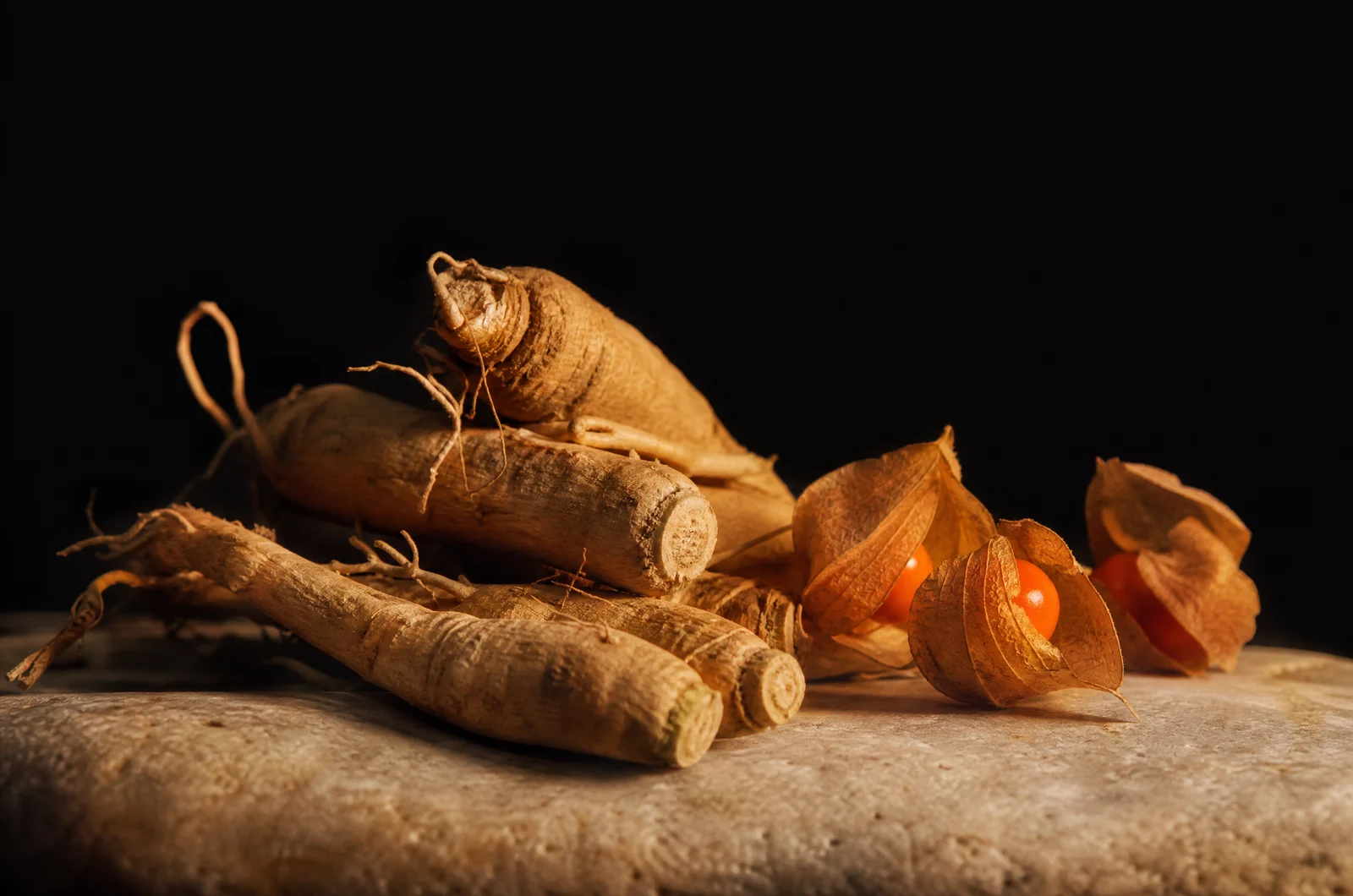 Moderate evidenceAshwagandhaIn a randomized trial of 60 stressed adults, ashwagandha lowered anxiety scores and morning cortisol more than placebo [[16]]. Rare cases of liver injury are reported, and it can raise thyroid hormone levels; avoid in pregnancy, and check with a pharmacist if you have thyroid disease or take thyroid medicine, sedatives or immunosuppressants.In our shop
How long does burnout last?
Burnout lasts as long as its cause, plus a recovery period that grows with how deep the exhaustion went. The ranges below are rough guides that vary from person to person, and they assume the cause at work has changed.
| Severity | What it looks like | Rough recovery once the load changes |
|---|---|---|
| Early | Tired and irritable, still functioning, weekends help | Often weeks |
| Moderate | Exhausted most days, cynical, mistakes creeping in | Often a few months |
| Severe (clinical exhaustion) | Cannot work, memory and concentration failing, sleep broken | Many months; in Swedish follow-ups of exhaustion disorder, some people still have symptoms a year or more later 6 |
Return to work after severe burnout goes better in phases: reduced hours or duties at first, a plan agreed with your manager and clinician, and a review after a few weeks. Going straight back to full duties in the same conditions is a common route to relapse.
How to prevent burnout
Prevention works best at the level of the job. A 2016 Lancet meta-analysis found that both individual and structural interventions helped doctors, with overall burnout falling from about 54% to 44% 19. A 2017 meta-analysis of 20 controlled interventions covering 1,550 physicians found that organization-directed changes (workload, schedules, teamwork, how work is organized) reduced burnout more than programs aimed at the individual doctor, whose effect was smaller 4. In practice, the most useful question for a manager is which of the six areas is out of line, and which lever in the table above the team can pull.
Personal buffers still help. Switching off mentally after work (detaching from emails and rumination), sleeping enough, regular movement and time with people outside work all protect the recovery that keeps stress from becoming burnout. Watch the early signs in the signs table above; a weekend that stops working is the clearest warning.
When to see a doctor
Bring a short timeline (when it started and what changed at work), how you sleep, any recent blood results and a list of medicines and supplements. That gives the clinician what they need to tell burnout apart from depression, ME/CFS and the medical look-alikes, and to support time off if you need it. For tiredness with no clear work link, the fatigue guide covers the wider list of causes, can't sleep covers insomnia, and brain fog covers poor concentration and memory.
Citations
- World Health Organization. Burn-out an "occupational phenomenon": International Classification of Diseases. 28 May 2019.
- Koutsimani P, Montgomery A, Georganta K. The relationship between burnout, depression, and anxiety: a systematic review and meta-analysis. Frontiers in Psychology. 2019;10:284.
- Danhof-Pont MB, van Veen T, Zitman FG. Biomarkers in burnout: a systematic review. Journal of Psychosomatic Research. 2011;70(6):505-524.
- Panagioti M, Panagopoulou E, Bower P, et al. Controlled interventions to reduce burnout in physicians: a systematic review and meta-analysis. JAMA Internal Medicine. 2017;177(2):195-205.
- Maslach C, Leiter MP. Understanding the burnout experience: recent research and its implications for psychiatry. World Psychiatry. 2016;15(2):103-111.
- Grossi G, Perski A, Osika W, Savic I. Stress-related exhaustion disorder: clinical manifestation of burnout? A review of assessment methods, sleep impairments, cognitive disturbances, and neuro-biological and physiological changes in clinical burnout. Scandinavian Journal of Psychology. 2015;56(6):626-636.
- Rotenstein LS, Torre M, Ramos MA, et al. Prevalence of burnout among physicians: a systematic review. JAMA. 2018;320(11):1131-1150.
- Karasek RA. Job demands, job decision latitude, and mental strain: implications for job redesign. Administrative Science Quarterly. 1979;24(2):285-308.
- Siegrist J. Adverse health effects of high-effort/low-reward conditions. Journal of Occupational Health Psychology. 1996;1(1):27-41.
- Söderström M, Jeding K, Ekstedt M, Perski A, Åkerstedt T. Insufficient sleep predicts clinical burnout. Journal of Occupational Health Psychology. 2012;17(2):175-183.
- Oosterholt BG, Maes JHR, Van der Linden D, Verbraak MJPM, Kompier MAJ. Burnout and cortisol: evidence for a lower cortisol awakening response in both clinical and non-clinical burnout. Journal of Psychosomatic Research. 2015;78(5):445-451.
- Salvagioni DAJ, Melanda FN, Mesas AE, et al. Physical, psychological and occupational consequences of job burnout: a systematic review of prospective studies. PLoS One. 2017;12(10):e0185781.
- Cadegiani FA, Kater CE. Adrenal fatigue does not exist: a systematic review. BMC Endocrine Disorders. 2016;16(1):48.
- American Psychiatric Association. Diagnostic and Statistical Manual of Mental Disorders, Fifth Edition, Text Revision (DSM-5-TR). 2022.
- National Institute for Health and Care Excellence. Myalgic encephalomyelitis (or encephalopathy)/chronic fatigue syndrome: diagnosis and management. NICE guideline NG206. 2021.
- Lopresti AL, Smith SJ, Malvi H, Kodgule R. An investigation into the stress-relieving and pharmacological actions of an ashwagandha (Withania somnifera) extract: a randomized, double-blind, placebo-controlled study. Medicine (Baltimore). 2019;98(37):e17186.
- Olsson EM, von Schéele B, Panossian AG. A randomised, double-blind, placebo-controlled, parallel-group study of the standardised extract SHR-5 of the roots of Rhodiola rosea in the treatment of subjects with stress-related fatigue. Planta Medica. 2009;75(2):105-112.
- Boyle NB, Lawton C, Dye L. The effects of magnesium supplementation on subjective anxiety and stress: a systematic review. Nutrients. 2017;9(5):429.
- West CP, Dyrbye LN, Erwin PJ, Shanafelt TD. Interventions to prevent and reduce physician burnout: a systematic review and meta-analysis. The Lancet. 2016;388(10057):2272-2281.
- de Bloom J, Kompier M, Geurts S, et al. Do we recover from vacation? Meta-analysis of vacation effects on health and well-being. Journal of Occupational Health. 2009;51(1):13-25.
Educational context only, not medical advice or a diagnosis. Always discuss your results with a clinician.