- 01A lower cortisol number and a calmer week are separate results
Adaptogen trials measure two things that often disagree: a lab value (cortisol, DHEA-S) and how stressed people feel. Pooled ashwagandha trials lowered serum cortisol without significantly moving perceived stress. Judge an adaptogen on both readouts, with blood drawn at the same clock time before and after.
The word adaptogen was coined in a Soviet laboratory in 1947, and no regulator in the US or EU recognises it as a drug class. This guide lists the main adaptogens, grades the human evidence for each one, shows where they are supposed to act on the stress system, and maps which blood test results an adaptogen can move. If you take an adaptogen and a thyroid, liver or cortisol result has just come back out of range, the section "Can adaptogens change your blood test?" below covers what can shift, and the first step is to tell the clinician reading it which supplements you take.
What are adaptogens?
Adaptogens are plants and mushrooms marketed to help the body resist stress of many kinds. The Soviet pharmacologist N. V. Lazarev introduced the term in 1947, and I. I. Brekhman and I. V. Dardymov set out the classic criteria in 1969 1. An adaptogen is supposed to be almost non-toxic, to raise resistance to a broad range of physical, chemical and biological stressors (the "non-specific" part), and to normalise body functions whichever direction they have drifted 1.
Those criteria came out of Soviet research on eleuthero (Siberian ginseng) and Panax ginseng aimed at soldiers, athletes and workers, and much of that early work was preclinical (done in cells or animals, not people) or never published outside Russian journals. When the European Medicines Agency's herbal medicines committee reviewed the concept in 2008, it concluded that the term is not accepted in EU pharmacology or clinical practice 2.
The principle of an adaptogenic action needs further clarification and studies in the pre-clinical and clinical area. As such, the term is not accepted in pharmacological and clinical terminology that is commonly used in the EU.European Medicines Agency, Committee on Herbal Medicinal Products, Reflection paper on the adaptogenic concept (2008)
The US Food and Drug Administration has no category for adaptogens either. In the US, adaptogens are sold as dietary supplements under the 1994 Dietary Supplement Health and Education Act (DSHEA), so a product reaches the shelf without proving it works or contains what the label says. "Adaptogen" on a label is a marketing word, and each herb has to be judged on its own trials.
How adaptogens are supposed to work: the stress system in one picture
The stress system adaptogens are claimed to act on is the HPA axis, short for hypothalamic-pituitary-adrenal axis: a chain of three glands that ends in cortisol, the body's main stress hormone. The chain runs in four steps, and the order matters because adaptogen claims target the last step.
How a stressor becomes cortisol, and where adaptogens are claimed to act
Cortisol also runs on a daily rhythm that matters for anyone comparing a cortisol result before and after trying an adaptogen. Cortisol rises by roughly 50% or more in the 30 to 45 minutes after waking, a rise called the cortisol awakening response, then falls through the day to its lowest point around midnight 3. The same person can read high at 7:30 am and low at 4 pm on the same day, so a before-and-after comparison only works if both blood draws happen at the same clock time.
The adaptogens list: what each is used for and how good the evidence is
The grade column below uses three plain levels. Moderate means several randomised trials in people pointing the same way overall, even where reviewers rate their confidence as low. Limited means a few small trials, often with design problems. Mostly traditional means long use in Ayurvedic or Chinese medicine with little controlled human data. Even the best grade here means the studies disagree with each other and could change with better trials. The dose column shows what the key trial used, not a recommendation.
| Adaptogen | Main use studied | Dose in the key trial | Best human evidence | Grade | Key caution |
|---|---|---|---|---|---|
| Ashwagandha (Withania somnifera) | Stress, anxiety, sleep | 240 to 600 mg/day root extract | 12 randomised trials, 1,002 people; stress scores fell, low certainty | Moderate (low certainty) | Rare liver injury; can lower TSH and raise thyroid hormones |
| Rhodiola (Rhodiola rosea) | Fatigue, burnout, mental performance | 576 mg/day of the extract SHR-5 | Small trials with design weaknesses | Limited | Jitteriness; can disturb sleep |
| Panax ginseng | Fatigue, energy, blood sugar | 1 to 2 g/day | Missed its main fatigue goal in a 90-person trial | Limited | Can lower blood sugar; may affect clotting and warfarin |
| Eleuthero (Siberian ginseng) | Endurance, stamina | No settled dose | Small training studies; cortisol rose in one | Limited | Insomnia; may interfere with digoxin blood tests |
| Holy basil (tulsi) | Stress, blood sugar | No settled dose | A handful of small trials | Limited | Fertility concerns from animal studies |
| Schisandra | Fatigue, liver support | No settled dose | Few controlled human trials | Mostly traditional | Changes how the liver clears some drugs |
| Astragalus | Immune support, fatigue | No settled dose | Few controlled trials for stress | Mostly traditional | Autoimmune disease and immunosuppressant medicines |
| Reishi | Immunity, sleep, fatigue | No settled dose | Small and mixed trials | Mostly traditional | Reports of liver injury with powdered extracts; bleeding risk |
| Cordyceps | Exercise capacity | 4 g/day blend | Small trials; VO2max gain after 3 weeks in one | Limited | May affect blood sugar and clotting |
| Lion's mane | Memory, focus | 3 g/day | One 30-person trial in mild cognitive impairment | Limited | Allergy in people sensitive to mushrooms |
| Maca, shatavari | Libido, menopause symptoms, energy | No settled dose | Small trials, mostly not for stress | Mostly traditional | Hormone-sensitive conditions |
Ashwagandha is the best-tested adaptogen. A 2022 meta-analysis (a study that pools the results of other studies) of 12 randomised trials with 1,002 participants found that ashwagandha lowered anxiety and stress scores versus placebo, though the trials disagreed with each other a great deal and the reviewers rated their confidence in the result as low 4. Most ashwagandha trials ran 6 to 8 weeks, so any effect is measured in weeks rather than days. The ashwagandha page covers its trials, forms and timing in full.
Rhodiola is used mainly for fatigue and burnout. In 60 adults with stress-related fatigue, 576 mg a day of the rhodiola extract SHR-5 for 28 days reduced fatigue and blunted the cortisol awakening response versus placebo 5. A systematic review of 11 rhodiola trials, however, found methodological weaknesses across the trials, meaning designs that could make the herb look better than it is, and called the fatigue evidence inconclusive 6. Rhodiola is usually taken in the morning, because its commonest side effects are jitteriness and trouble sleeping. The rhodiola page covers its side effects and the rosavin and salidroside content to look for.
Panax ginseng and eleuthero, the two herbs the adaptogen idea started with, have the weakest stress data of the well-known adaptogens. In 90 adults with unexplained chronic fatigue, Panax ginseng at 1 or 2 g a day did not improve the total fatigue score over four weeks, though mental fatigue improved 7. In six weeks of endurance training, eleuthero raised cortisol relative to testosterone, the opposite of the expected effect 8. Holy basil (tulsi) has a handful of small trials for stress and blood sugar, none large enough to grade higher than limited, and animal studies raised fertility concerns, so it is one to avoid when trying to conceive or pregnant.
Are mushrooms adaptogens?
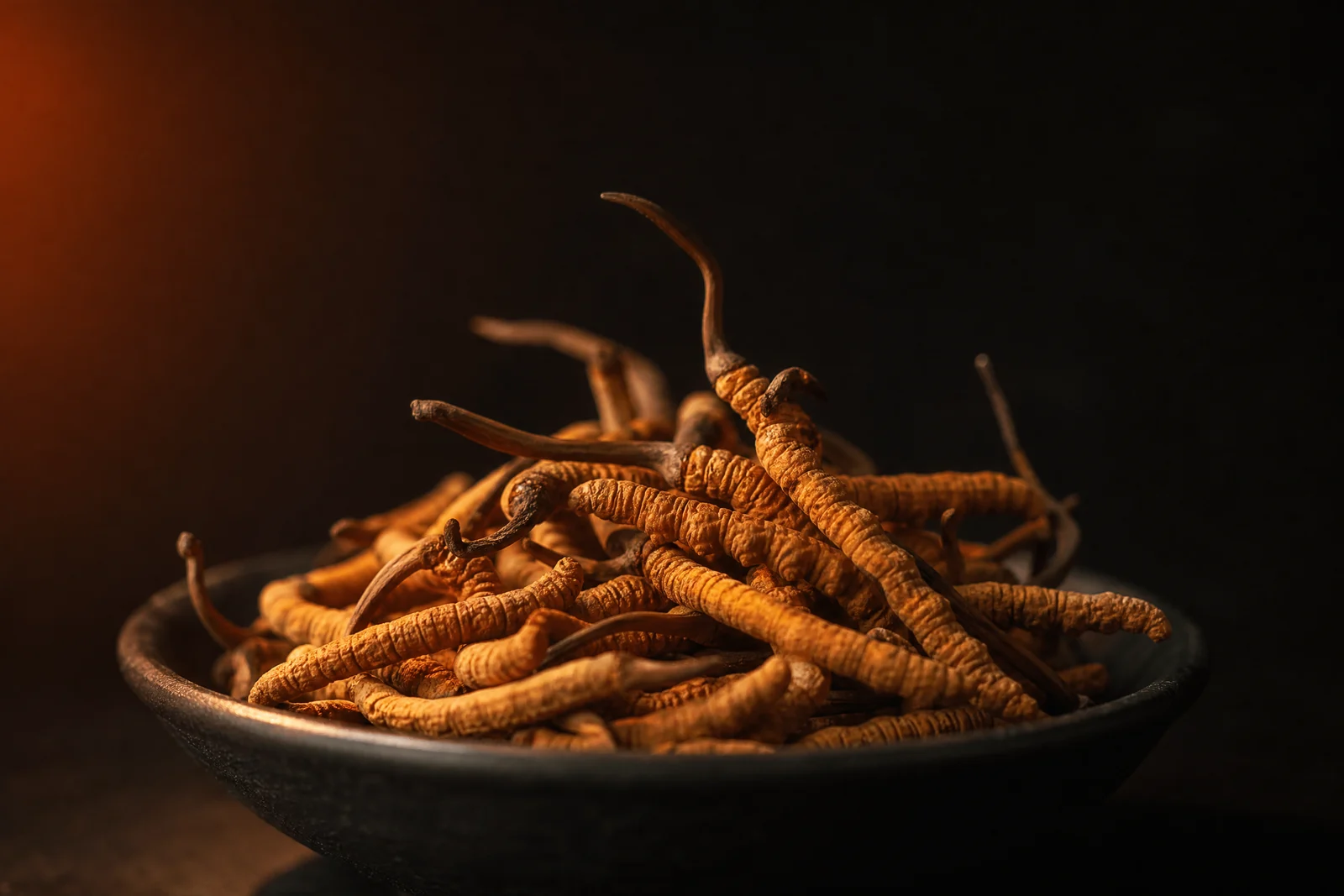
Reishi, cordyceps, chaga and lion's mane are often sold as adaptogens, and none of the medicinal mushrooms has a stress trial of the size ashwagandha has. The mushroom trials that exist measure other things. Lion's mane at 3 g a day improved cognitive test scores in 30 older adults with mild cognitive impairment over 16 weeks, and the scores fell back four weeks after stopping 9. A Cordyceps militaris blend at 4 g a day raised VO2max, a measure of aerobic fitness, after three weeks in a 28-person trial, but not after one week 10. No mushroom has shown a stress benefit in a controlled trial, so the adaptogen label on a mushroom product is a sales claim. The medicinal mushrooms page covers reishi, chaga and turkey tail.
The best-studied adaptogens
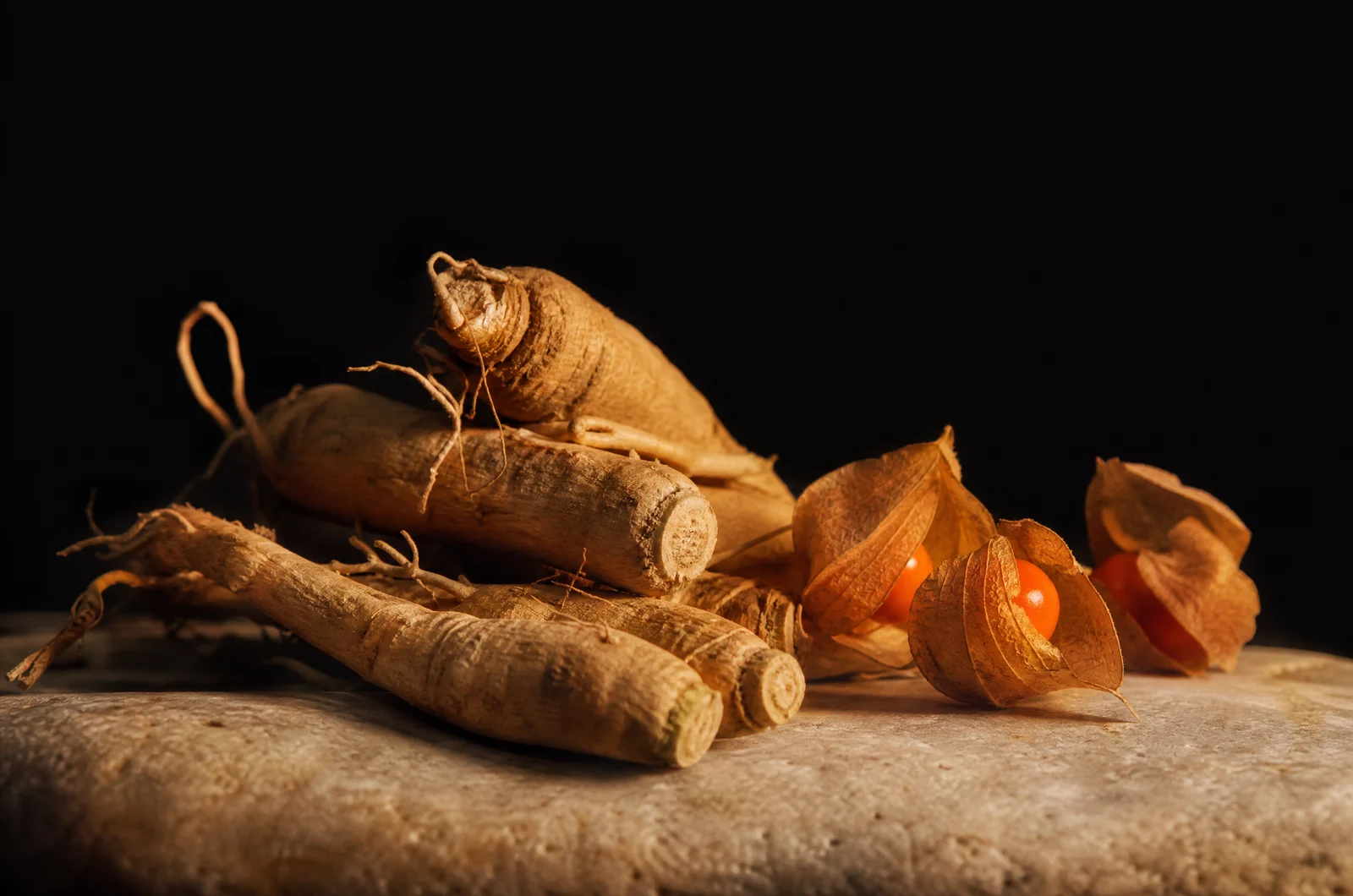 Most studiedAshwagandhaIn 12 small trials of stressed adults, stress questionnaire scores fell slightly versus placebo (low certainty); some trials also lowered morning cortisol.In our shop
 Mixed evidenceRhodiolaSmall trials report less fatigue under stress; most have design weaknesses.In our shop

Do adaptogens work?
Adaptogens work modestly at best, and only ashwagandha has enough trials to say so with any confidence. Rhodiola trials are small and weakly designed 6, ginseng missed its main fatigue goal 7, and the mushroom trials mostly measure exercise and memory rather than stress. Trials of adaptogens rarely run past three months, so long-term benefit and long-term safety are both unknown.
Persistent stress that does not lift with rest may be something else. Low mood most days for two weeks, panic attacks, a racing heart, unexplained weight change or exhaustion that sleep does not fix are reasons to see a doctor rather than try another herb; anxiety, depression and burnout each have their own page.
Do adaptogens lower cortisol?
Ashwagandha lowers morning cortisol in several trials. In 64 chronically stressed adults, 300 mg of a standardised ashwagandha root extract twice a day for 60 days lowered serum cortisol by about 28% and improved stress-scale scores versus placebo 11. In 60 stressed adults, 240 mg a day for 60 days lowered both morning cortisol and DHEA-S, the adrenal hormone measured alongside cortisol 12.
A lower cortisol result and a calmer person are separate outcomes, and adaptogen trials do not always deliver both. A 2025 meta-analysis of ashwagandha trials found serum cortisol fell by about 1.16 µg/dL, yet scores on the Perceived Stress Scale did not change significantly 13. Other adaptogens point in other directions: rhodiola blunted the awakening cortisol rise in one trial 5, and eleuthero raised cortisol under heavy training 8. Lowering cortisol only helps if cortisol was high to begin with. For supplements that reduce cortisol and the habits that do, how to lower cortisol compares the evidence for each option.
Cortisol and its partner hormone
Reading the label before you buy
Supplements are not tested before sale in the US, and quality varies widely. DNA testing of 5,957 commercial herbal products from 37 countries found about 27% were adulterated, meaning substituted or diluted with other species 14. Five label checks cut the risk of a substituted or underdosed product.
- Standardisation (a guaranteed amount of the active compound): the label states it as a percentage, such as withanolides for ashwagandha, rosavins and salidroside for rhodiola, or ginsenosides for ginseng.
- Plant part: most ashwagandha trials used the root; extracts that include the leaf have a different chemistry.
- Mushroom source: fruiting body extracts carry more beta-glucans (the fibre-like compounds thought to be active) than mycelium (the root-like threads), which is often grown on grain and can be mostly starch; look for a stated beta-glucan percentage.
- Proprietary blends: a blend that lists ingredients without amounts hides how much of each adaptogen you get, and adaptogen coffees, drinks and gummies often do not state amounts comparable to those used in trials.
- Third-party testing: a seal from USP, NSF or a similar independent lab confirms the contents match the label; it says nothing about whether the herb works.
Side effects, interactions and who should skip adaptogens
The common side effects of adaptogens are mild: stomach upset, loose stools, headache, sleepiness with ashwagandha, and jitteriness or trouble sleeping with rhodiola and ginseng. The serious risks are rarer and centre on the liver and the thyroid. In Iceland and the US Drug-Induced Liver Injury Network, five cases of liver injury, mostly cholestatic (bile flow blocked) with jaundice, were attributed to ashwagandha supplements, and all five people recovered after stopping 15. In 2023 Denmark's food authority announced plans to ban ashwagandha in food supplements over safety concerns.
Ask a doctor or pharmacist before starting an adaptogen if any of these apply:
- Pregnancy, trying to conceive or breastfeeding.
- Thyroid disease, including taking levothyroxine or another thyroid medicine.
- Autoimmune disease or immunosuppressant medicines, because some adaptogens are claimed to stimulate the immune system.
- Liver disease or a past reaction to an herbal supplement.
- Diabetes medicines (ginseng and others can lower blood sugar), blood thinners such as warfarin, sedatives or sleep medicines, antidepressants, or blood pressure medicines.
- Planned surgery within the next two weeks.
Can adaptogens change your blood test?
Adaptogens can change blood test results, and a result that has moved because of a supplement can be misread as a new disease or a treatment effect. In 50 adults with subclinical hypothyroidism (a slightly high TSH with normal thyroid hormone), 600 mg of ashwagandha a day for eight weeks lowered TSH (thyroid-stimulating hormone, the pituitary signal that drives the thyroid) and raised T3 and T4, the thyroid hormones themselves, versus placebo 16. That shift helps nobody if the person reading the thyroid panel does not know about the supplement, and it can push someone already taking thyroid medicine toward too much thyroid hormone.
| Adaptogen | Result that can move | Direction | Why it matters |
|---|---|---|---|
| Ashwagandha | TSH, free T4, T3 | TSH down, T4 and T3 up | Can mask or mimic a thyroid change; tell your prescriber if you take thyroid medicine |
| Ashwagandha, reishi | ALT, AST, bilirubin, ALP | Up in rare liver injury | A rising ALT while taking an herb needs a doctor's review |
| Ashwagandha | Cortisol, DHEA-S | Down | A low result may reflect the supplement, not the adrenals |
| Eleuthero | Cortisol | Up under training load | A high result may reflect the supplement plus exercise |
| Panax ginseng, cordyceps | Glucose, HbA1c | May fall | Adds to diabetes medicines; low readings possible |
Tell whoever orders or reads the test which supplements you take, and avoid starting a new adaptogen in the weeks before a baseline test. The guide to supplements that affect blood tests covers biotin and the other common culprits, and how to read your thyroid panel explains TSH against free T4. ALT is a liver enzyme that rises when liver cells are damaged; liver enzymes explained covers what a raised ALT means, and if your liver enzymes were already high, fatty liver and hepatitis cover the common causes to rule out.
Results an adaptogen can move
How to try an adaptogen sensibly
Anyone who decides with their doctor to try an adaptogen gets a clearer answer by treating it as a small, timed experiment. A single reading tells you little; trends beat single readings explains why two results taken the same way say more than one.
- 1Pick one adaptogenStarting two adaptogens at once makes it impossible to tell which one helped or which one caused a side effect.
- 2Check the labelChoose a standardised, third-party-tested product with the plant part and active compound stated, and follow the label and your clinician's advice on amount.
- 3Get a baseline if it mattersIf cortisol, thyroid or liver results are already being tracked, have them drawn before starting, with morning cortisol taken between about 7 and 9 am.
- 4Track for 6 to 8 weeksNote sleep and a simple 1 to 10 stress score each week; that is the length of most trials. Stop and get medical advice the same day for yellow skin or eyes, dark urine, pale stools, a racing heart or new heat intolerance.
- 5Retest the same way and decideRepeat any blood test at the same time of day and go over the results with your clinician. A liver or thyroid result that has moved is a reason to stop the adaptogen and have it checked by your doctor rather than retesting on your own, and no change after the trial period suggests it is not helping.
 Link · NIH National Center for Complementary and Integrative HealthAshwagandha: usefulness and safetyThe US government summary of what is known about ashwagandha, including liver and thyroid safety concerns.nccih.nih.gov
Citations
- Panossian A, Wikman G. Effects of adaptogens on the central nervous system and the molecular mechanisms associated with their stress-protective activity. Pharmaceuticals 2010;3(1):188-224.
- European Medicines Agency, Committee on Herbal Medicinal Products. Reflection paper on the adaptogenic concept (EMEA/HMPC/102655/2007), 2008.
- Stalder T et al. Assessment of the cortisol awakening response: expert consensus guidelines. Psychoneuroendocrinology 2016;63:414-432.
- Akhgarjand C et al. Does ashwagandha supplementation have a beneficial effect on the management of anxiety and stress? A systematic review and meta-analysis of randomized controlled trials. Phytotherapy Research 2022;36(11):4115-4124.
- Olsson EM, von Scheele B, Panossian AG. A randomised, double-blind, placebo-controlled, parallel-group study of the standardised extract SHR-5 of the roots of Rhodiola rosea in the treatment of subjects with stress-related fatigue. Planta Medica 2009;75(2):105-112.
- Ishaque S et al. Rhodiola rosea for physical and mental fatigue: a systematic review. BMC Complementary and Alternative Medicine 2012;12:70.
- Kim HG et al. Antifatigue effects of Panax ginseng C.A. Meyer: a randomised, double-blind, placebo-controlled trial. PLOS ONE 2013;8(4):e61271.
- Gaffney BT, Hugel HM, Rich PA. The effects of Eleutherococcus senticosus and Panax ginseng on steroidal hormone indices of stress and lymphocyte subset numbers in endurance athletes. Life Sciences 2001;70(4):431-442.
- Mori K et al. Improving effects of the mushroom Yamabushitake (Hericium erinaceus) on mild cognitive impairment: a double-blind placebo-controlled clinical trial. Phytotherapy Research 2009;23(3):367-372.
- Hirsch KR et al. Cordyceps militaris improves tolerance to high-intensity exercise after acute and chronic supplementation. Journal of Dietary Supplements 2017;14(1):42-53.
- Chandrasekhar K, Kapoor J, Anishetty S. A prospective, randomized double-blind, placebo-controlled study of safety and efficacy of a high-concentration full-spectrum extract of ashwagandha root in reducing stress and anxiety in adults. Indian Journal of Psychological Medicine 2012;34(3):255-262.
- Lopresti AL et al. An investigation into the stress-relieving and pharmacological actions of an ashwagandha (Withania somnifera) extract: a randomized, double-blind, placebo-controlled study. Medicine (Baltimore) 2019;98(37):e17186.
- Albalawi AA. Dual impact of ashwagandha: significant cortisol reduction but no effects on perceived stress. A systematic review and meta-analysis. Nutrition and Health 2025;31(4):1395-1408.
- Ichim MC. The DNA-based authentication of commercial herbal products reveals their globally widespread adulteration. Frontiers in Pharmacology 2019;10:1227.
- Bjornsson HK et al. Ashwagandha-induced liver injury: a case series from Iceland and the US Drug-Induced Liver Injury Network. Liver International 2020;40(4):825-829.
- Sharma AK, Basu I, Singh S. Efficacy and safety of ashwagandha root extract in subclinical hypothyroid patients: a double-blind, randomized placebo-controlled trial. Journal of Alternative and Complementary Medicine 2018;24(3):243-248.
Educational context only, not medical advice or a diagnosis. Always discuss your results with a clinician.