- 01Least disruptive is different from sleep-promoting
Dim red light has strong evidence for holding back melatonin less than other light. Evidence that it adds sleep on its own is one small unblinded trial, and red light can even raise alertness.
- 02Melanopic lux combines colour and brightness
The body clock responds to how strongly light excites melanopsin, which depends on both colour and brightness. A bright red light can still reach it; a very dim white one barely does.
- 03A red bulb and a red light therapy panel are different devices
A red bulb gives a few lux of visible red for winding down. A therapy panel is very bright, adds invisible near-infrared, and is not designed as a bedroom light.
Red light is the best light to keep on in the last hour before bed, as long as it is dim. Your body clock reads light through a small set of cells in the eye that respond most to blue, and red sits at the far end of the spectrum from them, so a dim red lamp lets you see without telling your brain it is still daytime. That benefit is real and well understood. The bigger claim, that red light makes you fall asleep faster or sleep deeper, rests on one small trial of 20 basketball players under a therapy panel.
Why the colour of light matters at night
Your eyes contain a few thousand cells that play almost no part in seeing. They are called intrinsically photosensitive retinal ganglion cells, or ipRGCs, and they carry a light-sensitive pigment called melanopsin that responds most strongly to blue light at about 480 nanometres (nm, the unit used for wavelength). Red light runs from about 620 to 700 nm, far from that peak, so it gives these cells only a faint signal.
How evening light holds back melatonin
Ordinary indoor light is enough to set that chain off. In a study of 116 healthy adults at Brigham and Women's Hospital, typical room light (under 200 lux) in the hours before bed suppressed melatonin in 99% of people and shortened the night's melatonin period by about 90 minutes compared with dim light 2. Lux measures how bright light looks to the eye; a candle seen from a metre away gives about 1 lux.
Colour changes how hard a given amount of light hits. When Steven Lockley, George Brainard and Charles Czeisler matched blue light (460 nm) and green light (555 nm) for the number of photons, the blue light shifted the melatonin rhythm about twice as far and suppressed melatonin about twice as long (Journal of Clinical Endocrinology and Metabolism, 2003).
Brightness counts as much as colour
A bright red light can still reach the clock, and a very dim white one may barely register. Sleep researchers now use a measure called melanopic lux (formally melanopic equivalent daylight illuminance, or melanopic EDI) that weights light by how strongly it excites melanopsin, so colour and brightness end up in one number. A dim red lamp scores close to zero; a bright cool-white ceiling light scores high. The 2022 consensus on indoor light, led by Timothy Brown with sleep and light researchers from several countries, sets all its limits in melanopic lux for this reason 1.
People also differ a great deal. In a study by Andrew Phillips and colleagues, about 25 lux of ordinary evening light was enough on average to halve melatonin, and sensitivity varied more than 50-fold between the people tested 3. Someone at the sensitive end can lose a share of their melatonin to a bathroom light that another person would shrug off.
What colour light helps you sleep? Every colour ranked
Ranked from least to most disruptive for the evening, assuming each light is equally dim, the order follows distance from melanopsin's 480 nm peak. Colour temperature, written in kelvin (K), describes white and near-white bulbs: the lower the number, the warmer and less blue the light.
| Light | Approx. wavelength or colour temperature | Effect on the body clock | Verdict for the evening |
|---|---|---|---|
| Darkness | None | No signal | Best once you are in bed |
| Dim red | 620 to 700 nm | Weakest signal of any visible light | Best light to have on |
| Amber or orange | 590 to 620 nm, under 2000 K | Weak signal | Good |
| Warm white | About 2700 K | Moderate; still contains blue | Acceptable if kept dim |
| Green | About 495 to 570 nm | Strong; close to melanopsin's peak | Poor |
| Cool white or daylight | 4000 K and above | Strong; rich in blue | Avoid in the evening |
| Blue | About 450 to 490 nm | Strongest | Worst |
Green surprises people because it is often sold as a calming colour. Green light sits close enough to melanopsin's peak that it reaches the clock strongly; in the Lockley study it had about half the effect of blue, which is still far more than red. Warm white bulbs look orange but still carry a blue component, so a bright 2700 K room is a long way from a dim red lamp. A Himalayan salt lamp is a small bulb behind tinted rock: its light acts on the clock like any other dim orange light, with no extra effect from the salt.
What the research on red light and sleep shows
The study behind most "red light improves sleep" headlines was run in 2012 on 20 female basketball players in China 4. Half lay under a red light therapy device that bathed the whole body in 658 nm light for 30 minutes each night for 14 days; the other half got no light at all. The red light group reported better sleep on the Pittsburgh Sleep Quality Index (a standard sleep questionnaire) and had higher blood melatonin at the end 4.
Those results are encouraging and thin. The control group had no sham device, so both the players and the researchers knew who was treated, which matters for a self-rated questionnaire. The device was a whole-body therapy panel, so the trial says little about a red bulb on a bedside table. The players were young athletes in training, and no larger trial has repeated the result.
Red light can also wake you up. Mariana Figueiro's group at Rensselaer Polytechnic Institute found that 630 nm red light at night raised measures of alertness without suppressing melatonin (BMC Neuroscience, 2009). Leaving melatonin alone and making you sleepy are two separate effects, and red light has good evidence only for the first.
Red light bulbs vs red light therapy panels
Red light therapy, also called photobiomodulation, uses panels that shine intense red and near-infrared light at close range. A red bulb used for wind-down gives off a few lux of visible red. The two share a colour and very little else.
For the evening, a dim red bulb is the tool; a therapy panel is a different device
Near-infrared light is invisible, so you cannot judge a panel's output by how bright it looks, and most manufacturers advise eye protection. A panel session is better placed earlier in the evening than as the last light before sleep. Anyone with an eye condition, or taking a medicine that makes the skin or eyes sensitive to light, should check with their doctor or pharmacist before using one.
Should you sleep with a red light on?
For most people, no: wind down under dim red light, then turn it off. Closed eyelids filter light unevenly. Kazuo Ando and Daniel Kripke measured eyelid transmission and found the lids let through a few percent of red light and well under 1% of blue (Biological Psychiatry, 1996). Red is the colour that gets through your eyelids most, which is why a red light left on all night still reaches the eye.
Light during sleep has measurable effects. In a Northwestern University study, healthy young adults who slept one night under 100 lux of overhead light, compared with under 3 lux, had a higher night-time heart rate, lower heart rate variability and more insulin resistance the next morning 5. That study used bright white overhead light, far brighter than a dim red night light, so it shows what light at night can do at the bright end. In about 43,700 women followed for nearly six years, sleeping with a television or light on in the room was linked to a roughly 17% higher risk of gaining 5 kg or more (Park and colleagues, JAMA Internal Medicine, 2019); that study was observational, so it shows an association and cannot prove the light caused the gain.
The sleep environment should be as dark as possible. The recommended maximum ambient melanopic EDI is 1 lux measured at the eye.Brown et al., recommendations for indoor light exposure, PLoS Biology 2022
The same consensus allows up to 10 melanopic lux at night only when an activity needs vision, such as getting up to a child 1. To picture those numbers, compare them with ordinary sources.
| Light source or limit | Rough brightness at the eye | How it compares |
|---|---|---|
| Full moon, clear sky | Well under 1 lux | Below the sleep ceiling |
| One candle at 1 metre | About 1 lux | Near the sleep ceiling; candlelight is orange, so its melanopic value is lower still |
| Dim red or amber night light | A few lux | Close to zero melanopic lux |
| Typical living room in the evening | Up to about 200 lux | Well above the evening ceiling if the light is white |
| Evening ceiling (consensus) | 10 melanopic lux | From 3 hours before bed |
| Sleep ceiling (consensus) | 1 melanopic lux | While asleep; up to 10 only if you need to see |
Standby lights on smoke detectors, chargers and televisions are tiny points of light and add very little to the room. If one bothers you, a piece of tape or a sleep mask deals with it; do not cover or disable a smoke detector itself.
How to set up your evening light
The consensus thresholds turn into a simple day plan 1. The timings below come from the 2022 recommendations; the red-light step is where the physiology above points.
- 1Daytime: get bright lightThe consensus recommends at least 250 melanopic lux at the eye by day, which usually means time outdoors or near a window 1. Bright days also make evening light matter less: Marc Hebert and colleagues found that after a week of bright daytime light, evening light suppressed melatonin less than after a week of dim days (Journal of Pineal Research, 2002).
- 2From 3 hours before bed: dim and warmKeep light at or below 10 melanopic lux 1. In practice that means lamps instead of ceiling lights, warm bulbs, and screens turned down.
- 3Last hour: dim red or amberSwitch to a dim red or amber lamp for reading, washing up and getting ready for bed.
- 4Lights out: darkAim for 1 melanopic lux or less while you sleep 1, with blackout blinds or a sleep mask if street light gets in.
 CalculatorSleep calculatorWork back from your wake time to find when the lights should start going down.Work it out
Screens, night modes and blue-light glasses
Screens held close to the face add up. In a study led by Anne-Marie Chang, reading on a light-emitting e-reader for about 4 hours before bed for five nights, compared with a printed book, delayed melatonin, made it take longer to fall asleep, cut REM sleep and left people less alert the next morning (PNAS, 2015).
Tinting the screen helps less than people hope. A Cochrane review of blue-light filtering glasses found too little reliable evidence to say whether they improve sleep quality 6. A Brigham Young University study found that iPhone Night Shift mode did not improve sleep compared with normal phone use or no phone (Duraccio and colleagues, Sleep Health, 2021). The evidence favours lowering brightness and putting the phone down over relying on a tint.
Night lights and children
Children's eyes let more light through to the clock. Under the same moderate night-time light, Shigekazu Higuchi's team measured melatonin suppression of about 88% in school-age children against about 46% in adults (Journal of Clinical Endocrinology and Metabolism, 2014). A dim red or amber night light placed low, out of the child's line of sight, and screens off well before bed follow from that. The same rules suit adults: a floor-level, motion-activated red light gets you to the bathroom without lighting the room.
When light isn't why you can't sleep
If your room is dark and you still struggle to fall asleep or stay asleep most nights for a month or more, the light is probably not the main problem. For chronic insomnia, the American Academy of Sleep Medicine's 2021 guideline recommends cognitive behavioural therapy for insomnia (CBT-I, a structured talking and sleep-scheduling treatment) as the first-line treatment for adults (Edinger and colleagues, Journal of Clinical Sleep Medicine). Our can't sleep page walks through the common reasons in more depth.
Common reasons sleep stays broken in a dark room
These are the usual suspects a doctor will think about. Some show up in blood work; some need a sleep study.
- 01Insomnia habits
Lying awake in bed, irregular sleep times and worry about sleep keep each other going. CBT-I targets exactly this pattern.
- 02Stress and evening cortisol
Cortisol should fall through the evening. A stressful day can keep it up and leave you feeling wired at bedtime; see how to lower cortisol.
- 03Sleep apnea
Breathing stops and restarts during sleep. Loud snoring, gasping and heavy daytime sleepiness are the signs, and it needs a sleep study.
- 04Restless legs
An urge to move the legs at night that eases with movement. Low iron stores are a known contributor; see restless legs.
- 05Overactive thyroid
Too much thyroid hormone can bring a racing pulse, heat intolerance, weight loss and poor sleep.
- 06Night-time blood sugar swings
Large drops or rises in glucose overnight can wake people, especially those on diabetes medicines.
These are things a symptom like this can be linked with, not a diagnosis. Several can sit together, and a clinician who knows your history puts them in order for you.
When to get help now
Fixing the light will not help these. See a doctor, and do not wait for the light changes to work first.
- Thoughts of harming yourself, with or without sleeplessness: call or text 988
- Chest pain, a racing or irregular heartbeat, or sudden breathlessness that wakes you
- Falling asleep while driving
- Loud snoring with pauses in breathing, choking or gasping, or heavy daytime sleepiness
- Insomnia most nights for more than a month
- An urge to move your legs at night that eases when you move them
- A racing pulse, heat intolerance or unexplained weight loss alongside poor sleep
LifeFrom can't examine you or assess a symptom. If something feels seriously wrong, trust that and get care rather than waiting on a test.
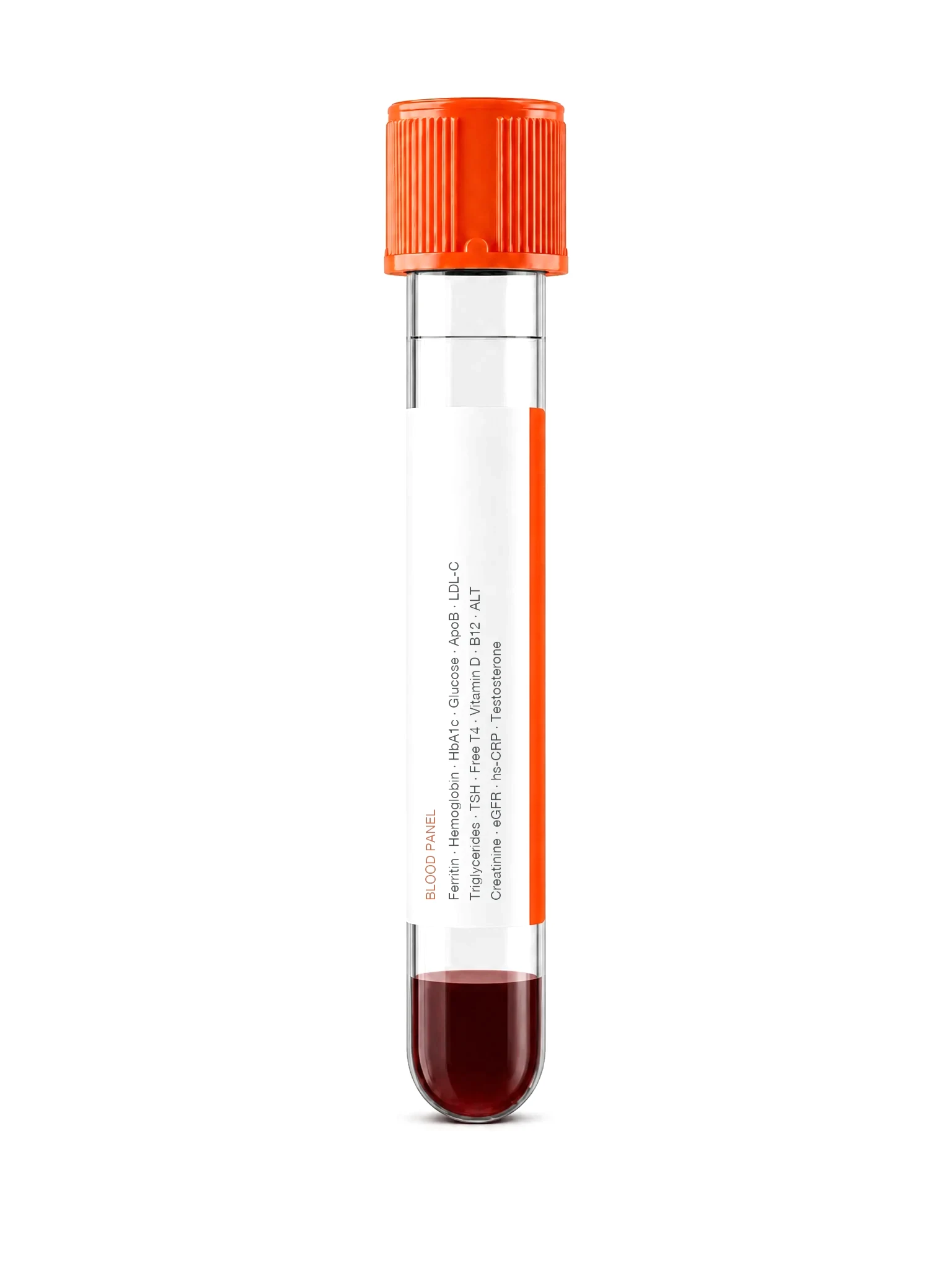
Blood markers a doctor may check when sleep stays poor
A few supplements have small trials behind them for sleep. They sit well behind light and CBT-I in the evidence, and anyone on regular medicines should check with a pharmacist first.
Other sleep levers with some evidence

Citations
- Brown TM et al. Recommendations for daytime, evening, and nighttime indoor light exposure to best support physiology, sleep, and wakefulness in healthy adults. PLoS Biology 2022
- Gooley JJ et al. Exposure to room light before bedtime suppresses melatonin onset and shortens melatonin duration in humans. J Clin Endocrinol Metab 2011
- Phillips AJK et al. High sensitivity and interindividual variability in the response of the human circadian system to evening light. PNAS 2019
- Zhao J et al. Red light and the sleep quality and endurance performance of Chinese female basketball players. J Athl Train 2012
- Mason IC et al. Light exposure during sleep impairs cardiometabolic function. PNAS 2022
- Singh S et al. Blue-light filtering spectacles for reducing eye strain and improving sleep. Cochrane Database Syst Rev 2023
Educational context only, not medical advice or a diagnosis. Always discuss your results with a clinician.