- 01You eat protein, your body uses amino acids
Food protein is broken down into single amino acids that mix in one pool, and your cells rebuild their own proteins from that pool in the order your DNA spells out. So what counts is whether the nine essential amino acids add up across the day: beans and rice do not need to share a plate, collagen cannot be your only protein because it lacks tryptophan, and BCAAs alone stall because the other six essentials are missing.
Every protein in your body, from the hemoglobin carrying oxygen to the antibodies fighting a cold, is a chain of amino acids folded into a working shape. The protein on your plate never goes straight into those chains. Digestion takes it apart into single amino acids, and your cells rebuild their own proteins from that shared supply. That one fact explains most of what matters in practice, from why a varied vegan diet covers your needs to why a BCAA drink cannot build muscle on its own.
What an amino acid is
An amino acid is a small molecule built around a central carbon atom with four attachments: an amino group (the nitrogen-containing end that gives the family its name), a carboxyl group (the acid end), a hydrogen atom, and a side chain. All 20 share the first three. The side chain makes each one different. Some side chains carry an electric charge, some are oily and tuck inside a folded protein away from water, and cysteine's side chain carries sulfur that can bond to a second cysteine and staple a protein into shape.
Cells join amino acids end to end with a peptide bond, the link that forms when the amino group of one amino acid meets the carboxyl group of the next and a molecule of water is released. A short chain is called a peptide; a long one, usually more than about 50 amino acids, is a protein. The order comes from your DNA, where each three-letter codon names one amino acid. Insulin has 51 amino acids; titin, the spring-like protein in muscle, has more than 30,000. A 21st amino acid, selenocysteine, appears in about 25 human proteins, mostly antioxidant enzymes.
Amino acid order matters because a chain folds according to its side chains. Sickle cell disease comes from a single swap: valine in place of glutamate at position 6 of beta-globin, one of the chains of hemoglobin. One changed amino acid out of 146 makes hemoglobin molecules stick together when oxygen is low, which bends red blood cells into the sickle shape.
From the protein you eat to the proteins you make
The 20 amino acids, and which ones are essential
Nine amino acids are essential (also called indispensable): the human body has no pathway to make them, so food must supply them 1. The other 11 can be made from other molecules. Six of those 11 are conditionally essential, meaning the body usually makes enough but can fall short during rapid growth, premature birth, severe illness or injury. Tyrosine is the clearest case. The body makes tyrosine from phenylalanine, so a person with phenylketonuria (PKU), who cannot run that conversion, has to get tyrosine from food. Essential is a statement about supply: all 20 amino acids are needed to build your proteins.
| Amino acid | Class | One real job | Where you get it |
|---|---|---|---|
| Histidine | Essential | Becomes histamine; holds the iron in hemoglobin in place | Meat, fish, dairy, soy |
| Isoleucine | Essential (BCAA) | Builds muscle protein; burned for fuel during exercise | Eggs, dairy, meat, lentils |
| Leucine | Essential (BCAA) | Switches on muscle protein building | Dairy, meat, soy |
| Lysine | Essential | Cross-links collagen; raw material for carnitine | Meat, fish, beans (low in grains) |
| Methionine | Essential | Starts every new protein chain; feeds the methionine cycle and creatine | Eggs, fish, sesame, nuts (low in beans) |
| Phenylalanine | Essential | Converted to tyrosine | Dairy, meat, soy, aspartame |
| Threonine | Essential | Builds the mucus proteins that line the gut | Dairy, meat, lentils |
| Tryptophan | Essential | Becomes serotonin, melatonin and some niacin | Poultry, dairy, oats, seeds |
| Valine | Essential (BCAA) | Builds muscle protein; burned for fuel | Dairy, meat, soy |
| Arginine | Conditionally essential | Makes nitric oxide; part of the urea cycle and creatine | Nuts, seeds, meat |
| Cysteine | Conditionally essential | Builds glutathione, taurine and keratin | Eggs, poultry, legumes |
| Glutamine | Conditionally essential | Fuels gut and immune cells; carries nitrogen in blood | Meat, dairy, beans |
| Glycine | Conditionally essential | Every third building block of collagen; part of glutathione and creatine | Gelatin, meat, fish skin |
| Proline | Conditionally essential | Gives collagen its rigid twist | Gelatin, dairy |
| Tyrosine | Conditionally essential | Becomes dopamine, adrenaline, thyroid hormone and melanin | Dairy, meat, soy |
| Alanine | Non-essential | Carries nitrogen from muscle to liver | Meat, eggs |
| Asparagine | Non-essential | Anchors sugar chains on many proteins | Dairy, meat, asparagus |
| Aspartate | Non-essential | Feeds the urea cycle; used to make other amino acids | Meat, legumes |
| Glutamate | Non-essential | Main excitatory signal in the brain; part of glutathione; umami taste | Meat, cheese, tomatoes |
| Serine | Non-essential | Builds cell-membrane fats and glycine | Eggs, soy, meat |
How much of each essential amino acid you need
The WHO, FAO and UN University set adult requirements for each essential amino acid in milligrams per kilogram of body weight per day 1. Leucine has the largest requirement and tryptophan the smallest. Methionine and phenylalanine are counted together with cysteine and tyrosine, the amino acids the body makes from them. The right-hand column works the numbers through for a 70 kg (154 lb) adult.
| Essential amino acid | mg per kg per day | Per day at 70 kg |
|---|---|---|
| Histidine | 10 | 700 mg |
| Isoleucine | 20 | 1,400 mg |
| Leucine | 39 | 2,730 mg |
| Lysine | 30 | 2,100 mg |
| Methionine plus cysteine | 15 | 1,050 mg |
| Phenylalanine plus tyrosine | 25 | 1,750 mg |
| Threonine | 15 | 1,050 mg |
| Tryptophan | 4 | 280 mg |
| Valine | 26 | 1,820 mg |
Added together, the nine requirements come to about 184 mg per kg, or roughly 13 g a day at 70 kg 1. Anyone eating enough total protein from a mix of foods clears these numbers with room to spare. The per-amino-acid figures matter mostly for very low-protein diets, diets built on a single plant staple, and medical diets planned by specialists, such as the low-phenylalanine diet in PKU.
What your body builds from amino acids
Muscle is the famous use, but most of your proteins have nothing to do with lifting. Enzymes run the chemical reactions in every cell. Antibodies are proteins. Hemoglobin carries oxygen; albumin carries hormones, drugs and calcium through the blood; insulin and growth hormone are peptide hormones; collagen holds skin, tendon and bone together; keratin makes hair and nails.
Amino acids also become small molecules that people know from supplement labels. Creatine is made from arginine, glycine and methionine. Glutathione, the cell's main antioxidant, is a three-part peptide of glutamate, cysteine and glycine. Carnitine, which ferries fat into mitochondria for burning, is built from lysine and methionine. Taurine comes from cysteine. Tyrosine becomes dopamine, adrenaline and thyroid hormone, and tryptophan becomes serotonin, melatonin and part of your niacin.
When amino acids are burned for fuel they fall into two groups. Glucogenic amino acids can be turned into glucose, which helps hold blood sugar steady during a fast. Ketogenic amino acids become ketone bodies or fat; leucine and lysine are the only purely ketogenic ones. A few, including isoleucine, phenylalanine, tryptophan, threonine and tyrosine, can go either way.
Amino acids and their products, with the evidence
 Strongest evidenceCreatineMade in the body from arginine, glycine and methionine; trials that add it to strength training find larger strength gains.In our shop
 Mixed evidenceBCAAsLeucine, isoleucine and valine; on their own they cannot sustain muscle building without the other six essentials.In our shop
 Early evidenceGlycineEvery third building block of collagen; small trials have looked at it for sleep quality.In our shop
 Mixed evidenceGlutamineFuel for the gut lining and immune cells; trials in healthy athletes show little benefit.In our shop
Complete and incomplete protein: does a plant diet cover it?
A complete protein supplies all nine essential amino acids in useful proportions. Meat, fish, eggs, dairy, soy and quinoa come close to that profile. Most single plant foods run low in one essential amino acid: grains are short on lysine, and beans and lentils are short on the sulfur amino acids, methionine and cysteine. The one in shortest supply is called the limiting amino acid, because it caps how much of that food's protein the body can use for building.
| Food group | Limiting amino acid | Covered by |
|---|---|---|
| Grains (wheat, rice, corn, oats) | Lysine | Beans, lentils, soy, dairy |
| Beans, lentils, peas | Methionine and cysteine | Grains, nuts, seeds |
| Most nuts and seeds | Lysine | Beans, lentils, soy |
| Collagen and gelatin | Tryptophan (essentially none) | Any complete protein |
For decades the advice was to pair beans and rice at the same meal. Because amino acids from every meal mix in one pool, that rule is unnecessary. The Academy of Nutrition and Dietetics states that a variety of plant foods eaten over the course of a day supplies all the essential amino acids, with no need to combine them at one sitting 2. Plant protein is digested a little less completely and carries less leucine, so plant eaters may need slightly larger servings to get the same muscle response. For the nutrients plant diets do tend to miss, see vegan nutrient deficiencies.
Protein quality also gets a score. The older PDCAAS (protein digestibility-corrected amino acid score) measures digestion across the whole gut and caps every food at 1.0. In 2013 an FAO expert consultation recommended DIAAS (digestible indispensable amino acid score) in its place, because DIAAS measures digestion at the end of the small intestine, where amino acids are absorbed, and does not cap high-quality proteins. Collagen scores at or near zero on both systems because it contains essentially no tryptophan.
Leucine, BCAAs and building muscle
Leucine acts as the on-switch for muscle protein synthesis, signalling through mTOR, a growth sensor inside each cell. A meal has to deliver enough leucine to flip that switch fully. In a pooled analysis of feeding studies, the protein dose that maxed out muscle building was about 0.24 g per kg per meal in younger men and about 0.40 g per kg in older men 5, a gap called anabolic resistance. The International Society of Sports Nutrition describes effective servings as roughly 20 to 40 g of protein carrying about 700 to 3,000 mg of leucine, spread every 3 to 4 hours 8.
BCAAs (branched-chain amino acids) are leucine, isoleucine and valine, three of the nine essentials. Leucine can start muscle building, but a new muscle protein still needs all 20 amino acids. With a BCAA drink alone, the other six essentials can only come from breaking down existing muscle protein, so the building response stalls 3. Robert Wolfe, a researcher in muscle protein metabolism, reviewed the human studies and wrote:
We conclude that the claim that consumption of dietary BCAAs stimulates muscle protein synthesis or produces an anabolic response in human subjects is unwarranted.Robert R. Wolfe, Journal of the International Society of Sports Nutrition, 2017
For building muscle, whole protein beats BCAAs alone
Total daily protein matters too, up to a point. A meta-analysis of 49 trials found that adding protein to resistance training increased gains in lean mass, and the benefit levelled off at about 1.6 g per kg per day of total protein 4. For how training shows up on blood work, see blood tests for athletes and the body and performance hub.
How much protein a day, and is more safe?
The US Recommended Dietary Allowance is 0.8 g of protein per kg of body weight per day, set to cover the needs of nearly all healthy adults; the WHO puts the adult safe level at 0.83 g per kg 1. The RDA is a floor that prevents deficiency in sedentary adults. Higher figures come from specific groups.
| Group | Protein figure | Source |
|---|---|---|
| Healthy adults, minimum | 0.8 g/kg/day | US RDA; WHO safe level 0.83 1 |
| Adults over 65 | 1.0 to 1.2 g/kg/day | PROT-AGE expert group, 2013 |
| Adults in regular training | 1.4 to 2.0 g/kg/day | ISSN position stand 8 |
| Chronic kidney disease, stages G3 to G5, not on dialysis | 0.8 g/kg/day; avoid above 1.3 | KDIGO 2024 7 |
 CalculatorProtein calculatorTurns these ranges into grams for your own weight, with a per-meal split.Work it out
For healthy kidneys, higher intakes look safe: a 2018 meta-analysis of randomised trials by Devries and colleagues found no meaningful difference in kidney function between higher-protein and normal-protein diets in adults without kidney disease 9. Kidney disease changes the picture, because the kidneys clear the urea made from protein. For adults with chronic kidney disease at stages G3 to G5 who are not on dialysis, KDIGO 2024 suggests 0.8 g per kg per day and advises avoiding more than 1.3 g per kg in people at risk of their kidney disease progressing 7. Your kidney function results tell your clinician which group you are in.
Where extra amino acids go: the nitrogen trail
Spare amino acids cannot be stored, so the body removes their nitrogen and gets rid of it. Several routine blood markers sit along that trail.
- 1Nitrogen comes offEnzymes called transaminases move the amino group onto another molecule. Two of them appear on every liver panel: ALT (alanine aminotransferase) and AST (aspartate aminotransferase), named for the amino acids they handle.
- 2Ammonia formsThe nitrogen is released as ammonia, which is toxic to the brain if it builds up.
- 3The liver makes ureaThe urea cycle in the liver joins ammonia with carbon dioxide to make urea, a harmless carrier for nitrogen.
- 4The kidneys clear ureaUrea leaves in urine. Its blood level is reported as BUN (blood urea nitrogen).
The nitrogen trail explains a common lab puzzle. BUN rises when you eat more protein, and it also rises with dehydration or when the kidneys filter less. Creatinine, a waste product of muscle, rises mainly when kidney filtering falls. Comparing the two as the BUN to creatinine ratio helps a clinician tell a high-protein or dehydration pattern from a kidney pattern, and the BUN to creatinine calculator works out your ratio. Ammonia climbs when the liver cannot keep the urea cycle running, most often in advanced liver disease. ALT and AST are mainly read as signs of liver cell stress; liver enzymes explained covers them.
Can a blood test show your amino acid status?
Routine panels such as the metabolic panel do not measure amino acids. Two markers on the metabolic panel often get misread as protein gauges: albumin and total protein. ASPEN, the American Society for Parenteral and Enteral Nutrition, advises against using albumin or prealbumin to judge nutrition status or protein intake, because both fall mainly with inflammation, liver disease, kidney losses and fluid shifts 6. A low albumin is a reason to look for those causes with your clinician, and extra protein shakes will not reliably raise it. The low total protein page walks through the usual causes.
Some routine markers do hint at how your body handles amino acids, read as trends and in context:
- BUN tends to track recent protein intake when hydration and kidney function are steady.
- Creatinine reflects muscle mass as well as kidney filtering, so a very muscular person can run high and a frail older adult low.
- Homocysteine is a step in the methionine cycle; it rises when vitamin B12, folate or B6 run low, or when the kidneys filter less.
- IGF-1 moves with protein and calorie intake, but age, growth hormone, liver function and illness move IGF-1 too.
A plasma amino acid panel measures 20 to 40 amino acids directly. Doctors use it mainly to diagnose and monitor inborn errors of metabolism such as PKU and maple syrup urine disease. Plasma amino acid levels swing with the last meal and with fasting, so the panel is a pattern test ordered by specialists and a poor everyday diet check.
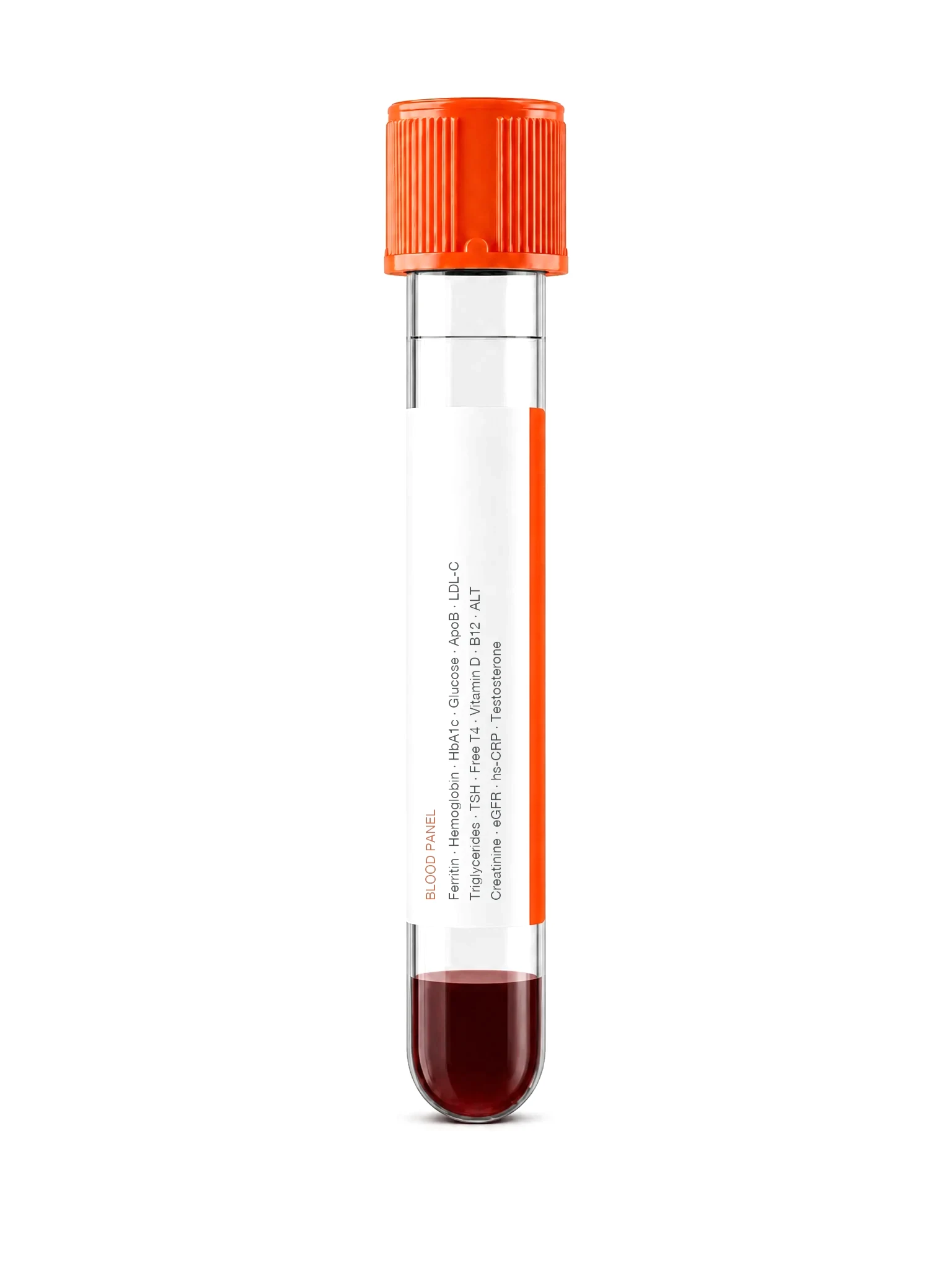
Markers that sit on the protein trail
When amino acid handling goes wrong
Phenylketonuria (PKU) is an inherited lack of phenylalanine hydroxylase, the enzyme that turns phenylalanine into tyrosine. Phenylalanine builds up and harms the developing brain unless a low-phenylalanine diet starts early, which is why PKU is on the newborn heel-prick screen in every US state and why drinks sweetened with aspartame carry a phenylalanine warning. Maple syrup urine disease is a block in breaking down the three BCAAs, named for the sweet smell of an affected baby's urine. Homocystinuria is a block in the methionine cycle that drives homocysteine very high and raises the risk of blood clots.
Outright protein deficiency (kwashiorkor) is rare where food is plentiful. In the US, low protein intake more often shows up quietly as muscle loss in older adults, in people with poor appetite during illness, and on very restrictive diets. Unplanned weight loss, visible muscle wasting, or swelling in the legs or belly are reasons to see a clinician soon, because the same signs can come from liver, kidney or bowel disease.
Citations
- WHO/FAO/UNU. Protein and amino acid requirements in human nutrition. WHO Technical Report Series 935 (2007)
- Melina V, Craig W, Levin S. Position of the Academy of Nutrition and Dietetics: Vegetarian Diets. J Acad Nutr Diet (2016)
- Wolfe RR. Branched-chain amino acids and muscle protein synthesis in humans: myth or reality? J Int Soc Sports Nutr (2017)
- Morton RW et al. A systematic review, meta-analysis and meta-regression of the effect of protein supplementation on resistance training-induced gains in muscle mass and strength. Br J Sports Med (2018)
- Moore DR et al. Protein ingestion to stimulate myofibrillar protein synthesis requires greater relative protein intakes in healthy older versus younger men. J Gerontol A Biol Sci Med Sci (2015)
- Evans DC et al. The Use of Visceral Proteins as Nutrition Markers: An ASPEN Position Paper. Nutr Clin Pract (2021)
- KDIGO 2024 Clinical Practice Guideline for the Evaluation and Management of Chronic Kidney Disease. Kidney Int (2024)
- Jäger R et al. International Society of Sports Nutrition Position Stand: protein and exercise. J Int Soc Sports Nutr (2017)
- Devries MC et al. Changes in kidney function do not differ between healthy adults consuming higher- compared with lower- or normal-protein diets: a systematic review and meta-analysis. J Nutr (2018)
Educational context only, not medical advice or a diagnosis. Always discuss your results with a clinician.