- 01Skin studies say nothing about injections
Every human study of GHK-Cu tested it on skin or in a wound gel, and the only independent randomized trial, 13 patients, found no difference on blinded assessment 3. Injected GHK-Cu, alone or in the GLOW blend, has no published human trials, and FDA says there are "limited data in humans to inform safety-related considerations" 4. A serum result tells you nothing about what an injection does inside the body.
GHK-Cu is a copper-carrying peptide with a few small human skin studies behind it and no human trials as an injection. On a serum label it is copper tripeptide-1, a cosmetic ingredient; in a vial marked 'research use only' it is an unapproved injectable. Below: what each form has been tested for, how much copper GHK-Cu carries, who should avoid it and what FDA has said.
GHK-Cu: the short answer
| Form | What it is | Human evidence | Main risk |
|---|---|---|---|
| Serum or cream (copper tripeptide-1) | A cosmetic ingredient; products may only claim to change how skin looks | A few small studies, mixed results 2 3 | Redness, stinging, rare allergy |
| Injected GHK-Cu | An unapproved 'research peptide' sold in vials | None published | Immune reactions FDA flagged 4, contaminated vials, unknown long-term effects |
| GLOW and KLOW blends | GHK-Cu mixed with BPC-157 and TB-500; KLOW adds KPV | None; neither blend has been studied | The injected risks, spread across three or four untested compounds |
What is GHK-Cu, and why do labels say copper tripeptide-1?
GHK-Cu is glycyl-histidyl-lysine, a peptide three amino acids long, holding one copper ion. Loren Pickart first isolated GHK from human plasma in 1973, as a factor that kept liver cells alive longer in culture 1. The body releases GHK when collagen and other proteins break down after an injury, and GHK grips copper so tightly that it can pull copper away from albumin, which carries a loosely bound share of the copper in blood 1. The amount of GHK in plasma falls with age, from about 200 ng/mL at 20 to about 80 ng/mL by 60 1.
The age decline is the root of most GHK-Cu marketing: if GHK falls as skin ages, topping it up should help. The fall in plasma GHK is measured. Whether replacing GHK reverses any sign of ageing in people has never been tested.
Names you will see
| Name | What it means | Where you see it |
|---|---|---|
| GHK-Cu | The peptide bound to copper | Research papers, vial labels, the front of serums |
| Copper tripeptide-1 | The INCI name, the standard cosmetic ingredient name for GHK-Cu | Ingredient lists on serums and creams, which are often pale blue |
| Prezatide copper acetate | The drug-development name for GHK-Cu | Wound-gel studies from the 1990s |
| GHK | The same peptide without copper | Some serums and research papers |
GHK-Cu and a copper supplement are different products. LifeFrom's copper guide explains that a normal diet covers copper and that most people who run low are taking too much zinc. A supplement is swallowed, so the gut controls how much copper gets in. GHK-Cu is a signalling peptide that happens to carry copper, and when it goes on skin or under it, the gut has no say.
How GHK-Cu is thought to work
Nearly everything known about how GHK-Cu works comes from preclinical studies, done before any testing in people. Much of it is summarised in reviews by Loren Pickart, who discovered GHK and developed it commercially 1 2. In human fibroblasts, the cells that build the skin's support layer, the GHK-copper complex raised collagen production at very low (nanomolar) concentrations, as Maquart and colleagues reported in 1988 2. GHK-Cu also shifts the balance between matrix metalloproteinases (MMPs, enzymes that break down collagen) and the proteins that hold those enzymes in check, so tissue is rebuilt as well as broken down 2. The copper itself is the cofactor for lysyl oxidase, the enzyme that cross-links collagen and elastin into stronger fibres 2.
Some of the most discussed recent work is genetic. Using the Connectivity Map, a database of how drugs change gene activity, Campbell and colleagues found in 2012 that GHK reversed the gene-activity pattern of lung tissue damaged by emphysema, and restored normal collagen contraction by lung fibroblasts taken from people with COPD (chronic obstructive pulmonary disease, the long-term lung disease that includes emphysema) 7. Those cells were grown in the lab; no one has given GHK-Cu to people with lung disease.
GHK-Cu benefits: what the research shows, by route
Sorted by how GHK-Cu was given, the evidence thins out fast. Most of the human studies were run or funded by companies that developed or sell the ingredient, which gives the one independent trial extra weight.
| Route | Who or what was studied | What was found | Independent of developers? | Strength for people |
|---|---|---|---|---|
| Cells | Human fibroblasts and hair follicles in culture | More collagen and glycosaminoglycans (the gel around collagen) 2; longer follicles 8 | Mixed | None on its own |
| Preclinical injury models | Skin wound models; a knee ligament reconstruction model (n = 72) | Faster wound closure 2; less knee looseness at 6 weeks that was gone by 12 weeks 10 | Mixed | None on its own |
| Skin, open study | 20 women, cream on the thigh for one month (Abdulghani, 1998) | Collagen rose in 70% on copper peptide cream, 50% on vitamin C cream, 40% on retinoic acid 2 | No | Weak: unblinded and tiny |
| Skin, after laser | 13 patients randomized after CO2 laser resurfacing, an in-clinic laser that removes the top layers of skin (Miller, 2006) | No difference in redness, wrinkles or skin quality on blinded assessment; patients using GHK-Cu were more satisfied on a questionnaire 3 | Yes | Weak: small, and null on blinded measures |
| Wound gel | People with diabetic foot ulcers, randomized to a GHK-Cu gel or a placebo gel (Mulder, 1994) | Median ulcer closure 98.5% on the gel against 60.8% on placebo 11 | No, developer-linked | Some: one trial, and the gel was never approved |
| Injection | No human study | Nothing measured | Not applicable | None |
Does GHK-Cu work for skin? Firmness, lines and after procedures
A copper peptide serum may make skin look slightly firmer and smoother over months, and the evidence for that is thinner than for the ingredients it usually shares a shelf with. The open thigh study ran for one month and measured collagen in skin samples, not how skin looked 2. Facial cream studies run by the developers, summarised in their own review, reported fewer fine lines and firmer skin over about 12 weeks, with no independent repeat 2. The independent laser trial is the hardest test so far: its blinded evaluators found no difference in redness, wrinkles or skin quality, although patients using GHK-Cu said they were more satisfied 3.
Getting into skin is the second problem. GHK-Cu is water-loving and carries a charge, which the skin's outer barrier is built to keep out. In lab tests on donated human skin, Hostynek, Dreher and Maibach applied a 0.68% GHK-Cu solution for 48 hours and found copper retained in, and passing through, the outer and deeper layers of skin (the epidermis and dermis) 9. That shows it can get in, not how much a serum delivers on a living face. Because the outermost layer is the main barrier, skin opened by microneedling, a peel or a laser takes in more of whatever goes on it. That is why the formula, its pH and the rest of the bottle matter more than the word 'copper' on the front. After a laser or peel, use only what the clinician who did the procedure approves.
Because reactions are uncommon and it does not make skin sun-sensitive, a copper peptide serum is often tried by people whose skin will not tolerate a retinoid. No study has compared results by skin type. If you get allergic contact rashes, patch-test first, and with rosacea or eczema ask a dermatologist before adding it.
| Ingredient | Human evidence for ageing skin | Irritation | Sun sensitivity |
|---|---|---|---|
| GHK-Cu (copper tripeptide-1) | A few small studies, mixed results 2 3 | Low | None known |
| Retinoids (tretinoin, retinol) | Many randomized trials; tretinoin is a prescription medicine | Moderate to high in the first weeks | Yes |
| Vitamin C (L-ascorbic acid serum) | Several small randomized trials | Mild, more at low pH | None known |
| Niacinamide | A few randomized trials | Low | None known |
The vitamin C guide covers what vitamin C does in the body and on skin; for collagen taken by mouth, see the collagen guide.
GHK-Cu for hair: what the evidence is
No controlled trial has tested GHK-Cu for hair loss in people. The best human-tissue evidence is a 2007 study by Pyo and colleagues, in which GHK-Cu lengthened human hair follicles kept alive in culture and increased growth of dermal papilla cells, the cells at the base of the follicle that steer hair growth 8. Nobody has shown the same effect on a living scalp.
'Copper uglies', the online claim that copper peptides cause shedding or dull skin, has never been studied in either direction. When hair is coming out, finding the cause with a doctor or dermatologist is the useful step. LifeFrom's hair loss guide notes that clinicians check ferritin and hemoglobin for low iron and TSH for thyroid problems when the story fits.
Injected GHK-Cu: what people use it for and what is missing
People inject GHK-Cu hoping for better skin, thicker hair, faster recovery from training injuries or a general anti-ageing effect. Each of those hopes rests on cell and preclinical work. No human study has measured how injected GHK-Cu is absorbed, how long it stays in the blood, what it does to tissue, or what amount is safe.
Compounded injectable drugs containing GHK-Cu may pose risk for immunogenicity due to the potential for aggregation and peptide-related impurities.
Immunogenicity means the immune system reacting to the injected product, anywhere from a sore lump at the site to a body-wide allergic reaction. Aggregation means the peptide molecules clumping together, which makes that reaction more likely. In the same entry, FDA wrote that 'there are limited data in humans to inform safety-related considerations' for injected GHK-Cu 4.
GLOW and KLOW peptide blends
The GLOW peptide blend is a single vial that mixes GHK-Cu with two other unapproved peptides, BPC-157 and TB-500; KLOW adds a fourth, KPV. No published study in people or in preclinical models has tested either blend, and sellers do not agree on the ratios inside the vial. TB-500 is a short synthetic fragment of thymosin beta-4, a natural healing protein, so studies of the full protein do not transfer to TB-500. LifeFrom's BPC-157 guide puts that peptide's record plainly: "In people the evidence is four small uncontrolled reports totalling 33 patients."
FDA's position on each ingredient turns on compounding, which is when a licensed pharmacy makes a medicine for one patient's prescription. FDA keeps lists of the bulk ingredients pharmacies may and may not use.
| Ingredient | What it is | Best evidence | Human data | FDA position, November 2026 |
|---|---|---|---|---|
| GHK-Cu | Copper-binding tripeptide | Cell and preclinical repair studies | Skin and wound studies only | Injectable on the 'nominated but withdrawn' list 4; committee review due before February 2027 6 |
| BPC-157 | 15-amino-acid peptide based on a stomach juice protein | Preclinical tendon and gut healing | 33 patients, uncontrolled (see the BPC-157 guide) | Advisory committee voted in July 2026 to recommend it for the compounding list; not approved 6 |
| TB-500 | Synthetic fragment of thymosin beta-4 | Preclinical wound and heart studies | None for TB-500 itself | Same July 2026 committee recommendation; not approved 6 |
| KPV (KLOW only) | Three-amino-acid fragment of alpha-MSH, a skin hormone | Preclinical gut inflammation studies | None; FDA found no human exposure data by any route 4 | Same July 2026 committee recommendation; not approved 6 |
Whether KLOW is safe is unknown, because the blend has never been tested and it adds a compound for which FDA says it 'has not identified any human exposure data' 4. Each extra peptide in a vial is one more ingredient with its own impurities and its own unknowns, and with a blend there is no way to tell which one caused a reaction.
One of the peptides in GLOW and KLOW

GHK-Cu dosage: why there is no proven dose
No trial has found a right dose of GHK-Cu for any route, and the numbers in 'glow peptide dosage' posts and on peptide seller sites do not come from human studies. No skin trial has compared serum strengths to find the best one. For injected GHK-Cu, and for GLOW, there is no human dose-finding study at all, so any number offered is a guess about safety as well as about effect. LifeFrom does not give doses for unapproved peptides.
The copper in GHK-Cu can be worked out exactly. One copper atom (atomic weight 63.5) sits in a GHK-Cu molecule of about 402, so copper is roughly 16% of the 1:1 GHK-Cu complex by weight. Powders sold as a salt, such as GHK-Cu acetate, are heavier per molecule and carry less, roughly 12 to 14%.
Those amounts are small next to the daily figures, but the figures assume copper is swallowed. The Recommended Dietary Allowance (RDA) of 0.9 mg and the upper limit of 10 mg were set for copper eaten and absorbed through the gut, which adjusts how much copper it takes in, while the liver sends the excess out in bile 5. Copper injected with GHK-Cu skips the gut's control. For someone whose liver cannot clear copper, as in Wilson disease, any extra copper adds to a load the body is already failing to remove.
Copper in pills, beside copper in peptides
Is GHK-Cu safe? Side effects and who should avoid it
On skin, the reactions reported to GHK-Cu are mild and uncommon; injected, its safety is unknown. The two answers rest on very different amounts of evidence, so read them separately.
Topical GHK-Cu
Reported reactions to copper peptide serums are usually mild: redness, stinging or itching, and rarely an allergic contact rash. A patch test on the inner arm for a few days before facial use can show a reaction before it reaches the face. Keep copper peptide serums off broken or freshly treated skin unless the clinician treating it says otherwise, and stop if a rash spreads or blisters.
Injected GHK-Cu
Injected GHK-Cu carries the risks FDA named, immune reactions to clumped peptide and impurities 4, plus the risks of any unregulated vial: infection at the injection site, a product holding a different amount or a different peptide than the label says, and no long-term human data. The warning signs to act on are in the red-flags box above. If you have injected GHK-Cu and feel fine, stop using it, keep the vial and its lot number, and tell your clinician what you took; if you have liver disease, ask whether to check serum copper and ceruloplasmin.
Who should avoid GHK-Cu
- People with a copper allergy, including anyone who has reacted to copper jewellery or a copper IUD.
- People with Wilson disease, an inherited condition in which the liver cannot clear copper, or another copper-storage disorder 5.
- People with liver disease or blocked bile flow, since bile is the main exit route for copper 5; liver enzymes explained shows what liver results mean.
- Anyone pregnant or breastfeeding: no safety data exist for any route.
- Anyone with active cancer or a past cancer: GHK-Cu promotes new blood-vessel growth in preclinical models 2, a theoretical concern that has not been shown to cause harm in people. Ask your oncologist before using it in any form.
- Athletes in tested sport: the World Anti-Doping Agency (WADA) Prohibited List does not name GHK-Cu, but its S0 class bans substances with no government approval for human therapeutic use 12, so check with your anti-doping body before going near an injectable.
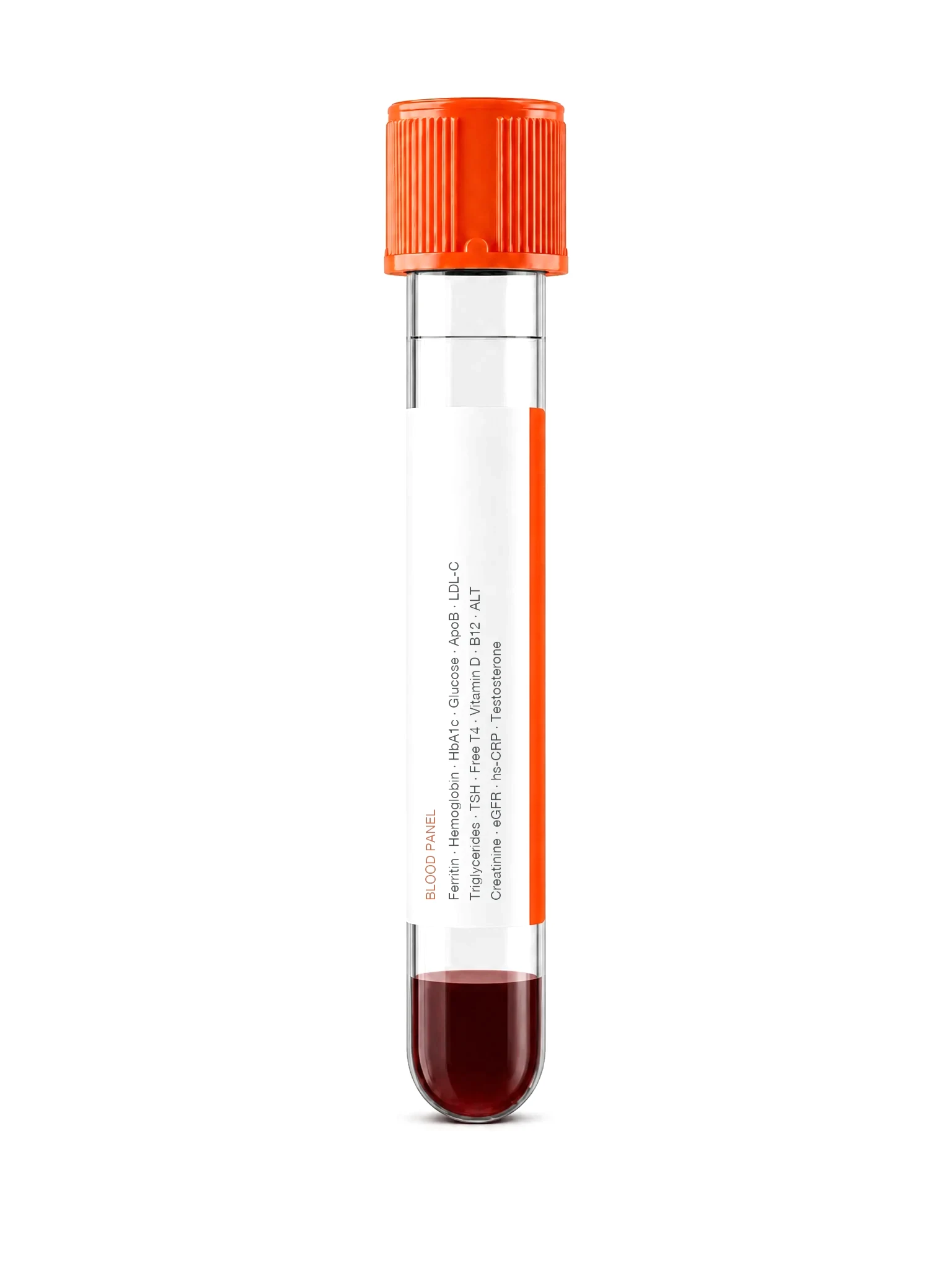
A blood test shows copper status and says nothing about what a peptide is doing. Serum copper and ceruloplasmin, the protein that carries most of the copper in blood, are the standard pair for copper status 5, and unexpectedly low ceruloplasmin is one of the clues doctors follow up for Wilson disease. Zinc belongs beside them, because zinc and copper compete for absorption, so months of high-dose zinc can push copper down 5; zinc deficiency covers the other side of that balance. No study has linked GHK-Cu use to a copper result. A high copper result more often reflects inflammation, pregnancy or oestrogen, and a low one often points to high zinc intake or poor absorption, so bring the number to your clinician rather than adjusting GHK-Cu or a supplement yourself.
Blood tests that show your copper status
Is GHK-Cu FDA-approved? Where it stands in 2026
GHK-Cu is not an FDA-approved drug in any form. As a cosmetic ingredient, copper tripeptide-1 needs no approval, and products may only claim to change how skin looks; a serum claiming to heal wounds or regrow hair would be making a drug claim. As an injectable, GHK-Cu is an unapproved drug, and its standing on FDA's compounding lists (see the GLOW section above) changed in 2026.
| When | What happened | What it means for you |
|---|---|---|
| 1973 | GHK isolated from human plasma 1 | GHK is natural; that says nothing about injecting it |
| Before April 2026 | Injectable GHK-Cu sat in FDA's compounding Category 2, its list of ingredients that may pose significant safety risks, over immune-reaction concerns 4 | Pharmacies were steered away from compounding it |
| By April 2026 | Injectable GHK-Cu moved to FDA's 'nominated but withdrawn' list after the nominator pulled its request 4 | A withdrawn request; FDA made no finding that it is safe |
| Before February 2027 | FDA's Pharmacy Compounding Advisory Committee is due to review GHK-Cu 6 | Committee votes are advisory; FDA would still need formal rulemaking 6 |
For someone buying GHK-Cu online today, none of these steps makes a 'research use only' vial legal for human use or checked for safety. At the July 2026 committee meeting, six other peptides, including BPC-157, TB-500 and KPV, were recommended for the compounding list, while GHK-Cu was held for a later review 6. SLU-PP-332 and dihexa are two more compounds sold online as research chemicals without any approval for human use.
How to use a copper peptide serum
- 1Apply to clean, dry skinOnce or twice a day, after cleansing and before moisturiser.
- 2Give strong vitamin C and acids their own slotLow-pH vitamin C (L-ascorbic acid) serums and exfoliating acids (AHAs such as glycolic acid, BHAs such as salicylic acid) can destabilise copper peptides in the same layer, so use them at the other end of the day.
- 3Alternate with a retinoid if skin stingsRetinoid one night and copper peptide the next is a common way to keep both in a routine without irritation. If the retinoid is a prescription such as tretinoin, or you are treating rosacea or eczema, ask the prescriber or a dermatologist how to fit a copper peptide in.
- 4Wear sunscreen in the morningGHK-Cu is not known to cause sun sensitivity, but any ingredient aimed at ageing skin loses ground without daily sun protection.
- 5Judge it at 8 to 12 weeksCollagen changes slowly, and the human skin studies ran for one to three months.
Hyaluronic acid and niacinamide can be used alongside copper peptides in the same routine, morning or night.
Routine partners for a copper peptide serum

Citations
- Pickart L, Margolina A. Regenerative and protective actions of the GHK-Cu peptide in the light of the new gene data. International Journal of Molecular Sciences, 2018;19(7):1987.
- Pickart L, Vasquez-Soltero JM, Margolina A. GHK peptide as a natural modulator of multiple cellular pathways in skin regeneration. BioMed Research International, 2015;2015:648108.
- Miller TR, et al. Effects of topical copper tripeptide complex on CO2 laser-resurfaced skin. Archives of Facial Plastic Surgery, 2006;8(4):252-259.
- US Food and Drug Administration. Certain bulk drug substances for use in compounding that may present significant safety risks (GHK-Cu and KPV entries; content current as of 22 April 2026).
- NIH Office of Dietary Supplements. Copper: fact sheet for health professionals.
- DLA Piper. FDA AdComm recommends adding six peptides to bulk list. 31 July 2026.
- Campbell JD, et al. A gene expression signature of emphysema-related lung destruction and its reversal by the tripeptide GHK. Genome Medicine, 2012;4(8):67.
- Pyo HK, et al. The effect of tripeptide-copper complex on human hair growth in vitro. Archives of Pharmacal Research, 2007;30(7):834-839.
- Hostynek JJ, Dreher F, Maibach HI. Human skin penetration of a copper tripeptide in vitro as a function of skin layer. Inflammation Research, 2011;60(1):79-86.
- Fu SC, et al. Tripeptide-copper complex GHK-Cu (II) transiently improved healing outcome in a rat model of ACL reconstruction. Journal of Orthopaedic Research, 2015;33(7):1024-1033.
- Mulder GD, et al. Enhanced healing of ulcers in patients with diabetes by topical treatment with glycyl-l-histidyl-l-lysine copper. Wound Repair and Regeneration, 1994;2(4):259-269.
- World Anti-Doping Agency. Prohibited List (S0, non-approved substances).
Educational context only, not medical advice or a diagnosis. Always discuss your results with a clinician.