SupplementsVitaminsVitamin C
Vitamin C
as ascorbic acid
Famous for fighting colds, better at building collagen, and strangely limited: past a point, your body simply sends it back out.
- Builds up
- Fills, then spills
- In your body
- Extra leaves fast
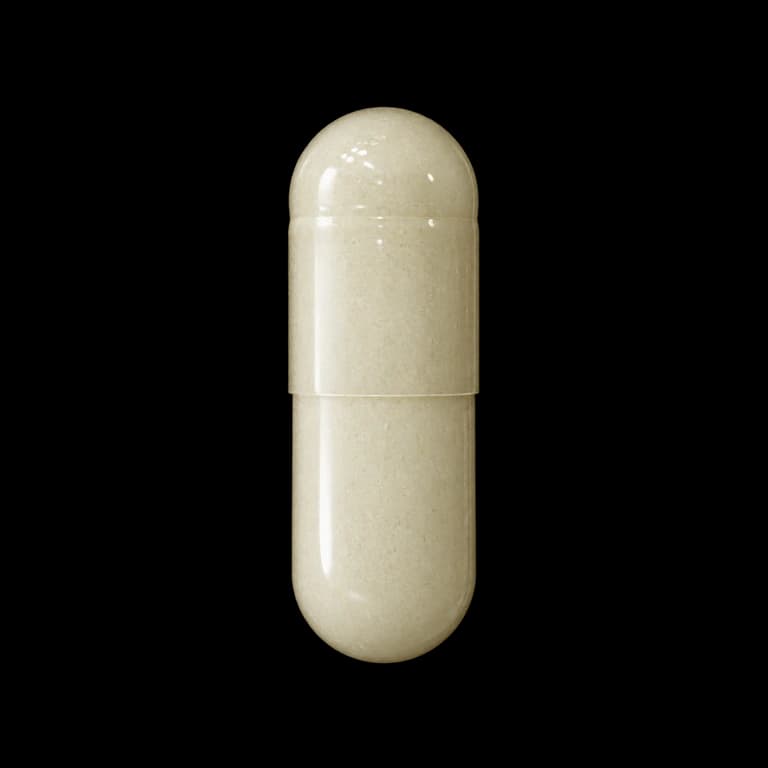
- Per 1 capsule
- 1000 mg
- 30-day supply
- $4.92One capsule a day, plus packing and delivery
What is vitamin c?
Humans can't make vitamin C, so it has to come from food: citrus, peppers, kiwi, strawberries, broccoli and tomatoes. Your body uses it to make collagen, the protein that holds together your skin, tendons and blood vessels. It also helps you absorb iron from plants and works as an antioxidant.
Go without it for long enough and you get scurvy, the old sailors' disease, with bleeding gums, bruising and slow-healing wounds. That takes very little to avoid, around 10 mg a day.
Adults are advised to get 75 to 90 mg a day. Ours holds 1,000 mg of ascorbic acid, far more than that. We'll explain below what your body does with the rest.
What it does
- CollagenNeeded to make collagen for skin, tendons, ligaments and blood vessels.
- Immune systemSupports the normal work of your immune cells.
- IronHelps you absorb iron from plant foods.
- AntioxidantHelps protect cells from everyday damage, including from smoke and pollution.
These statements have not been evaluated by the FDA. This product is not intended to diagnose, treat, cure or prevent any disease.
What people take it for
 Some evidenceColdsTaken regularly, it didn't reduce colds for most people but shortened them by about 8% in adults. People under heavy physical stress got about half as many.
 Early daysSkin and collagenYour skin depends on it and holds a lot of it. How much extra helps, beyond getting enough, isn't well studied.
 MixedIron absorptionIt clearly helps at a single meal. Over the long term, the effect looks much smaller.
How long it takes
Your immune cells fill up at about 100 mg a day and your blood at about 1,000 mg a day. It doesn't keep building past that. Instead, your kidneys clear the extra.
- HoursIt peaks in your blood, then your kidneys start to clear what you don't need
- Days to weeksYour levels settle, faster if you weren't low to begin with
- Up to 4 weeksHow long scurvy symptoms can take to improve in someone who was truly short
How long it stays in your body
There's no one clean number, because it depends on how full you are. When you're topped up, what you absorb from a large amount tends to leave in your urine, so it doesn't stack from one day to the next.
What's in a capsule
One capsule holds 1,000 mg. Adults need 75 to 90 mg a day, plus 35 mg if you smoke. The upper limit is 2,000 mg a day. In one careful study, blood levels were fully saturated at 1,000 mg a day, and amounts above 400 mg added no clear value.
Your body has a limit, and that's the interesting part
Most things you swallow get absorbed in proportion to how much you take. Vitamin C doesn't work that way. You absorb all of a 200 mg amount, but above about 500 mg at once your gut takes in a smaller share, and what does get in tends to leave through your kidneys.
That's why capsules have a ceiling. Researchers found 1,250 mg by mouth lifted blood levels to about 135 micromoles per liter, while the same amount into a vein reached around 885. You can't reach that kind of level by swallowing it.
The extra isn't always harmless, either. As amounts go up, your urine carries more oxalate, which is what most kidney stones are made of. Across several studies, men taking vitamin C supplements had a higher risk of stones. Women didn't, for reasons that aren't clear.
What it interacts with
- Thyroid medicine (levothyroxine)Vitamin C can increase how much you absorb, so your dose may need checking.
- ChemotherapyAntioxidants like vitamin C have been linked to worse results when taken during some chemotherapy. Talk to your oncologist first.
- Simvastatin with niacinIn a 3-year study, a mix of antioxidants that included vitamin C blunted part of what this cholesterol combination did. Ask your doctor if you take it.
- Finger-stick glucose metersIn lab tests, vitamin C made some meters read falsely high. It can also throw off urine glucose tests. If you have diabetes, ask which test to trust.
- Lab tests in generalTell lab staff you take it before any test.
- Iron supplementsIt helps you absorb iron from plants. Useful if you're low, and a concern if you store too much.
Goes well with
Side effects
- At higher amounts: upset stomach, diarrhea, nausea, heartburn and gas.
- Some people notice flushing, headache, tiredness or trouble sleeping.
- Rarely, kidney stones, with men more at risk.
Check first if
- Kidney stones or kidney disease: ask your doctor first.
- Hemochromatosis or other iron overload: vitamin C supplements aren't advised.
- G6PD deficiency: very large amounts have been linked to damage to red blood cells, mostly when given through a vein, so ask your doctor.
- Pregnancy: large amounts aren't recommended, because they can lead to a shortage in the baby after birth.
- Having cancer treatment: talk to your oncologist first.
The blood tests that go with it
- Vitamin CShows your level, which will drop if you stop.
- FerritinYour iron stores, which vitamin C can affect.
- Transferrin saturationUseful if you may store too much iron.
- Uric acidVitamin C lowered it in studies.
- Fasting glucoseA lab test is the safer check, since some home meters can read high on vitamin C.
- Urine crystalsOxalate crystals can show up here, and oxalate is what most kidney stones are made of.
Supplementation
Find Vitamin C in a ready-made protocol.
Start from one of these, or add it to your own. Everything comes in one pouch each morning.
Body & skin
A skin-focused routine.
30-day pack · 6 a morning · 180 pills
$75.42 / month
Choose this packBody & skin
For an active life.
30-day pack · 5 a morning · 150 pills
$75.40 / month
Choose this packDaily foundations
An antioxidant-focused stack.
30-day pack · 6 a morning · 180 pills
$86.22 / month
Choose this packLife stages
Your everyday starting point.
30-day pack · 6 a morning · 180 pills
$79.62 / month
Choose this packYour own
Build your own pouch.
Know what you want to take? Pick each ingredient, and we time it through your day.
Build your own
- cGMP-certifiedFacilities
- FDA-registeredFacilities
- Accredited labsIndependent testing
- Non-GMOIngredient options
- OrganicIngredient options
- VeganFormula options
These statements have not been evaluated by the Food and Drug Administration. These products are not intended to diagnose, treat, cure or prevent any disease.
Want it more precise? Get the app.
A page can only tell you about Vitamin C. The app tells you about you: whether it fits, when to take it, and whether it's working.
- Checked against your blood work and everything you already take
- On your daily timeline, around your sleep, training and meals
- Followed over time, so you can see what moved

 Vitamin COPEN 09:00
Vitamin C against your blood work, your sleep and what you already take.
 AI
You trained hard this week and you've had two colds this winter. Want to compare your vitamin C with your training load?
ASK ABOUT VITAMIN CFind the goal that's yours.
Your record, your routine and LifeFrom AI, pointed at the outcome that matters to you.


Questions
What is vitamin C good for?
Making collagen, supporting your immune cells, helping you absorb iron from plants and protecting cells as an antioxidant.
What are the benefits of vitamin C?
Getting enough is the big one. Taken regularly, it can shorten colds slightly, and small studies found a modest drop in blood pressure.
Does vitamin C stop colds?
Not for most people. Regular use shortened colds by about 8% in adults. Starting after a cold begins hasn't shown a consistent effect. People under heavy physical stress got far fewer colds.
How long does vitamin C take to work?
It's in your blood within hours. Effects on colds only came with regular use before the cold, and skin changes would take much longer.
What are the side effects of vitamin C?
Upset stomach, diarrhea, heartburn and gas are the common ones at higher amounts. Rarely, kidney stones.
Can I take vitamin C every day?
Yes, it's a daily nutrient and your body doesn't keep much extra. Stay under the 2,000 mg upper limit, including food and other products.
Does vitamin C cause kidney stones?
It may in men. Studies found a higher risk with supplements in men, and not in women. If you've had stones, ask your doctor first.
Does vitamin C help you absorb iron?
Yes, especially at a single meal with plant foods. Over the long term the effect looks smaller.
Who should not take vitamin C?
Check first if you've had kidney stones, have iron overload, G6PD deficiency or diabetes with a home meter, are pregnant, or are having cancer treatment.
Sources
- MedlinePlus. Vitamin C.
- MedlinePlus. Ascorbic acid (vitamin C).
- Levine M et al. Vitamin C pharmacokinetics in healthy volunteers: evidence for a recommended dietary allowance. Proc Natl Acad Sci USA, 1996.
- Padayatty SJ et al. Vitamin C pharmacokinetics: implications for oral and intravenous use. Ann Intern Med, 2004.
- Hemilä H, Chalker E. Vitamin C for preventing and treating the common cold. Cochrane Database Syst Rev, 2013.
- Carr AC, Maggini S. Vitamin C and immune function. Nutrients, 2017.
- Pullar JM et al. The roles of vitamin C in skin health. Nutrients, 2017.
- Cook JD, Reddy MB. Effect of ascorbic acid intake on nonheme-iron absorption from a complete diet. Am J Clin Nutr, 2001.
- Jiang et al. Ascorbic acid supplements and kidney stones incidence among men and women. Urol J, 2019.
- Juraschek SP et al. Effects of vitamin C supplementation on blood pressure. Am J Clin Nutr, 2012.
- Liu et al. Association between oral vitamin C supplementation and serum uric acid. Complement Ther Med, 2021.
- Grzych G et al. Antioxidants other than vitamin C may be detected by glucose meters. Clin Biochem, 2021.
- Skelin M et al. Factors affecting gastrointestinal absorption of levothyroxine: a review. Clin Ther, 2017.
- Ambrosone CB et al. Dietary supplement use during chemotherapy and survival outcomes of patients with breast cancer. J Clin Oncol, 2020.
- Clinical benefits and risks of high-dose intravenous vitamin C: a systematic review. J Med Life, 2026.
- Borch-Iohnsen B. Primary hemochromatosis and dietary iron. Tidsskr Nor Laegeforen, 1997.
- Brown BG et al. Simvastatin and niacin, antioxidant vitamins, or the combination for the prevention of coronary disease. N Engl J Med, 2001.
Written by LifeFrom from these sources, and not yet reviewed by a clinician. Talk to your doctor before starting a supplement.