SupplementsMineralsIron
Iron
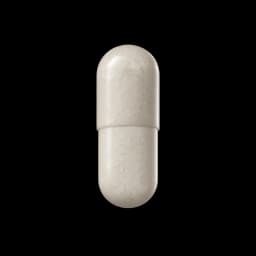
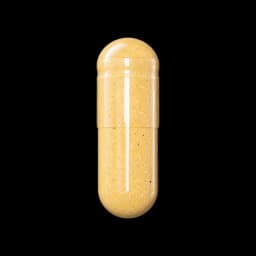
as ferrous bisglycinate (Ferrochel)
Your body recycles almost all of its iron and has no good way to get rid of the rest, which makes this one worth testing before you take it.
- Builds up
- Several months
- In your body
- Mostly recycled
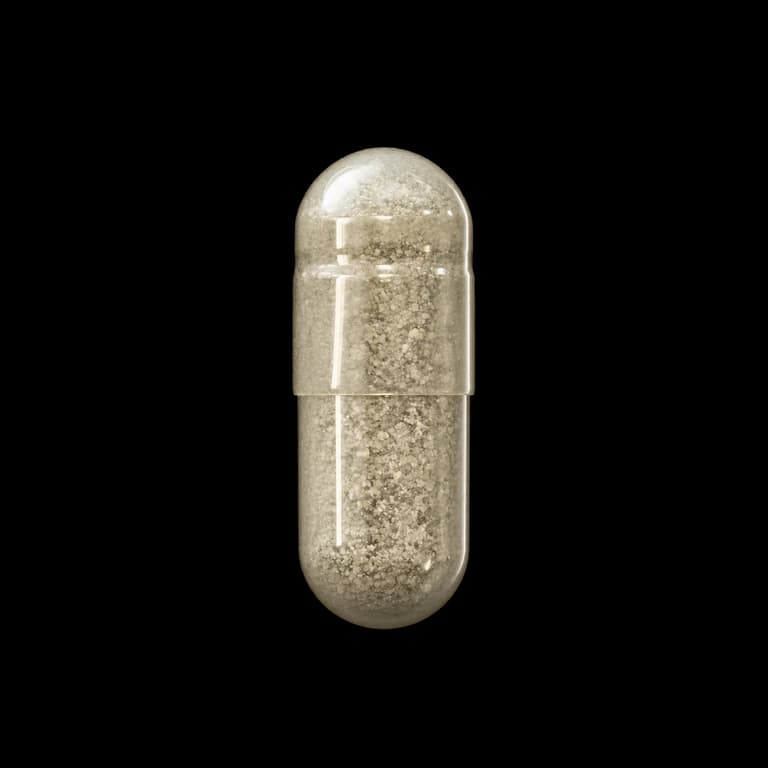
- Per 1 capsule
- 18 mg
- 30-day supply
- $4.80One capsule a day, plus packing and delivery
What is iron?
Iron is the mineral that lets your blood carry oxygen. About two-thirds of it sits in hemoglobin, the protein inside red blood cells. Most of the rest is kept in reserve, mainly in your liver, spleen and bone marrow, in a storage protein called ferritin.
Ours is ferrous bisglycinate, sold as Ferrochel, iron bound to the amino acid glycine. People like it because it tends to be gentler on the stomach than the classic iron tablet, ferrous sulfate.
Those most likely to run low include women with periods, pregnant women, long-distance runners and frequent blood donors.
What it does
- OxygenHelps your red blood cells carry oxygen around your body.
- MusclesPart of myoglobin, the protein that holds oxygen in your muscles.
- EnergySupports normal energy, and helps reduce tiredness when you're low.
- PregnancySupports the extra blood your body makes during pregnancy.
These statements have not been evaluated by the FDA. This product is not intended to diagnose, treat, cure or prevent any disease.
What people take it for
 Good evidenceLow iron levelsThis is the clear reason to take it. Iron tablets reliably raise low hemoglobin and ferritin.
 Some evidenceTiredness with low ferritinIn women with low ferritin but no anemia, tiredness scores fell 48% after 12 weeks on 80 mg of iron a day, against 29% without it. That's much more than one capsule holds.
 Early daysEndurance trainingLow iron can hold back endurance, and runners tend to run low. It's most likely to help if your blood test says you're short.
How long it takes
Hemoglobin answers first, often within about 4 weeks. Filling your iron stores takes far longer, and guidelines suggest around 3 months more once your hemoglobin is back to normal.
- HoursAbsorbed in your upper gut, and your iron gatekeeper hormone rises for about a day
- About 4 weeksTime for a blood test to see your hemoglobin respond
- 3 months or moreYour stores slowly fill, after hemoglobin is back to normal
How long it stays in your body
There's no useful half-life. Your body reuses nearly all its iron and loses only about 1 mg a day, so what you store can last a long time, for better or worse.
What's in a capsule
One capsule holds 18 mg, which is 100% of the daily value. That matches what women aged 19 to 50 need each day, and it's more than double the 8 mg men and older women need. The adult upper limit is 45 mg a day from all sources. Studies on low iron often used 60 to 80 mg a day, far more than this, so ask your doctor if yours is low.
A hormone guards the gate
Your body has no real exit for iron. It loses only about 1 mg a day through skin and gut, so it controls how much comes in instead. A liver hormone called hepcidin works as the gatekeeper. When you're low, the gate opens and you absorb more. When you're full, it closes.
Here's the interesting part. A capsule of iron makes hepcidin rise for about 24 hours, which means less gets through from the next one. What that means for how often to take it, and what to take it with, is in the full guide.
Acid-reducing medicines also reduce how much you absorb, since iron needs stomach acid.
What it interacts with
- Thyroid medicine (levothyroxine)Iron binds to it in your gut and can undo its work. Keep them at least 4 hours apart.
- Some antibiotics (doxycycline, minocycline, tetracycline)Keep them at least 2 hours apart. For tetracycline itself, take iron 4 hours before or 2 hours after.
- Some antibiotics (ciprofloxacin)Take iron at least 6 hours before or 2 hours after the antibiotic.
- HIV medicine (dolutegravir)Take iron 6 hours before or 2 hours after it, or take them together with a meal.
- Parkinson's medicine (levodopa)Iron can reduce how much you absorb. Ask your doctor how to time them.
- Acid-reducing medicines (PPIs and H2 blockers)Taken for 2 years or more, they're linked to a higher risk of low iron.
- Calcium, coffee and teaAll of them reduce how much iron you absorb, so it helps to have them at another time.
- Iron blood testsTell whoever orders them that you take iron, and ask whether to fast. Serum iron moves around a lot and isn't used alone to diagnose low iron. Birth control pills and estrogen can also change your levels.
Goes well with
Side effects
- Constipation, stomach pain, nausea or diarrhea. These are the classic complaints, and bisglycinate caused fewer of them than other iron in studies of pregnant women.
- Dark or black stools. Iron pills can do this harmlessly, but black, tarry stools can also mean bleeding in your gut, so tell your doctor.
- Too much over time builds up in your organs, since your body can't easily clear it.
Check first if
- Keep it away from children. This is an adults-only product, and iron overdose is a leading cause of fatal poisoning in children under 6. If a child swallows some, call Poison Control or a doctor straight away.
- Iron overload (hemochromatosis): don't take it unless your doctor says so. This inherited condition already makes you absorb too much.
- Unexplained low iron, especially in men or after menopause: see your doctor. Guidelines say the cause should be looked for, because it can be bleeding in the gut, including from cancer. Don't just top up and move on.
- Ulcers, gut bleeding or hemolytic anemia: tell your doctor first.
- Pregnancy or breastfeeding: your needs change, so check what's right for you.
The blood tests that go with it
- FerritinYour iron stores, and the best first test. Inflammation can make it read high.
- HemoglobinShows whether low iron has reached your red blood cells yet.
- Transferrin saturationHow much iron is on the move in your blood. Also useful for spotting overload.
- TIBCRises when your stores are running out.
- MCVRed blood cells shrink when iron runs short.
- HepcidinThe gatekeeper hormone that controls how much you absorb.
- Serum ironThe iron in your blood right now. It swings through the day, so it's read with the others.
- hs-CRPInflammation can push ferritin up, and this helps show when that is happening.
- Soluble transferrin receptorTends to rise when your cells are short of iron, and it was measured in the tiredness study.
Work it out

Supplementation
Find Iron in a ready-made protocol.
Start from one of these, or add it to your own. Everything comes in one pouch each morning.
Daily foundations
For a plant-based routine.
30-day pack · 7 a morning · 210 pills
$86.10 / month
Choose this packYour own
Build your own pouch.
Know what you want to take? Pick each ingredient, and we time it through your day.
Build your own
- cGMP-certifiedFacilities
- FDA-registeredFacilities
- Accredited labsIndependent testing
- Non-GMOIngredient options
- OrganicIngredient options
- VeganFormula options
These statements have not been evaluated by the Food and Drug Administration. These products are not intended to diagnose, treat, cure or prevent any disease.
Want it more precise? Get the app.
A page can only tell you about Iron. The app tells you about you: whether it fits, when to take it, and whether it's working.
- Checked against your blood work and everything you already take
- On your daily timeline, around your sleep, training and meals
- Followed over time, so you can see what moved

 IronOPEN 09:00
Iron against your blood work, your sleep and what you already take.
 AI
Your ferritin was 18 last spring, and you've felt tired on your long runs. Worth a new test before you add iron?
ASK ABOUT IRONFind the goal that's yours.
Your record, your routine and LifeFrom AI, pointed at the outcome that matters to you.



Questions
What is iron good for?
It helps your blood carry oxygen and supports normal energy. It's mainly useful if you're low, so a ferritin test is a smart first step.
How long does iron take to work?
Hemoglobin often responds within about 4 weeks. Refilling your stores takes months. Tiredness improved at 12 weeks in one study of women with low ferritin.
Iron side effects: what are they?
Constipation, nausea, stomach pain and diarrhea are the common ones. Bisglycinate tends to cause fewer of them than ferrous sulfate.
What is iron's half-life?
It doesn't really have a useful one. Your body recycles nearly all its iron and loses only about 1 mg a day.
Should I take iron if I'm just tired?
Test first. Tiredness has lots of causes, and iron won't help if you're not low. Your body also can't easily get rid of the extra.
What should I not take with iron?
Keep it apart from thyroid medicine and some antibiotics. Calcium, coffee and tea also reduce how much you absorb.
Who should not take iron?
Anyone with iron overload should not take it unless a doctor says so. If your low iron has no clear cause, get that checked first. Also check first if you have ulcers, gut bleeding or hemolytic anemia, or if you're pregnant or breastfeeding.
Why are my stools black on iron?
Iron pills commonly darken stools, and that's harmless. Black, tarry stools can also be a sign of bleeding, so mention it to your doctor rather than assuming it's the iron.
Sources
- MedlinePlus. Iron in diet.
- MedlinePlus. Iron supplements: drug information.
- MedlinePlus. Levothyroxine: drug information.
- MedlinePlus. Ciprofloxacin: drug information.
- Institute of Medicine. Dietary Reference Intakes for Vitamin A, Vitamin K, Arsenic, Boron, Chromium, Copper, Iodine, Iron, Manganese, Molybdenum, Nickel, Silicon, Vanadium, and Zinc. National Academies Press, 2001.
- Snook J et al. British Society of Gastroenterology guidelines for the management of iron deficiency anaemia in adults. Gut, 2021.
- Stoffel NU et al. Iron absorption from oral iron supplements given on consecutive versus alternate days and as single morning doses versus twice-daily split dosing. Lancet Haematol, 2017.
- Stoffel NU et al. Iron absorption from supplements is greater with alternate day than with consecutive day dosing in iron-deficient anemic women. Haematologica, 2020.
- Vaucher P et al. Effect of iron supplementation on fatigue in nonanemic menstruating women with low ferritin. CMAJ, 2012.
- Fischer JAJ et al. The effects of oral ferrous bisglycinate supplementation on hemoglobin and ferritin concentrations in adults and children. Nutr Rev, 2023.
- Tolkien Z et al. Ferrous sulfate supplementation causes significant gastrointestinal side-effects in adults. PLoS One, 2015.
- Campbell NRC et al. Ferrous sulfate reduces thyroxine efficacy in patients with hypothyroidism. Ann Intern Med, 1992.
- Campbell RRA et al. The effect of ferrous sulfate and pH on L-dopa absorption. Can J Physiol Pharmacol, 1990.
- Lam JR et al. Proton pump inhibitor and histamine-2 receptor antagonist use and iron deficiency. Gastroenterology, 2017.
- Brissot P et al. Haemochromatosis. Nat Rev Dis Primers, 2018.
- Nemeth E, Ganz T. Hepcidin-ferroportin interaction controls systemic iron homeostasis. Int J Mol Sci, 2021.
- MedlinePlus. Black or tarry stools.
- MedlinePlus. Iron tests.
- MedlinePlus. Tetracycline: drug information.
- MedlinePlus. Dolutegravir: drug information.
- Pasricha SR et al. Diagnosis and management of iron deficiency anaemia: a clinical update. Med J Aust, 2010.
Written by LifeFrom from these sources, and not yet reviewed by a clinician. Talk to your doctor before starting a supplement.