SupplementsVitaminsD Complex
D Complex
vitamins D3, K2, A and E
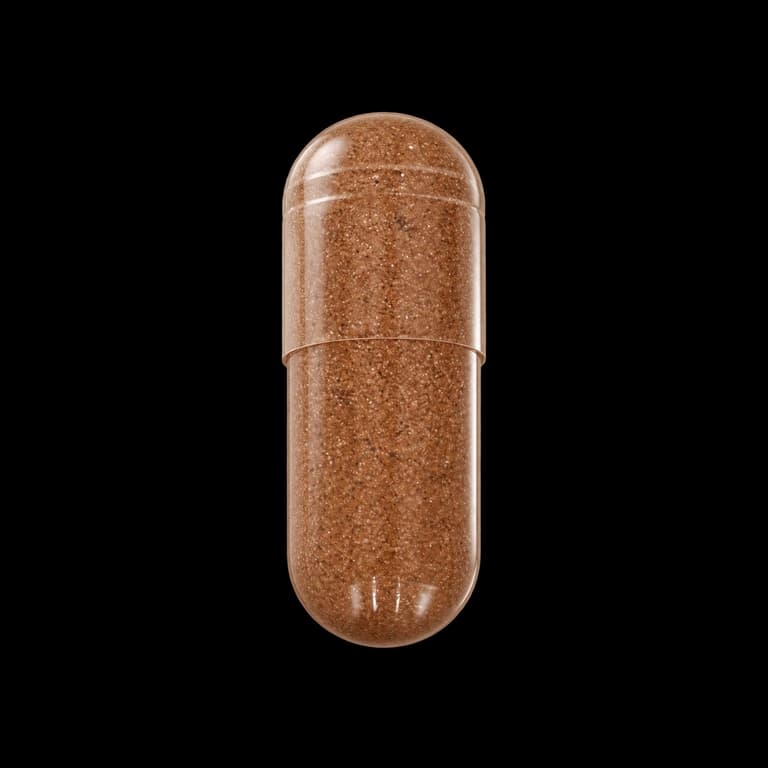
Four fat-soluble vitamins in one capsule. They build up slowly and stay a long time, so this is one worth checking with a blood test.

- Builds up
- About 3 months
- In your body
- About 15 days
- Per 1 capsule
- 5 ingredients
- 30-day supply
- $11.40One capsule a day, plus packing and delivery
What is d complex?
This capsule brings together the fat-soluble vitamins: D3, K2, A and E. Fat-soluble means they travel with fat and get stored in your body, unlike vitamins that leave quickly in your urine. That's useful, and it's also why more isn't automatically better.
Vitamin D helps you absorb calcium for your bones. Your skin makes it in sunlight, and you get a little from fatty fish and fortified foods. Vitamin K helps build proteins that clot your blood and work in bone. Vitamin A helps your eyes and skin, and vitamin E is an antioxidant.
The D3 is high in this one: 125 mcg, or 5,000 IU. That's above the 100 mcg (4,000 IU) a day set as the upper limit for adults, and we think you should know that up front. The capsule is also listed as non-vegetarian.
What it does
- BonesVitamin D helps you absorb calcium, and K2 supports proteins that work in bone.
- Blood clottingVitamin K helps your liver make the proteins that clot your blood.
- Eyes and skinVitamin A supports normal vision, especially in low light, and normal skin.
- AntioxidantVitamin E helps protect cells from everyday damage.
These statements have not been evaluated by the FDA. This product is not intended to diagnose, treat, cure or prevent any disease.
What people take it for
 Good evidenceLow vitamin DVitamin D raises a low blood level reliably. This is the clearest reason, especially with little sun.
 MixedBonesVitamin D matters for bones, but extra didn't lower fractures in generally healthy adults. Higher amounts over 3 years even went with slightly lower bone density at the wrist.
 Early daysBones after menopauseIn a 3-year study, 180 mcg a day of K2 (MK-7) slowed bone loss at the spine and the top of the thigh bone in women past menopause.
How long it takes
Vitamin D builds slowly. In one study of 4,000 IU a day, blood levels went from 81 to 115 in 3 months, then to 132 by 3 years (in nmol/L). Vitamin A piles up in your liver over time.
- Hours to daysK2 as MK-7 peaks in your blood at about 4 to 6 hours and lingers for days
- About 3 monthsVitamin D has done most of its climbing, so a blood test tells you more
- YearsHow long a slow effect on bones takes, and how long vitamin A can stay stored
How long it stays in your body
The form of vitamin D your blood test measures has a half-life of about 15 days, and vitamin D in your fat lasts about 2 months. MK-7 also stays around a long time, while vitamin A can stay stored in your liver.
What's in a capsule
One capsule holds 125 mcg (5,000 IU) of vitamin D3, 600 mcg RAE of vitamin A, 33.5 mg of vitamin E, and K2 as 1,000 mcg of MK-4 and 100 mcg of MK-7. The D3 is above the adult daily upper limit of 100 mcg, and the big vitamin D studies used 50 mcg (2,000 IU) a day. The K2 bone study used 180 mcg of MK-7, more than the 100 mcg here.
Why this one calls for a blood test
Most vitamins can't overfill. These can. Too much vitamin D raises the calcium in your blood, which can bring on nausea, weakness, confusion and kidney stones. Experts say blood levels above 125 nmol/L (50 ng/mL) should raise concern, and in one study people on 4,000 IU a day averaged 132 after 3 years.
The vitamin K part is interesting. There are two forms here. MK-7 stays in your blood for days and climbs to much higher levels with daily use. MK-4 is very different: in one study of women taking up to 420 mcg with breakfast, it didn't show up in the blood at all. Our capsule holds both, with more MK-4 than that study used.
Where the research is honest, it's humbling. In the huge VITAL study of generally healthy adults, 2,000 IU a day didn't lower cancer, heart problems or fractures. And in a 3-year study, people on 4,000 IU lost a little more bone density at the wrist than those on 400 IU. So checking your level beats guessing.
What it interacts with
- WarfarinVitamin K works directly against these. As little as 50 mcg a day of MK-7 may affect them, and this capsule holds 100 mcg. Talk to your doctor before taking it.
- Blood thinners and vitamin EVitamin E may add to bleeding risk. In people on warfarin, higher vitamin E levels went with more bleeding.
- Thiazide water pillsTaken along with vitamin D and calcium, these blood pressure medicines can push your blood calcium too high, more so if you're older or have kidney or parathyroid problems.
- DigoxinHigh blood calcium makes this heart medicine more likely to cause harm, and too much vitamin D raises calcium. Ask before starting.
- Isotretinoin and similar vitamin A medicinesVitamin A supplements can interact with these acne and skin medicines, so ask first.
- OrlistatThis weight-loss medicine blocks fat, so it lowers how much of these vitamins you absorb.
Goes well with
Side effects
- Too much vitamin D over time can raise blood calcium, causing nausea, vomiting, constipation, weakness and confusion.
- Too much vitamin A over time can cause serious health problems. Food and other supplements count too.
- High-dose vitamin E may raise the risk of bleeding in the brain. In one big study, men on 400 IU a day also had more prostate cancer. This capsule holds much less than that.
Check first if
- Pregnancy or trying to conceive: large amounts of vitamin A can cause birth defects, so talk to your doctor before taking this.
- Kidney disease, kidney stones, or high calcium: ask your doctor first.
- Sarcoidosis or a similar granuloma condition: your body can overproduce active vitamin D, which can raise your calcium. Ask first.
- Liver disease: vitamin A is stored in your liver, so ask your doctor first.
- Blood thinners: talk to your doctor first, because of the vitamin K and E.
- Cancer treatment: antioxidants such as vitamins A and E have been linked to worse outcomes when taken during chemotherapy, so tell your oncologist.
- Other products with vitamin D or A: your multivitamin and fortified foods add to the total, and this capsule is already past the D3 upper limit.
- Anyone taking this long term: check your vitamin D and calcium with a blood test.
The blood tests that go with it
- Vitamin D (25-OH)The main test. Over 125 nmol/L (50 ng/mL) raises concern.
- CalciumRises if you get too much vitamin D.
- PTHThe calcium hormone, which falls as vitamin D rises.
- INRHow long your blood takes to clot, and key if you take warfarin.
- Vitamin AStored in your liver, so it can build up over time.
- OsteocalcinA bone protein that depends on vitamin K.
Work it out
Supplementation
Find D Complex in a ready-made protocol.
Start from one of these, or add it to your own. Everything comes in one pouch each morning.
Body & skin
Put heart health in focus.
30-day pack · 7 a morning · 210 pills
$84.54 / month
Choose this packBody & skin
A bone-focused foundation.
30-day pack · 6 a morning · 180 pills
$84.88 / month
Choose this packLife stages
Your everyday starting point.
30-day pack · 6 a morning · 180 pills
$79.62 / month
Choose this packLife stages
A broader daily foundation.
30-day pack · 7 a morning · 210 pills
$92.29 / month
Choose this packDaily foundations
For a plant-based routine.
30-day pack · 7 a morning · 210 pills
$86.10 / month
Choose this packYour own
Build your own pouch.
Know what you want to take? Pick each ingredient, and we time it through your day.
Build your own
















- cGMP-certifiedFacilities
- FDA-registeredFacilities
- Accredited labsIndependent testing
- Non-GMOIngredient options
- OrganicIngredient options
- VeganFormula options
These statements have not been evaluated by the Food and Drug Administration. These products are not intended to diagnose, treat, cure or prevent any disease.
Want it more precise? Get the app.
A page can only tell you about D Complex. The app tells you about you: whether it fits, when to take it, and whether it's working.
- Checked against your blood work and everything you already take
- On your daily timeline, around your sleep, training and meals
- Followed over time, so you can see what moved

 D ComplexOPEN 09:00
D Complex against your blood work, your sleep and what you already take.
 AI
Your vitamin D went from 52 to 118 since you started. That's plenty, so let's talk to your doctor about what to do next.
ASK ABOUT D COMPLEXFind the goal that's yours.
Your record, your routine and LifeFrom AI, pointed at the outcome that matters to you.


Questions
What is vitamin D3 good for?
It helps you absorb calcium and keeps your bones healthy. It's also important if your level is low, which is common with little sun.
What are the benefits of vitamin D3?
Raising a low level and supporting bones are the main ones. In people who weren't low, big studies didn't find fewer fractures, cancers or heart problems.
How long does vitamin D3 take to work?
Your blood level climbs over weeks and does most of its rising by about 3 months. That's a good time to retest.
What are the side effects of vitamin D3?
At high amounts over time, it can raise your calcium. That can cause nausea, weakness, confusion and kidney stones. Vitamin A and E in this capsule also have limits.
Is 5,000 IU of vitamin D too much?
It's above the 4,000 IU a day upper limit for adults. Toxicity usually involves more than this, but long-term safety is less clear, so test your blood level.
Why take vitamin D with K2?
Both are involved with calcium and bones. K2 helps activate proteins that work in bone. The combination is popular, but the proof that it adds up to fewer fractures is thin.
Can I take this with blood thinners?
Talk to your doctor first. Vitamin K can work against warfarin, and vitamin E may add to bleeding risk.
Does vitamin D interact with medicines?
Yes. Thiazide water pills and digoxin matter because of blood calcium, orlistat lowers absorption, and other products add to the total. Vitamin K and A have their own list in the section above.
Who should not take this?
Check first if you're pregnant or trying to conceive, take blood thinners, digoxin, water pills or isotretinoin, or have kidney disease, kidney stones, high calcium, sarcoidosis or liver disease.
Can I take it every day?
That's how vitamin D is usually taken, but because this one is above the upper limit and stays in your body, check in with a blood test rather than taking it on autopilot.
Sources
- MedlinePlus. Vitamin D.
- MedlinePlus. Vitamin K.
- MedlinePlus. Vitamin A.
- MedlinePlus. Vitamin E.
- MedlinePlus. Isotretinoin.
- Ross AC et al. The 2011 report on dietary reference intakes for calcium and vitamin D from the Institute of Medicine. J Clin Endocrinol Metab, 2011.
- Jones G. Pharmacokinetics of vitamin D toxicity. Am J Clin Nutr, 2008.
- Burt LA et al. Effect of high-dose vitamin D supplementation on volumetric bone density and bone strength. JAMA, 2019.
- Manson JE et al. Vitamin D supplements and prevention of cancer and cardiovascular disease. N Engl J Med, 2019.
- LeBoff MS et al. Supplemental vitamin D and incident fractures in midlife and older adults. N Engl J Med, 2022.
- Schurgers LJ et al. Vitamin K-containing dietary supplements: comparison of synthetic vitamin K1 and natto-derived menaquinone-7. Blood, 2007.
- Sato T et al. Comparison of menaquinone-4 and menaquinone-7 bioavailability in healthy women. Nutr J, 2012.
- Knapen MHJ et al. Three-year low-dose menaquinone-7 supplementation helps decrease bone loss in healthy postmenopausal women. Osteoporos Int, 2013.
- Lerner UH. Vitamin A: discovery, metabolism, receptor signaling and effects on bone mass and fracture susceptibility. Front Endocrinol, 2024.
- Pastori D et al. Vitamin E serum levels and bleeding risk in patients receiving oral anticoagulant therapy. J Am Heart Assoc, 2013.
- Klein EA et al. Vitamin E and the risk of prostate cancer (SELECT). JAMA, 2011.
- McDuffie JR et al. Effects of orlistat on fat-soluble vitamins in obese adolescents. Pharmacotherapy, 2002.
- Ambrosone CB et al. Dietary supplement use during chemotherapy and survival outcomes of patients with breast cancer. J Clin Oncol, 2020.
- Robien K et al. Drug-vitamin D interactions: a systematic review of the literature. Nutr Clin Pract, 2013.
- Nadeem S. Vitamin D supplementation in granulomatous disease. Cureus, 2026.
- DailyMed, US National Library of Medicine. Digoxin tablet prescribing information.
Written by LifeFrom from these sources, and not yet reviewed by a clinician. Talk to your doctor before starting a supplement.