- 01The fall depends on where you start
Against a typical American diet at high sodium, DASH plus low sodium lowered systolic pressure by about 5 mmHg in people starting below 130 and about 21 mmHg in people starting at 150 or higher, so a small fall at normal pressure matches the trials 3.
DASH stands for Dietary Approaches to Stop Hypertension, an eating plan funded by the US National Heart, Lung, and Blood Institute (NHLBI) and tested in 1990s feeding trials where researchers supplied every meal, so the diet itself was the only thing that changed. It needs no special foods. It is a set of daily servings that tilts the plate toward vegetables, fruit, whole grains, beans, nuts and low-fat dairy, and away from fatty meat, full-fat dairy, sweets and salt 4. In the 1997 DASH trial it lowered blood pressure by 11.4/5.5 mmHg in people with hypertension within two weeks 1. How far it moves yours depends mostly on how high your pressure starts, and cutting sodium adds to the fall 3.
Blood pressure is written as two numbers, such as 140/90. The top number (systolic) is the pressure while the heart beats, and the bottom number (diastolic) is the pressure between beats, both measured in mmHg (millimeters of mercury). So a fall of 11.4/5.5 mmHg means the top number dropped by about 11 and the bottom number by about 5 or 6.
DASH diet servings per day
NHLBI writes DASH as servings per food group, scaled to how many calories you need. The 2,000-calorie column is the one most menus use. At 1,600 calories the plan drops to 6 grain servings and 3 to 4 oz of meat or less a day; at 2,600 calories grains rise to 10 to 11 servings 4. Whole grains should make up most of the grain servings 4.
| Food group | Servings at 2,000 calories | One serving looks like | What the group brings |
|---|---|---|---|
| Grains, mostly whole | 6 to 8 a day | 1 slice bread; 1 oz dry cereal; 1/2 cup cooked rice, pasta or oatmeal | Energy and fiber 4 |
| Vegetables | 4 to 5 a day | 1 cup raw leafy greens; 1/2 cup cut-up raw or cooked vegetables | Potassium, magnesium, fiber 4 |
| Fruit | 4 to 5 a day | 1 medium fruit; 1/2 cup fresh, frozen or canned; 1/4 cup dried | Potassium, magnesium, fiber 4 |
| Fat-free or low-fat dairy | 2 to 3 a day | 1 cup milk or yogurt; 1.5 oz cheese | Calcium and protein 4 |
| Lean meat, poultry and fish | 6 or fewer a day | 1 oz cooked meat, poultry or fish; 1 egg | Protein and magnesium 4 |
| Nuts, seeds and legumes | 4 to 5 a week | 1/3 cup nuts; 2 Tbsp peanut butter; 1/2 cup cooked beans or lentils | Magnesium, protein, fiber 4 |
| Fats and oils | 2 to 3 a day | 1 tsp vegetable oil or soft margarine; 1 Tbsp mayonnaise; 2 Tbsp salad dressing | The DASH trial got 27% of calories from fat 4 |
| Sweets and added sugars | 5 or fewer a week | 1 Tbsp sugar, jelly or jam; 1/2 cup sorbet; 1 cup lemonade | Kept low in fat 4 |
| Sodium | 2,300 mg a day, or 1,500 mg | Read the sodium line on the Nutrition Facts label | The lower cap lowers pressure further 2 |
DASH diet food list: eat more, eat less
The servings translate into a shopping list. NHLBI's own examples lean on ordinary grocery-store food: oatmeal, brown rice, whole-wheat bread, potatoes, spinach, tomatoes, bananas, oranges, strawberries, lentils, kidney beans, almonds and peanut butter 4. The eat-less column holds the foods highest in sodium and saturated fat. More than 70% of the sodium Americans eat comes from packaged and prepared food, not from the salt shaker, which is why canned soup, sauces and restaurant meals sit on that side 13.
| Eat more | Eat less |
|---|---|
| Leafy greens, broccoli, carrots, sweet potatoes, tomatoes | Bacon, sausage, ham, deli meat and other processed meat |
| Bananas, oranges, berries, melon, dried apricots | Fatty cuts of red meat and poultry with the skin on |
| Oats, brown rice, whole-wheat bread and pasta, unsalted popcorn | Full-fat cheese, butter, cream, and coconut or palm oil |
| Beans, lentils, split peas, unsalted nuts and seeds | Sugary drinks, candy and pastries |
| Fat-free or low-fat milk and yogurt, fish, skinless chicken | Canned soup, jarred sauces, salted snacks, frozen meals and restaurant food |
DASH diet meal plan: a sample day
Here is one day built from NHLBI's 2,000-calorie servings, with every food counted against the targets 4. Nothing in it is unusual; the work is in the count of fruit and vegetables and in choosing lower-sodium versions of bread and sauces.
| Meal | On the plate | Counts as |
|---|---|---|
| Breakfast | 1 cup cooked oatmeal, 1 cup low-fat milk, 1 banana | 2 grains, 1 dairy, 1 fruit |
| Lunch | 2 cups spinach, 1/2 cup cherry tomatoes and 1/2 cup chickpeas with 2 Tbsp olive-oil dressing; 2 slices whole-wheat bread; 1 apple | 3 vegetables, 1 legume, 1 fat, 2 grains, 1 fruit |
| Snack | 1 cup plain low-fat yogurt with 1/2 cup berries | 1 dairy, 1 fruit |
| Dinner | 3 oz baked salmon, 1 cup brown rice, 1/2 cup broccoli and 1/2 cup carrots cooked in 1 tsp olive oil | 3 oz fish, 2 grains, 2 vegetables, 1 fat |
| Evening | 1 orange | 1 fruit |
| Day total | 6 grains, 5 vegetables, 4 fruit, 2 dairy, 3 oz fish, 2 fats, 1 legume serving toward the weekly 4 to 5, no sweets |
- 1Add one serving at a timeAdd one fruit or vegetable serving a day each week until you reach 4 to 5 of each; a jump from two servings to ten overnight is hard on the gut and hard to keep.
- 2Read the sodium lineBread, cheese, cured meat, soup and sauces vary widely in sodium between brands, so the label tells you more than the food type.
- 3Season without saltHerbs, garlic, citrus, vinegar and pepper carry flavor in place of salt in home cooking.
- 4Swap dairy if lactose is a problemNHLBI suggests lactase pills or lactose-free milk for people with lactose intolerance 4.
How much does the DASH diet lower blood pressure?
The 1997 DASH trial fed 459 adults for 8 weeks while holding their sodium intake and body weight steady. Compared with a typical American diet, the DASH diet lowered blood pressure by 5.5/3.0 mmHg, and a diet that only added fruit and vegetables lowered it by 2.8/1.1 mmHg, about half as much 1. In the 133 people who had hypertension, DASH lowered blood pressure by 11.4/5.5 mmHg; in the 326 without it, by 3.5/2.1 mmHg 1. The fall appeared within the first two weeks and held for the rest of the trial 1.
A diet rich in fruits, vegetables, and low-fat dairy foods and with reduced saturated and total fat can substantially lower blood pressure.Appel and colleagues, DASH Collaborative Research Group, New England Journal of Medicine, 1997 1
| Study | Who | What was compared | Fall in blood pressure (mmHg) |
|---|---|---|---|
| DASH trial, 1997 | 459 adults, systolic below 160 and diastolic 80 to 95 | DASH vs typical American diet, same sodium, 8 weeks | 5.5/3.0 overall; 11.4/5.5 with hypertension; 3.5/2.1 without 1 |
| DASH trial, 1997 | Same adults | Fruit and vegetables added, nothing else | 2.8/1.1 1 |
| DASH-Sodium, 2001 | 412 adults | DASH at low sodium vs typical diet at high sodium, 30 days per level | Systolic 7.1 without hypertension; 11.5 with 2 |
| DASH-Sodium reanalysis, 2017 | Same 412, grouped by starting systolic pressure | DASH at low sodium vs typical diet at high sodium | Systolic 5.3 if under 130; 20.8 if 150 or higher 3 |
| ENCORE, 2010 | 144 overweight adults with high blood pressure, not on medication | DASH alone, DASH plus weight loss and exercise, or usual diet, 4 months | 11.2/7.5 on DASH alone; 16.1/9.9 with weight loss and exercise; 3.4/3.8 on usual diet 10 |
Starting pressure sets the size of the combined DASH and low-sodium effect. The 2017 reanalysis of DASH-Sodium found that DASH plus a low sodium intake lowered systolic pressure by 5.3 mmHg in people who started below 130, by 9.7 in people at 140 to 149, and by 20.8 in people at 150 or higher, falls the authors called striking. DASH alone, at high sodium, lowered systolic pressure by a similar 4 to 5 mmHg in every group below 150 3. These are group averages, and individual responses vary. A reader at 124 mmHg who sees systolic pressure fall 3 or 4 points on DASH is getting about what the trials predict. The trial enrolled people with systolic pressure below 160 who took no blood pressure medication, so a reader at 152 mmHg sits in the range that saw the largest falls, and also needs a clinician to confirm and manage that reading whatever diet they choose. High blood pressure explains what the readings themselves mean.
Feeding trials show what DASH does when people eat it exactly. Pooled across 20 randomized trials with 1,917 people, lasting 2 to 24 weeks, DASH lowered blood pressure by 5.2/2.6 mmHg on average, with bigger falls in people whose pressure or BMI started higher 9. In ENCORE, overweight adults with high blood pressure who followed DASH for 4 months saw systolic pressure fall 11.2 mmHg, and 16.1 mmHg when they also lost weight and exercised 10. The 2017 ACC/AHA blood pressure guideline lists DASH among its best-proven non-drug treatments and puts its effect at about 11 mmHg systolic in people with hypertension and about 3 mmHg in people without 7.
Why the whole pattern beats any single nutrient
DASH changes several things at once: more potassium, magnesium, calcium, fiber and protein, and less saturated fat and sodium 4. A higher potassium intake helps the kidneys excrete sodium and relaxes blood vessel walls 6. The fruit-and-vegetable diet in the 1997 trial matched DASH on potassium and magnesium yet lowered blood pressure only about half as much (2.8/1.1 against 5.5/3.0 mmHg) 1. DASH added low-fat dairy, more calcium and protein, and less total and saturated fat on top, though the trial could not say which of those changes produced the extra fall. The effect belongs to the whole pattern, so a single mineral such as magnesium taken as a pill is not a stand-in for the food.
Does the DASH diet lower cholesterol?
DASH lowers cholesterol modestly. In 436 people from the 1997 DASH trial, DASH lowered total cholesterol by 13.7 mg/dL, LDL cholesterol by 10.7 mg/dL and HDL cholesterol by 3.7 mg/dL compared with a typical American diet, with no significant change in triglycerides 5. The LDL fall was larger in men than in women, and the fruit-and-vegetable diet alone produced few lipid changes 5. If your LDL is already flagged high, high cholesterol explains what the numbers mean and when treatment is considered.
HDL fell most in people whose HDL started highest. The trial authors wrote that "the possible opposing effect on coronary heart disease risk of HDL reduction needs further study", while judging that DASH is likely to lower heart disease risk overall 5. LDL carries cholesterol into artery walls, and how the LDL and HDL changes weigh up for one person is a question for the clinician reading the whole lipid panel; HDL vs LDL sets out what each number does. For a bigger LDL change than DASH gives, see foods that lower cholesterol and cholesterol medications explained.
Lipid markers to read before and after DASH
 CalculatorCholesterol ratio calculatorPut your before and after lipid panels side by side as total-to-HDL and triglyceride-to-HDL ratios.Work it out
Beyond blood pressure: heart disease, diabetes and gout
The blood pressure effect is proven in randomized trials. The evidence on heart attacks and strokes is weaker, because it comes from cohort studies that follow how people already eat. An umbrella review covering 15 cohorts and 942,140 people found DASH-style eating went with about 20% less cardiovascular disease, 21% less coronary heart disease, 19% less stroke and 18% less type 2 diabetes, and rated the certainty for cardiovascular disease as low 11. In the pooled trials, the changes in blood pressure and cholesterol predicted about a 13% lower 10-year heart risk score 9.
Two small trials found HbA1c, the 3-month blood sugar average, fell by about 0.5 percentage points on DASH, which is relevant to prediabetes 11. In a DASH-Sodium substudy of 103 adults, DASH lowered serum uric acid by 0.35 mg/dL overall and by about 1.3 mg/dL in the 8 people who started at 7 mg/dL or higher, the range linked to gout. In the same study, the lowest sodium level raised uric acid slightly, by about 0.4 mg/dL compared with the highest 12.
DASH vs Mediterranean, low-sodium and keto
| DASH | Mediterranean | Low-sodium only | Keto | |
|---|---|---|---|---|
| Built for | Lowering blood pressure | Heart health overall | Lowering blood pressure | Weight and blood sugar |
| Sodium rule | Cap of 2,300 or 1,500 mg 4 | No set cap | The whole plan | No set cap |
| Fat | About 27% of calories, low in saturated fat 4 | Generous olive oil and nuts | Unchanged | Most of the calories |
| Carbohydrate | High: grains, fruit and vegetables lead | Moderate, mostly whole grains and beans | Unchanged | Very low |
| Dairy | 2 to 3 low-fat servings a day 4 | Some cheese and yogurt | Unchanged | Full-fat allowed |
| Main lab signal | LDL down about 11 mg/dL 5; CRP unchanged in pooled trials 11 | CRP (an inflammation marker) down about 1 mg/L | Blood pressure only | Triglycerides down, HDL up, LDL can climb |
DASH and Mediterranean eating overlap heavily. Our anti-inflammatory diet guide covers PREDIMED, a Spanish trial of 7,447 adults at high heart risk in which the Mediterranean diet lowered the combined rate of heart attack, stroke and cardiovascular death by about 30%, and notes that in randomized trials the diet "lowers CRP, the blood marker of low-grade inflammation, by about 1 mg/L on average". A person can eat DASH servings with olive oil as the main fat and keep the sodium cap, which is the part Mediterranean advice leaves out. Keto points the other way on fat and carbohydrate. Our keto diet guide sums up its lab effect: "triglycerides and blood sugar usually fall, HDL usually rises, and LDL cholesterol can climb, sometimes a lot." On a lipid panel, keto and DASH can pull LDL in opposite directions.
What DASH changes on your blood and urine tests
Blood pressure is the main readout. Home readings over two to four weeks show the change, since the trial fall appeared within two weeks, and a lipid panel after about 8 weeks shows the cholesterol effect 15. For home readings, sit quietly for 5 minutes with your back supported and your arm at heart level, avoid caffeine, exercise and smoking for 30 minutes beforehand, and take two readings a minute apart in the morning and the evening; bring a week of readings to your clinician 7.
Repeated home readings of 130/80 or higher are worth confirming with a clinician rather than treating with diet alone, since that is where the 2017 guideline starts to call blood pressure high 7. A reading above 180/120 that stays that high on a second check a minute later, with chest pain, shortness of breath, back pain, numbness, weakness, vision change or trouble speaking, is an emergency: call 911 8.
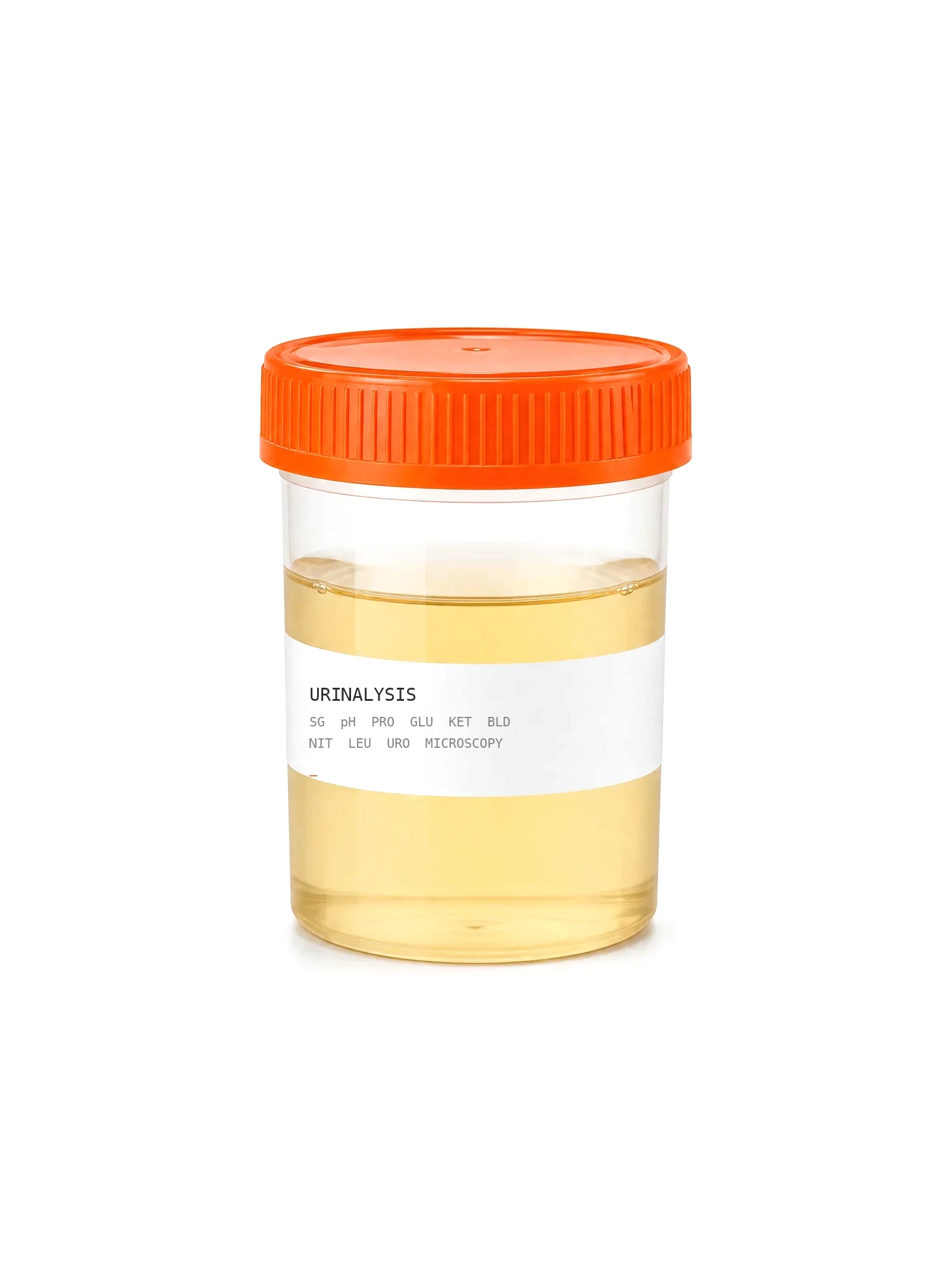
Three lab results matter when someone starts DASH, and the first is often misread:
- Serum sodium on a metabolic panel does not show how much salt you eat. Sodium, serum tracks the body's fluid balance, so it moves with dehydration and with kidney and hormone problems rather than with salt intake 15; electrolytes explained covers what moves it.
- Urine sodium, ideally from a 24-hour collection, reflects salt intake, because most of the sodium you eat leaves in urine. Urine potassium shows whether potassium intake rose.
- Serum potassium is the safety check on DASH for anyone with weak kidneys or on drugs that hold on to potassium 6; read it beside eGFR, the kidney filtration estimate described in kidney function explained.
Markers that show whether DASH is working, and safe
Who should be careful with DASH
If you already take blood pressure medication, DASH can lower your pressure further, so keep measuring at home and share the readings with your prescriber. Tell them if you feel dizzy, light-headed when you stand, or faint, because diet plus medication can push pressure too low, and do not stop or change a blood pressure drug on your own. DASH adds to treatment for high blood pressure and does not replace it when readings are high.
People with chronic kidney disease often have a potassium limit set by their care team, and that limit outranks the DASH serving counts. If you take lithium, ask your prescriber before moving to the 1,500 mg sodium cap, because lithium treatment depends on steady amounts of salt and fluid 14. People with heart failure who already have a sodium or fluid limit should follow their care team's plan.
The trials ran for weeks to months, and the gains last only while the eating pattern lasts. The DASH-Sodium investigators wrote that "long-term health benefits will depend on the ability of people to make long-lasting dietary changes and the increased availability of lower-sodium foods" 2. Home readings every few weeks, and a lipid panel a few months in, show whether the changes have held.

Citations
- Appel LJ et al. A clinical trial of the effects of dietary patterns on blood pressure. DASH Collaborative Research Group. N Engl J Med 1997;336:1117-1124
- Sacks FM et al. Effects on blood pressure of reduced dietary sodium and the Dietary Approaches to Stop Hypertension (DASH) diet. N Engl J Med 2001;344:3-10
- Juraschek SP, Miller ER, Weaver CM, Appel LJ. Effects of sodium reduction and the DASH diet in relation to baseline blood pressure. J Am Coll Cardiol 2017;70:2841-2848
- National Heart, Lung, and Blood Institute (NIH). DASH Eating Plan: Following DASH (servings by calorie level and serving sizes)
- Obarzanek E et al. Effects on blood lipids of a blood pressure-lowering diet: the Dietary Approaches to Stop Hypertension (DASH) Trial. Am J Clin Nutr 2001;74:80-89
- NIH Office of Dietary Supplements. Potassium: Fact Sheet for Health Professionals
- Whelton PK, Carey RM et al. 2017 ACC/AHA/AAPA/ABC/ACPM/AGS/APhA/ASH/ASPC/NMA/PCNA guideline for the prevention, detection, evaluation, and management of high blood pressure in adults. Hypertension 2018;71:e13-e115
- American Heart Association. Hypertensive crisis: when you should call 911 for high blood pressure
- Siervo M et al. Effects of the Dietary Approach to Stop Hypertension (DASH) diet on cardiovascular risk factors: a systematic review and meta-analysis. Br J Nutr 2015;113:1-15
- Blumenthal JA et al. Effects of the DASH diet alone and in combination with exercise and weight loss on blood pressure and cardiovascular biomarkers in men and women with high blood pressure: the ENCORE study. Arch Intern Med 2010;170:126-135
- Chiavaroli L et al. DASH dietary pattern and cardiometabolic outcomes: an umbrella review of systematic reviews and meta-analyses. Nutrients 2019;11:338
- Juraschek SP, Gelber AC, Choi HK, Appel LJ, Miller ER. Effects of the Dietary Approaches to Stop Hypertension (DASH) diet and sodium intake on serum uric acid. Arthritis Rheumatol 2016;68:3002-3009
- US Food and Drug Administration. Sodium in your diet
- MedlinePlus (US National Library of Medicine). Lithium
- MedlinePlus (US National Library of Medicine). Sodium blood test
Educational context only, not medical advice or a diagnosis. Always discuss your results with a clinician.