- 01Accuracy depends on the marker and how the sample was collected
There is no single answer to whether a home blood test is accurate. HbA1c, cholesterol, thyroid tests and morning testosterone from a home sample track a vein draw closely; potassium, glucose and blood counts from a squeezed fingertip often do not. Judge a kit by the markers you need, the collection method and how fast the sample reaches the lab.
Usually yes. Most of the error in an at-home blood test happens before the sample reaches the lab: a cold, squeezed finger, a half-filled tube, two hot days in a mailbox. Once the sample arrives, it usually runs on the same kind of analyser that handles hospital blood. The useful question is which of your markers survive the trip from your skin to that analyser, and this page answers it one marker at a time.
Is capillary blood as accurate as venous blood?
For most routine tests, yes. Capillary blood is the few drops from the tiny vessels under the skin of a fingertip or upper arm; venous blood is drawn from a vein with a needle. A 2025 review that pooled 26 studies found a strong overall correlation between self-collected capillary blood and venous blood (r = 0.89, where 1 would mean the two always move together), and people found self-collection less painful than a needle in the vein, with upper-arm devices hurting less than a finger-prick 1.
In a 2026 study of 480 adults, capillary samples from the fingertip and the upper arm were clinically comparable with a vein draw for 16 of 18 routine tests, including cholesterol, kidney, thyroid and heart markers, once badly damaged samples were screened out 2. The two that failed were potassium and chloride. An at-home self-test, a strip, meter or cassette read on the spot, is a separate product with its own evidence, and this page does not cover it.
What accurate means for any blood test
No blood result is exact, including one from a hospital draw. Every result carries analytical error, the small wobble of the lab machine, and your body adds biological variation, the real change in a marker from day to day. For some markers, such as triglycerides, that natural swing is larger than any difference between a finger and a vein. The page on why trends beat single readings shows how big that swing is for each marker.
So the fair test of a home kit is narrow. Take capillary and venous blood from the same person at the same sitting, run both, and ask whether the gap would ever change a decision. That is the standard the studies on this page use. It also explains when a regular home test, monthly or quarterly, is useful: for tracking a trend, provided you use the same lab, the same collection method and the same conditions each time.
Finger-prick vs venous blood: why they differ
Capillary blood is a mix of blood fresh from the arteries, blood on its way back to the veins, and a little tissue fluid, the watery fluid that bathes your cells. A vein draw collects blood that has already passed through the tissues. For most markers that difference is too small to matter. For a handful it is large and predictable.
- Glucose: after a meal, your tissues take glucose out of the blood between the artery and the vein, so capillary glucose reads higher than venous glucose; the gap was largest in the first hour after a glucose drink and narrowed over the following hours 10.
- Haemolysis, meaning red cells bursting: squeezing or milking a finger damages red cells, which spill potassium, LDH and AST into the sample and push those results falsely high 4. Fingertip samples haemolyse more often than upper-arm or vein samples 2 5.
- Tissue fluid: hard squeezing draws extra tissue fluid into the sample and dilutes it.
- Drop-to-drop variation: successive drops from one finger-prick differ in haemoglobin, white cell and platelet counts, so a blood count from a single drop is less reliable than one from a tube 9.
the leading cause of unsuitable specimens in clinical laboratoriesLippi G et al., on haemolysis, Clin Chem Lab Med 2008 4
Three ways to collect blood at home
| Method | How it works | Haemolysis risk | Main caveat |
|---|---|---|---|
| Fingertip lancet into a tube | You prick a fingertip and drip blood into a small tube | Highest of the three 2 | A small volume, so only a few tests fit; squeezing spoils potassium and blood counts |
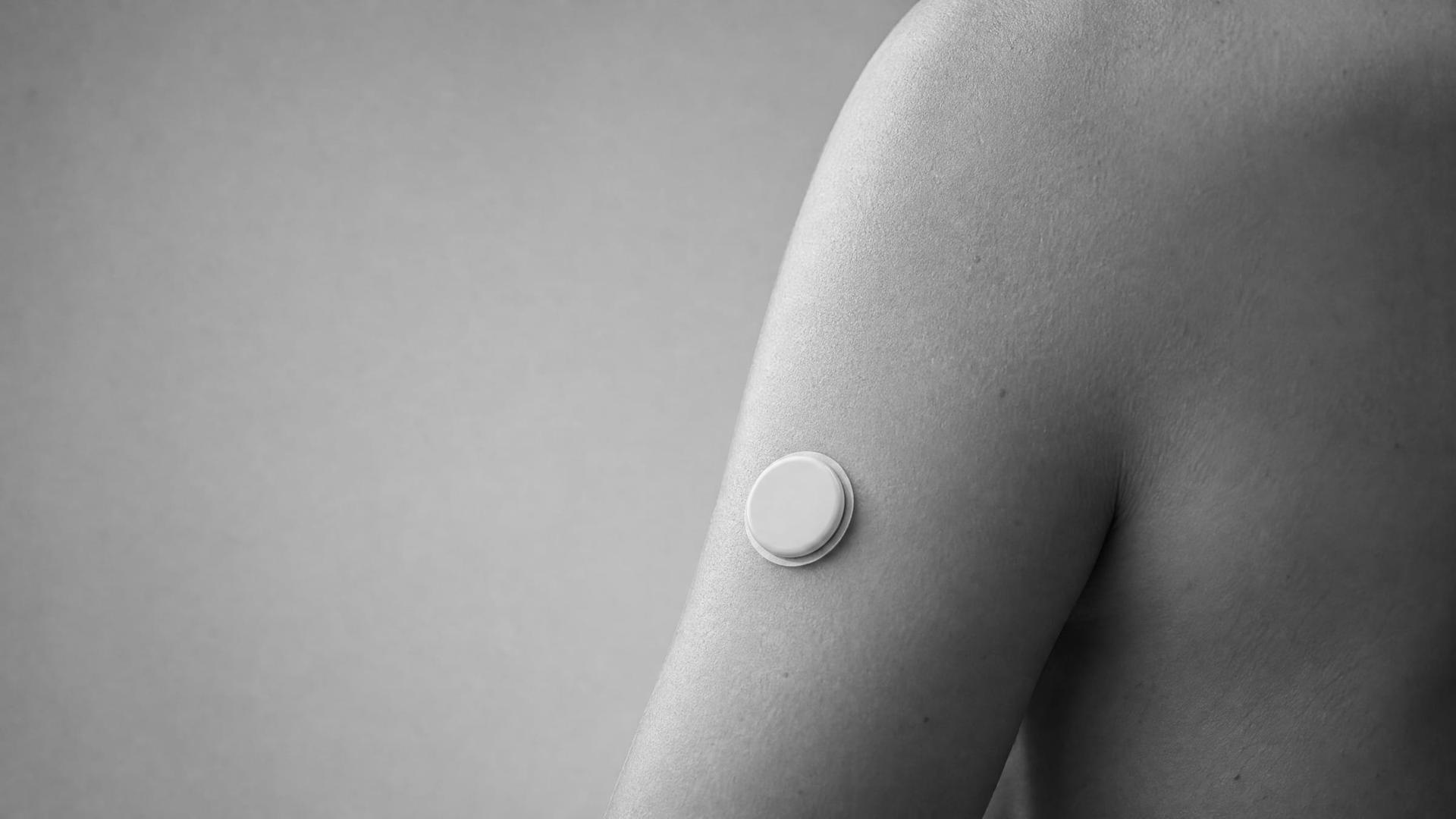
| Upper-arm vacuum device (Tasso, Autodraw, EasyDraw) | A button-sized device with tiny lancets and gentle suction fills a tube from the upper arm | Lower than fingertip 2 | More failed collections than a fingertip in one study 2; still capillary blood, so the glucose and potassium caveats remain |
| Dried blood spot card | Drops dry onto filter paper and the lab punches out a disc | Red cells break as the spot dries, so potassium and similar markers cannot be measured | Results depend on haematocrit (the share of your blood that is red cells), which changes how far a drop spreads; each test needs its own validation |
Which markers work from a home sample, and which need a vein
In short: HbA1c, cholesterol, thyroid tests and morning testosterone travel well. Potassium, LDH, AST, glucose and single-drop blood counts often do not, and vitamin D and ferritin need to reach the lab within a day.
| Marker | Home sample verdict | What goes wrong | Evidence |
|---|---|---|---|
| HbA1c | Good | Little; HbA1c holds up in the post | Mailed upper-arm samples were within about 0.5% of venous in 105 adults 3 |
| Total, LDL and HDL cholesterol | Good | A small gap, about 3 to 6% on average | Same mailed-sample study 3 |
| Triglycerides | Good, if you fast as the kit asks | A recent meal raises triglycerides in any sample, home or hospital | Small offsets that stayed within allowable error 2 |
| TSH and free T4 | Good | Little | Home and vein results rose and fell together almost perfectly in 55 people 7; see TSH vs free T4 |
| Testosterone and LH (luteinising hormone) | Good, if collected in the morning | Timing matters more than the sample: testosterone is highest early in the day | Upper-arm capillary serum showed excellent agreement with venous 8 |
| Vitamin D | Good, if it reaches the lab within a day | Drifted beyond acceptable limits after 24 hours at room temperature | 5 |
| Ferritin | Conditional | Same 24-hour drift; a slow post is the risk | 5; see ferritin vs iron |
| Glucose | Conditional | Capillary reads higher after food; glucose fell outside the error limits US labs must meet in a 34-test comparison | 6 10; for a home check, HbA1c is steadier: see A1C vs fasting glucose |
| Potassium and chloride | Weak | Haemolysis pushes potassium falsely high (see high potassium) | Limited interchangeability 2; haemolysis effect 4 |
| LDH and AST | Weak from a squeezed finger | Both are enzymes found inside many cells, including red cells, and leak from burst red cells (see high LDH and high AST) | 4 |
| Blood count: platelets, white cells and the differential (the split of white cells by type) | Good from a tube, weak from a single drop | Single drops vary; haematocrit and platelet size measures drift after 24 hours | 5 9 |
| Low-level hormones, such as estradiol and progesterone in women | Conditional | Low concentrations leave less room for error, and few capillary studies exist | Ask whether the lab validated capillary samples for that specific hormone |
Got a full panel back? Read it with how to read your lipid panel, your thyroid panel, or the male and female hormone panel guides.
The markers to read beside a home result
The four links in the chain: collection, transit, lab, you
How a drop of blood becomes a home test result
Biotin interferes with the lab test itself rather than the sample: high doses can push many immunoassays (lab tests that use antibodies to catch a hormone or protein), including thyroid and hormone tests, falsely high or low 11. Tell the lab or your clinician if you take it.
The supplement that can skew a home result

How to check a home test company before you order
- The lab is named. In the US it holds a CLIA certificate and ideally CAP accreditation; in the UK it holds ISO 15189 accreditation from UKAS.
- The company publishes capillary versus venous validation for each marker it sells, rather than one accuracy claim for the whole panel.
- The company says whether it collects liquid blood in a tube or a dried spot, and which device it uses.
- The kit states how long the sample stays stable and which days to post it.
- The company explains what happens with a haemolysed, clotted or short sample, and whether a recollection is free.
- A clinician reviews results that fall outside the reference range.
Theranos is the reason to ask. The company claimed it could run hundreds of tests from a few drops of finger-prick blood and collapsed in 2018. Ask any home test company for marker-by-marker validation before you order. For price comparisons, see the cheapest blood tests; for what to order, see what blood tests should I get.
When a venous draw is the better choice
- A large panel: a fingertip gives enough blood for a handful of tests, while a vein draw covers a full panel.
- Following up a high or low potassium, sodium or other electrolyte (see electrolytes explained).
- A full blood count with the white cell breakdown (see CBC explained).
- A result that will confirm a diagnosis or change a medication. Low testosterone is the clearest example: the Endocrine Society asks for fasting morning measurements repeated on a separate day 12, and TRT blood work covers the monitoring.
- A result that conflicts with how you feel.
- Iron studies when the post will take more than a day (see iron studies explained).
My home result looks wrong. What now?
- 1Act first on a critical result or symptomsIf the result is marked critical or urgent, if the lab or a clinician contacts you about it, or if you feel unwell, speak to a clinician the same day instead of repeating the kit. A very high potassium or glucose, or a very low haemoglobin or platelet count, can be real. Chest pain, severe breathlessness, fainting, confusion or an irregular heartbeat need emergency care now.
- 2Read the lab's commentsWords like haemolysed, insufficient or clotted mean the sample was damaged, and the flagged numbers may not be real. The guide to lab report flags explains each one.
- 3Check the marker against the known capillary weak spotsA strange potassium, LDH, AST, glucose or blood count from a finger-prick is more often a collection problem than a strange HbA1c or cholesterol, but treat it as possibly real until a venous test says otherwise.
- 4Compare like with likeReference ranges differ between labs (see reference ranges explained), so compare a home result with an earlier result from the same lab, at the same time of day, in the same fasting state.
- 5Confirm before actingFor a result well outside the range, ask your clinician for a venous draw, promptly for an odd potassium, glucose or blood count. For a borderline result, a careful repeat is reasonable; for testosterone, repeat on another morning, fasting. To read the rest of your report, start with how to read any lab result.

Citations
- Schröder D et al. Comparison of laboratory results and pain perception in self-sampled capillary blood versus venous blood sampling: a systematic review and meta-analysis. Clin Biochem 2025;138:110965
- Deza S et al. Venous-capillary blood agreement for routine chemistry analytes: effects of collection site and sample matrix. Clin Chem Lab Med 2026;64(12):2757-2772
- Hoffmeister L et al. Concordance of HbA1c, creatinine, LDL cholesterol, HDL cholesterol, and total cholesterol between venous and self-collected capillary blood samples sent by mail. J Diabetes Investig 2026;17(8):1419-1431
- Lippi G et al. Haemolysis: an overview of the leading cause of unsuitable specimens in clinical laboratories. Clin Chem Lab Med 2008;46(6):764-772
- Maroto-García J et al. Analysis of common biomarkers in capillary blood in routine clinical laboratory: preanalytical and analytical comparison with venous blood. Diagnosis (Berl) 2023;10(3):281-297
- Doeleman MJH et al. Comparison of capillary finger stick and venous blood sampling for 34 routine chemistry analytes. Clin Chem Lab Med 2025;63(4):747-752
- Suzuki N et al. Determination of capillary blood TSH and free thyroxine levels using digital immunoassay. J Endocr Soc 2024;8(4):bvae030
- Goodrum JM et al. Is blood blood? Comparing quantitation of endogenous steroids and luteinizing hormone in concurrently collected venous serum and Tasso+ SST capillary serum samples. Drug Test Anal 2025;17(3):365-371
- Bond MM, Richards-Kortum RR. Drop-to-drop variation in the cellular components of fingerprick blood. Am J Clin Pathol 2015;144(6):885-894
- Kuwa K et al. Relationships of glucose concentrations in capillary whole blood, venous whole blood and venous plasma. Clin Chim Acta 2001;307(1-2):187-192
- US Food and Drug Administration. Biotin interference with troponin lab tests: assays subject to biotin interference
- Bhasin S et al. Testosterone therapy in men with hypogonadism: an Endocrine Society clinical practice guideline. J Clin Endocrinol Metab 2018;103(5):1715-1744
- Centers for Medicare & Medicaid Services. Clinical Laboratory Improvement Amendments (CLIA)
Educational context only, not medical advice or a diagnosis. Always discuss your results with a clinician.