Some people with knee osteoarthritis reported less pain after taking 5-Loxin, an extract made from boswellia tree resin. The advantage over placebo was smaller when researchers asked how hard it was to do things like get out of a chair or walk downstairs.17 A suddenly hot, swollen and very painful knee needs urgent assessment today, even without a fever.16 If you are still figuring out why your knee hurts, start with what can cause joint pain.
How much did boswellia help knee pain?
A Cochrane review combined two trials that compared the same oral extract with placebo in people with knee osteoarthritis, a condition that affects cartilage and other tissues in the joint. The trials measured pain and difficulty with daily activities separately. Both scales ran from 0 to 100, with lower scores meaning less pain or less difficulty. The 95% confidence interval in the last column gives a range of average differences consistent with the trial data.1
| Average score at 90 days | Boswellia extract | Placebo | Difference favoring boswellia (95% confidence interval) |
|---|---|---|---|
| Knee pain, out of 100 | 23 | 40 | 17 points less pain (8 to 26)1 |
| Difficulty with daily activities, out of 100 | 25 | 33 | 8 points less difficulty (2 to 14)1 |
At 90 days, the average pain score was 23 with the extract and 40 with placebo. Subtracting one score from the other gives the 17-point benefit. The data were consistent with an average benefit as small as 8 points or as large as 26. Those numbers describe a difference between groups. They cannot predict how much better one person's knee will feel.1
For daily activities, the trials used the physical function section of the Western Ontario and McMaster Universities Osteoarthritis Index (WOMAC). It asks about tasks such as getting out of a chair and going down stairs. Cochrane used 10 points as a benchmark for a meaningful difference in function. The average benefit of 8 points fell below that benchmark, but the interval extended above it. The trials leave room for both a noticeable improvement and one small enough to miss.1
Why the guideline leaves the decision open
Thomas Dalmonte and colleagues asked a broader question in 2024. They pooled results from different boswellia products, including blends. Some trials used a placebo and others used an active treatment. Taken together, the results showed no clear advantage on pain or overall WOMAC scores. When the authors looked at placebo comparisons alone, WOMAC scores favored boswellia. Those placebo comparisons cannot tell you whether boswellia works as well as a pain medicine such as ibuprofen.4
One proposed explanation for boswellia's effect on pain involves an enzyme called 5-lipoxygenase, which helps the body make inflammatory signals. Certain boswellic acids blocked this enzyme in preclinical experiments. In healthy volunteers who took frankincense extract, the researchers found no fall in blood levels of one of those signals, leukotriene B4. How the extract might ease knee pain in people remains uncertain.10
The US Departments of Veterans Affairs and Defense found “insufficient evidence to recommend for or against” boswellia for hip or knee osteoarthritis.2 The same guideline recommends exercise and lists exercise in water as one option.2 The knee trials measured pain and difficulty with daily activities. Whether the extract slows joint damage remains unknown. The trials also give no reliable way to predict who will feel better from their age or the severity of their arthritis.14
Is boswellia the same as frankincense?
Boswellia is a group of trees. Frankincense is the aromatic gum resin those trees produce. Boswellia serrata yields Indian frankincense, and manufacturers can make several different products from the resin. The words “frankincense” and “boswellia” on the front of a bottle tell you much less than the species, plant part and product form on the back.3
| What the label says | How people use it | What the knee evidence covers |
|---|---|---|
| Boswellia serrata gum resin extract | An oral supplement, often a capsule | Some named extracts have human trials for knee pain and function.1 |
| Frankincense essential oil or incense | Oil for fragrance, or resin burned as incense | The 90-day pain result came from swallowing a resin extract. It gives no estimate for inhaling frankincense.13 |
| Frankincense cream, gel or topical oil | A preparation applied to the skin | Evidence is too limited to say whether topical frankincense relieves osteoarthritis or rheumatoid arthritis symptoms.3 |
What does 60% boswellic acids mean on a label?
The Pure Encapsulations product sheet names the species (Boswellia serrata), the part of the tree (gum resin) and what the manufacturer measures (60% boswellic acids).8 Boswellic acids are a family of compounds in the resin. The percentage tells you how much of the extract consists of that family. It tells you neither which acids make up most of the extract nor how much pain relief to expect.
To compare a bottle with a trial, check the species, plant part and extract name, then read the other active ingredients. If a label names the tree but leaves out the extract name, you cannot tell whether it matches 5-Loxin. If it adds curcumin, the trial of boswellia alone no longer tells you what to expect from the whole product.27 LifeFrom explains how to read a supplement label.
The studies establish no single amount or schedule that works across extracts.12 One study tested what happened when healthy volunteers took a resin extract with a high-fat meal. Several boswellic acids reached higher levels in their blood than when they took the same extract after fasting. The researchers measured absorption. They did not measure knee pain, so the study cannot tell you whether taking an extract with food improves relief.9
Does adding turmeric improve the result?
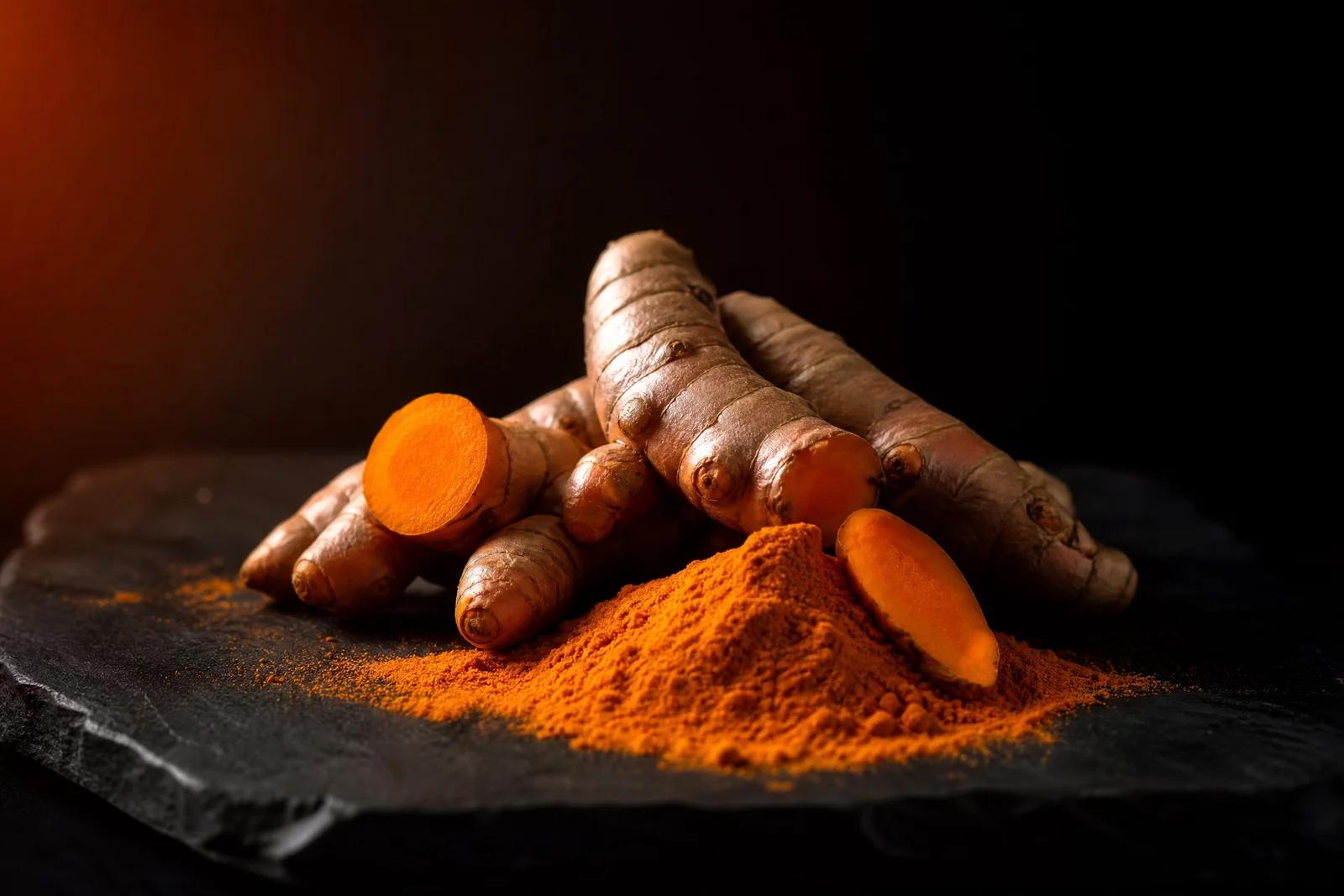
Whether adding turmeric helps more than boswellia alone is still an open question. Curcumin is a compound in turmeric. Armine Haroyan and colleagues assigned 201 people with knee osteoarthritis to one of three groups. One took a turmeric extract with boswellia, one took a turmeric extract without boswellia, and one took a placebo. After 12 weeks, the combination group had a greater improvement in WOMAC pain than the placebo group. There was no boswellia-only group to show how much curcumin added.11
The Australian ATLAS trial recruited 84 adults with symptomatic knee osteoarthritis to test a different blend. It contained boswellia, curcumin, pine bark extract, methylsulfonylmethane (MSM) and piperine from black pepper. At 12 weeks, knee pain had fallen by about 20 points out of 100 in both groups. People taking the blend felt about the same improvement as people taking placebo.5
Turmeric and knee pain
Does boswellia help other kinds of inflammation?
The clearest pain estimate comes from people with knee osteoarthritis. Researchers interested in other conditions have asked different questions, including whether a person breathes more easily or stays free of a bowel disease flare.1313
Rheumatoid arthritis
The 90-day pain estimate came from people with osteoarthritis. It cannot predict pain relief for someone with rheumatoid arthritis. The National Center for Complementary and Integrative Health (NCCIH) also finds the evidence for applying boswellia to the skin too limited to establish a benefit in either condition.13
Asthma
A few small studies suggest that oral boswellia might ease asthma symptoms, but their size and quality leave its usefulness uncertain. They provide no evidence for inhaling frankincense to relieve breathing problems.3 During an asthma attack, follow your prescribed asthma action plan. Call 911 if breathing is very hard or your reliever medicine is not helping.12
Crohn's disease
Wolfgang Holtmeier and colleagues studied whether a boswellia extract could keep Crohn's disease in remission. They randomly assigned 82 people to extract or placebo and stopped the trial early. Among 66 people evaluated for benefit, about 60% on boswellia and 55% on placebo stayed in remission. The difference was statistically inconclusive. Everyone entered the study while their disease was quiet, so it cannot tell us whether boswellia helps during an active flare.13
Side effects, warfarin and long-term safety
In the 90-day 5-Loxin trial, people in both the extract and placebo groups reported digestive symptoms such as nausea and diarrhea.7 Small, short trials can miss uncommon problems. They also cannot establish that boswellia is safer for the stomach or kidneys than ibuprofen. If stomach trouble is the reason you are considering switching from a pain medicine, tell the clinician who manages your knee pain which medicine caused the problem and what happened.23
Both people recovered after the extract was withdrawn. The timing suggests a possible interaction. Two reports cannot establish the cause or show how often this happens.6 When you contact your anticoagulation team, have the product name or a photo of the full ingredient list handy and tell them when you started or stopped it. That lets the team compare the dates with your INR results and check the other ingredients in a blend.
During pregnancy or breastfeeding, researchers have little information about the safety of concentrated oral boswellia extracts. A pregnancy care clinician or pharmacist can review the product before use. In the US, the FDA does not approve dietary supplements for safety and effectiveness before sale. A bottle on a store shelf therefore tells you little about whether that extract has been tested for knee pain.3
How can I tell whether my knee feels better?
For familiar, stable knee symptoms, choose an activity you already do and record both how much it hurts and how hard it is to do.
- 1Choose a task you already doUse the stairs at home, the walk from your parking spot or getting up from your usual chair. Pick something familiar enough that you can compare like with like without pushing through pain.
- 2Record pain and difficulty separatelyFor example, “Coming downstairs, pain 6 out of 10, held the rail the whole way.” Use the same pain scale next time. The rail gives you a second detail to compare even if you are unsure whether to call the pain a 5 or a 6.
- 3Write down what else changedNote a change in pain medicine, exercise, physical therapy or how often you used the stairs. A record can show that the task got easier. If several things changed in the same week, it cannot tell you which one helped.
High-sensitivity C-reactive protein (hs-CRP) often helps clinicians assess cardiovascular risk. The erythrocyte sedimentation rate (ESR) can give clues about inflammation from many causes. Neither result locates its source.1718 The knee trials give no starting hs-CRP or ESR cutoff for choosing boswellia and no percentage drop that counts as success.14 Bring your knee notes and the lab report with its units and reference range to the clinician who ordered the test. Ask, “What could explain this result alongside my symptoms, and does it need follow-up?”
Inflammation markers you may already have

Citations
- Cameron M, Chrubasik S. Oral herbal therapies for treating osteoarthritis. Cochrane Database of Systematic Reviews. 2014.
- Department of Veterans Affairs and Department of Defense. VA/DoD Clinical Practice Guideline for the Non-Surgical Management of Hip & Knee Osteoarthritis. 2026. Recommendation 30 and appendix J.
- National Center for Complementary and Integrative Health. Boswellia. 2025.
- Dalmonte T, et al. Efficacy of Extracts of Oleogum Resin of Boswellia in the Treatment of Knee Osteoarthritis: A Systematic Review and Meta-Analysis. Phytotherapy Research. 2024.
- Yuan S, et al. Effect of an oral complementary medicine combination for symptomatic knee osteoarthritis: A double-blind, randomized, placebo-controlled trial. Osteoarthritis and Cartilage. 2026.
- Paoletti A, et al. Interactions between Natural Health Products and Oral Anticoagulants: Spontaneous Reports in the Italian Surveillance System of Natural Health Products. Evidence-Based Complementary and Alternative Medicine. 2011.
- Sengupta K, et al. A double blind, randomized, placebo controlled study of the efficacy and safety of 5-Loxin® for treatment of osteoarthritis of the knee. Arthritis Research & Therapy. 2008.
- Pure Encapsulations. Boswellia. Product information sheet. April 2021.
- Sterk V, Büchele B, Simmet T. Effect of food intake on the bioavailability of boswellic acids from a herbal preparation in healthy volunteers. Planta Medica. 2004.
- Siemoneit U, et al. On the interference of boswellic acids with 5-lipoxygenase: mechanistic studies in vitro and pharmacological relevance. European Journal of Pharmacology. 2009.
- Haroyan A, et al. Efficacy and safety of curcumin and its combination with boswellic acid in osteoarthritis: a comparative, randomized, double-blind, placebo-controlled study. BMC Complementary and Alternative Medicine. 2018.
- National Heart, Lung, and Blood Institute. Asthma Attack.
- Holtmeier W, et al. Randomized, placebo-controlled, double-blind trial of Boswellia serrata in maintaining remission of Crohn's disease: good safety profile but lack of efficacy. Inflammatory Bowel Diseases. 2011.
- US Food and Drug Administration. Tips for Patients and Caregivers Using INR Test Meters at Home.
- MedlinePlus Medical Encyclopedia. Gastrointestinal bleeding.
- MedlinePlus Medical Encyclopedia. Knee pain.
- Mayo Clinic Laboratories. C-Reactive Protein, High Sensitivity, Serum.
- MedlinePlus. Erythrocyte Sedimentation Rate (ESR).
Educational context only, not medical advice or a diagnosis. Always discuss your results with a clinician.