- 01Your urine decides, not your plate
Your urine decides, not your plate: a low oxalate diet is for people whose 24-hour urine shows high oxalate, not for anyone with a stone history or crystals on a urinalysis. A 24-hour urine stone risk panel measures the oxalate that actually reaches the kidneys; a food list or a spot urinalysis cannot.
A low oxalate diet is for people who form calcium oxalate kidney stones and whose 24-hour urine shows high oxalate. What counts is how much oxalate ends up in your urine, and food is only one of the things that sets it. The calcium on the same plate, how much you drink and how much salt you eat move urine oxalate and stone risk as much as cutting spinach does. That is why the diet starts with a 24-hour urine test and ends with a second one.
What oxalate is and where it comes from
Oxalate is a small compound that plants make and store in leaves, seeds, skins and bark. The human liver makes oxalate too, partly from breaking down vitamin C and hydroxyproline (an amino acid that is plentiful in collagen and gelatin). Diet supplies up to about half of the oxalate in urine, depending on how much a person eats, and the body makes the rest 3. People cannot break oxalate down, so it leaves through the kidneys, where it can meet calcium and form calcium oxalate crystals. Most kidney stones are calcium-based, and calcium oxalate is the most common type 3.
Two things in the gut decide how much food oxalate reaches the urine. Calcium in the same meal binds oxalate into an insoluble salt that leaves in stool. Gut bacteria, the best known being Oxalobacter formigenes, break down some oxalate before it is absorbed. Most people absorb a small share of the oxalate they eat and clear it with no trouble.
How oxalate on your plate becomes oxalate in your urine
Who needs a low oxalate diet
The American Urological Association (AUA) guideline on preventing kidney stones ties oxalate advice to a urine result, not to a diagnosis of stones alone 1:
Clinicians should counsel patients with calcium oxalate stones and relatively high urinary oxalate to limit intake of oxalate-rich foods and maintain normal calcium consumption.Pearle MS et al., AUA guideline on medical management of kidney stones, Journal of Urology, 2014
| Who | Does a low oxalate diet help? | What else matters |
|---|---|---|
| Recurrent calcium oxalate stones with urine oxalate above about 40 to 45 mg a day | Yes, as one part of the plan | Fluid, calcium with meals, less sodium |
| Enteric hyperoxaluria: after gastric bypass (Roux-en-Y, the most common type of weight-loss surgery), or with Crohn's disease, short bowel (after part of the gut was removed), chronic pancreatitis or orlistat (a weight-loss drug that blocks fat absorption) | Yes, usually low oxalate and low fat together | Calcium with meals; urine oxalate can run very high |
| Primary hyperoxaluria, a genetic liver enzyme defect | Only a little | The liver makes most of the oxalate; care is specialist (vitamin B6 for some type 1 patients, and lumasiran, an injected drug that cuts the liver's oxalate production, approved by the FDA in 2020 14) |
| Uric acid stones | No | Urine pH and uric acid drive these stones |
| No stones, or symptoms that were never tested | No | A 24-hour urine test answers the question first |
Enteric hyperoxaluria deserves its own line because the numbers are so different. After gastric bypass or in Crohn's disease, unabsorbed fat binds calcium in the gut, so oxalate that would have left in stool is absorbed in the colon instead 3. Urine oxalate in enteric hyperoxaluria often runs well above the levels seen in ordinary stone formers, and the low oxalate, low fat diet with calcium at meals is the first-line approach. Anyone in that group needs a kidney or stone clinic managing the plan.
How much oxalate is in common foods
Clinical low oxalate diets usually aim for about 40 to 50 mg of oxalate a day, while typical Western diets carry 100 to 200 mg 3. A food list without milligrams cannot get anyone to that number, because one serving of spinach holds more than a week of the target. The bands below use milligrams per normal serving: very high is over 100 mg, high is 25 to 100, moderate is 10 to 25 and low is under 10.
| Food | Serving | Oxalate (mg, approx.) | Band |
|---|---|---|---|
| Spinach, cooked | 1/2 cup | 750 | Very high |
| Rhubarb, cooked | 1/2 cup | 540 | Very high |
| Almonds | 1 oz (about 22) | 120 | Very high |
| Baked potato with skin | 1 medium | 95 | High |
| Beets, cooked | 1/2 cup | 75 | High |
| Navy beans, cooked | 1/2 cup | 75 | High |
| Cocoa powder | 4 teaspoons | 65 | High |
| Cashews | 1 oz | 50 | High |
| Raspberries | 1 cup | 48 | High |
| Sweet potato, cooked | 1/2 cup | 28 | High |
| Peanuts | 1 oz | 27 | High |
| Black tea, brewed | 1 cup | 14 | Moderate |
| White rice, cooked | 1 cup | 4 | Low |
| Banana | 1 medium | 3 | Low |
| Kale, raw | 1 cup | 2 | Low |
| Coffee, brewed | 1 cup | 2 | Low |
| Apple | 1 medium | 1 | Low |
| Eggs, milk, cheese, yogurt, meat, fish | Any normal serving | 0 | Low |
Oxalate values vary two to threefold with variety, soil, ripeness and lab method, so read each number as a rough band. The figures above are rounded from the Harvard T.H. Chan School of Public Health oxalate table 7.
Low oxalate foods you can eat freely
Most of the plate stays open on a low oxalate diet.
| Group | Low oxalate examples |
|---|---|
| Protein and dairy | Meat, poultry, fish, eggs, milk, cheese, yogurt |
| Grains | White rice, pasta, white bread, corn tortillas |
| Fruit | Apples, bananas, melon, grapes, blueberries, cherries, citrus |
| Vegetables | Cauliflower, cucumber, cabbage, mushrooms, bok choy, lettuce, zucchini, peas, kale |
Kale and spinach are both dark leafy greens, but kale is low in oxalate, so it is the green to keep.
High oxalate foods to limit, and the swaps that work
The foods that blow the budget are spinach, Swiss chard, rhubarb, beets, almonds, cashews, peanuts, potato skins, sweet potato, cocoa and dark chocolate, soy products, buckwheat, wheat bran and large amounts of black tea. Limiting these foods is about portion and frequency: a few cashews eaten with a glass of milk is a different load from a handful of almonds eaten alone every afternoon.
| Instead of | Try | Why it helps |
|---|---|---|
| Spinach in salads and smoothies | Kale, romaine or bok choy | About 2 mg per cup against hundreds |
| Almond milk | Dairy milk, or rice milk with added calcium | Removes oxalate and adds calcium |
| Almond flour | White or rice flour | Almond flour is concentrated almonds |
| Baked potato with skin | Peeled, boiled potato or white rice | Most potato oxalate sits in and near the skin |
| Peanut or almond butter | Sunflower seed butter, in modest portions | Lower oxalate per spoon |
| Several cups of strong black tea | Coffee, herbal tea or lighter tea with milk | Milk calcium binds some of the tea oxalate |
Keep calcium, and eat it with the oxalate
Cutting calcium is a common mistake among stone formers, and it backfires. With less calcium in the gut, more oxalate stays free and more is absorbed. A 1993 New England Journal of Medicine study that followed about 45,000 US men for four years (a cohort study, by Curhan and colleagues) found that men with the highest dietary calcium intake had about 45% lower stone risk than men with the lowest 8. A 2002 randomised trial then tested the question directly 2.
In the Borghi trial, men with recurrent calcium oxalate stones and high urine calcium (idiopathic hypercalciuria) who ate about 1,200 mg of calcium a day with less salt and less meat protein had about half the recurrences of men on a 400 mg low-calcium diet, and their urine oxalate fell while the low-calcium group's rose 2. The AUA guideline recommends 1,000 to 1,200 mg of calcium a day for stone formers, ideally from food 1. Timing matters as much as amount: calcium binds oxalate only when both are in the gut together, so yogurt, milk or cheese belongs at the meal that carries the oxalate. A calcium supplement taken between meals does not do that job, so anyone already on one can ask their clinician about the form and timing.
The calcium question
 Strong for dietary calcium with meals; mixed for supplementsCalcium (from food, with meals)Calcium eaten at the same meal as oxalate binds it in the gut; in a trial, a normal-calcium diet halved stone recurrence compared with a low-calcium diet. Supplements taken apart from meals do not bind oxalate and were linked to slightly higher stone risk in a large cohort of women, so form and timing are a question for your clinician.In our shop
The other levers matter as much as oxalate
Urine volume comes first in the AUA guideline, which asks stone formers to drink enough to pass at least 2.5 litres of urine a day, which for most adults means about 3 litres of fluid 1. The <a href="/calculators/water-intake">water intake calculator</a> gives a starting point. If a clinician has told you to limit fluids, for example for heart failure, advanced kidney disease or dialysis, follow that advice and ask them what target fits you. Sodium matters because salt pulls calcium into the urine, which the <a href="/biomarkers/urine-sodium">urine sodium</a> result on a stone panel shows; the guideline advises limiting it 1, and 2,300 mg a day is the usual US ceiling. Moderate portions of meat, fish and poultry help, and citrus fruit adds citrate, which blocks calcium oxalate crystals from growing. If your 24-hour urine shows low citrate, your clinician may prescribe potassium citrate.
Whole-diet patterns hold up as well as oxalate counting. In a randomised trial of recurrent stone formers with high urine oxalate, a DASH-style diet reduced urinary stone risk about as much as a low oxalate diet did 4, even though DASH includes nuts, beans and vegetables. Across three large US cohorts, Taylor and colleagues reported in 2009 that people with the highest DASH scores had about 40 to 45% lower stone risk than those with the lowest 9. Our <a href="/learn/dash-diet">DASH diet guide</a> covers the pattern, and the <a href="/conditions/kidney-stones">kidney stones</a> page covers the stone picture as a whole.
Cooking and kitchen tricks
Boiling vegetables and pouring off the water reduced soluble oxalate by 30 to 87% in a 2005 study of common vegetables, while steaming removed less and baking removed almost none 6. Boiled spinach is still a very high oxalate food after that loss, so it still belongs on the limit list. Peeling and boiling potatoes, keeping portions modest and eating higher oxalate foods with dairy at the same meal all lower the load, and the dairy does the most.
Supplements and drinks that add oxalate
Vitamin C supplements are the best documented source. The body converts part of any vitamin C it does not need into oxalate. In a Swedish cohort of about 23,000 men followed for 11 years, men taking vitamin C supplements had about twice the kidney stone risk of men taking none 5. Ferraro and colleagues, pooling three US cohorts in 2016, linked total vitamin C intake of 1,000 mg a day or more to higher stone risk in men, with no clear link in women 10. Vitamin C from fruit has not shown the same signal. Anyone with a stone history who takes vitamin C can bring the dose to their clinician; it is one of the easier things to review.
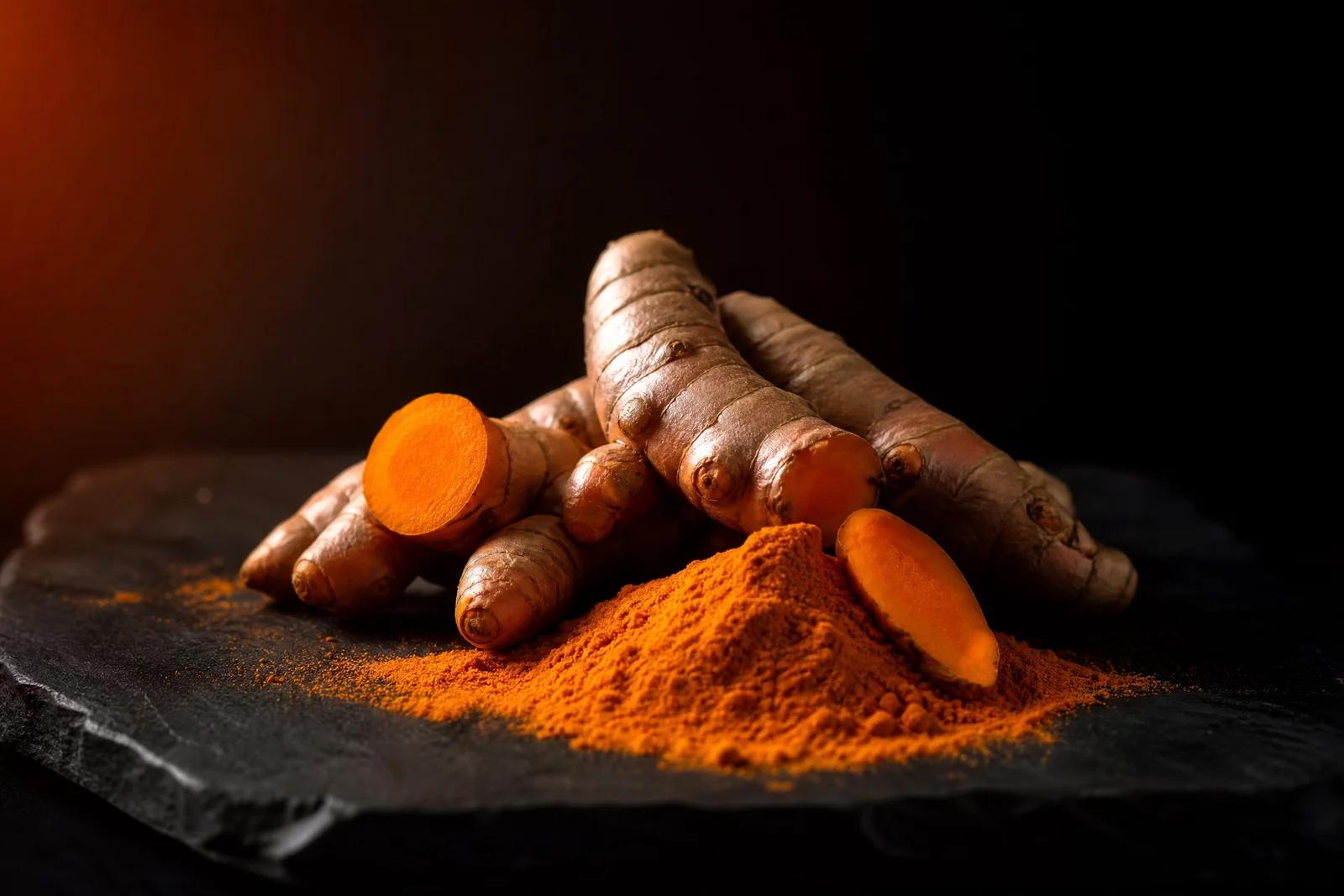
Turmeric powder is high in oxalate, and in a 2008 trial turmeric supplements raised urine oxalate more than cinnamon did 11. Large daily servings of collagen or gelatin supply hydroxyproline, which the liver turns into oxalate. Green juices and spinach-heavy smoothies can deliver several hundred milligrams in one glass, and oxalate nephropathy (kidney damage from oxalate crystals in the kidney tissue) has been reported after juicing, including in a 2013 case report and review in the American Journal of Medicine 12. How supplements stack with each other is covered on our <a href="/learn/supplement-interactions">supplement interactions</a> page.
Supplements that add oxalate
A sample day around 50 mg
One day is enough to show the pattern: low oxalate staples, one moderate item, and a calcium food at every meal. Values are approximate, from the Harvard oxalate table 7.
| Meal | What's on the plate | Oxalate (mg, approx.) | Calcium at the meal |
|---|---|---|---|
| Breakfast | Greek yogurt with blueberries, coffee | 6 | Yogurt |
| Lunch | Chicken and cheese sandwich on white bread with romaine and cucumber, an apple | 12 | Cheese |
| Afternoon | A banana and a cup of black tea with milk | 17 | Milk in the tea |
| Dinner | Salmon, white rice, roasted cauliflower, a glass of milk | 8 | Milk |
| Day total | About 45 | All four meals |
The budget leaves room for one moderate or high item a day, such as a small serving of peanuts or a half cup of sweet potato, eaten with dairy.
How to know if you need it, and if it's working
Oxalate is measured in a 24-hour urine collection, usually as part of a stone risk panel that also reports urine volume, calcium, citrate, sodium, uric acid and pH. Common lab targets are urine oxalate under about 40 mg a day (some labs use 45) 3, volume above 2.5 litres 1, and citrate above roughly 450 mg a day. Repeating the 24-hour urine about 6 to 8 weeks after a change shows whether the diet moved the number.
24-hour urine oxalate, example readingmg/day
Which test tells you whether to cut oxalate
Calcium oxalate crystals on a routine urinalysis are a common finding in healthy people. They form after a spinach salad, in <a href="/biomarkers/urine-specific-gravity">concentrated</a> morning urine, or as a sample cools on the bench, and a crystal finding alone does not diagnose stones or call for a diet. Crystals matter more when they come with <a href="/biomarkers/urine-blood-hemoglobin">blood in the urine</a>, pain, or a stone history, and the <a href="/learn/urinalysis-explained">urinalysis guide</a> walks through the rest of that report.
Oxalate is not on a standard blood panel. Blood tests give context instead: creatinine and eGFR show how well the kidneys filter, serum calcium flags a <a href="/conditions/hyperparathyroidism">parathyroid</a> cause of high urine calcium, and uric acid matters for uric acid stones and <a href="/conditions/gout">gout</a>. Reduced kidney function also changes how oxalate is handled, which the <a href="/learn/kidney-function-explained">kidney function guide</a> covers.
Markers to read beside a stone workup
What to do next
- 1Had a calcium oxalate stone?Ask your clinician for a 24-hour urine stone risk panel before changing your diet.
- 2Urine oxalate above about 40 to 45 mg a day?Try the low oxalate plan with calcium at every meal, enough fluid to pass 2.5 litres of urine (unless you have been told to limit fluids) and less salt, then repeat the 24-hour urine in 6 to 8 weeks.
- 3Low citrate on the panel?Ask whether potassium citrate is right for you.
- 4Only crystals on a urinalysis and no stones?You do not need the diet. The urinalysis guide explains what the crystals line means.
Low oxalate for vulvodynia, autism, joint pain or oxalate dumping
The low oxalate diet has spread well beyond kidney stones, and the evidence has not followed it. In a 2008 case-control study by Harlow and colleagues, women who ate more oxalate were no more likely to have vulvodynia 13. There are no controlled trials showing a low oxalate diet helps autism, fatigue, joint pain or general inflammation. "Oxalate dumping", the idea that cutting oxalate releases stored oxalate and causes rashes, aches or mood swings, has no clinical evidence behind it and no measurement that confirms it. Anyone with those symptoms deserves a proper workup instead of a narrower diet; our pages on <a href="/symptoms/joint-pain">joint pain</a> and <a href="/symptoms/fatigue">fatigue</a> are a place to start, and the <a href="/learn/anti-inflammatory-diet">anti-inflammatory diet</a> is a pattern with evidence behind it.
Risks of overdoing it
Greens, nuts, beans and whole grains carry most of the diet's fibre, magnesium, potassium and folate, and stripping all of them out costs more than it saves. Magnesium and potassium both help prevent stones, so losing them works against the goal. Cutting dairy along with oxalate foods brings back the low-calcium problem from the Borghi trial. Long food lists can also feed anxious or disordered eating, a risk shared with other restrictive plans such as the <a href="/learn/low-fodmap-diet">low FODMAP diet</a> and the <a href="/learn/low-histamine-diet">low histamine diet</a>. Children, pregnant women and anyone after bariatric surgery should follow a low oxalate plan only with a dietitian.
The short version: test first, keep calcium on the plate, drink enough to pass 2.5 litres of urine, cut the few very high oxalate foods, and retest in 6 to 8 weeks. The <a href="/conditions/kidney-stones">kidney stones</a> page covers the rest of the prevention plan.
Citations
- Pearle MS, Goldfarb DS, Assimos DG, et al. Medical management of kidney stones: AUA guideline. Journal of Urology, 2014.
- Borghi L, Schianchi T, Meschi T, et al. Comparison of two diets for the prevention of recurrent stones in idiopathic hypercalciuria. New England Journal of Medicine, 2002.
- Siener R. Nutrition and kidney stone disease. Nutrients, 2021.
- Noori N, Honarkar E, Goldfarb DS, et al. Urinary lithogenic risk profile in recurrent stone formers with hyperoxaluria: a randomized controlled trial comparing DASH-style and low-oxalate diets. American Journal of Kidney Diseases, 2014.
- Thomas LD, Elinder CG, Tiselius HG, Wolk A, Akesson A. Ascorbic acid supplements and kidney stone incidence among men: a prospective study. JAMA Internal Medicine, 2013.
- Chai W, Liebman M. Effect of different cooking methods on vegetable oxalate content. Journal of Agricultural and Food Chemistry, 2005.
- Harvard T.H. Chan School of Public Health. Oxalate content of foods (nutrient table used in stone prevention).
- Curhan GC, Willett WC, Rimm EB, Stampfer MJ. A prospective study of dietary calcium and other nutrients and the risk of symptomatic kidney stones. New England Journal of Medicine, 1993;328:833-838.
- Taylor EN, Fung TT, Curhan GC. DASH-style diet associates with reduced risk for kidney stones. Journal of the American Society of Nephrology, 2009.
- Ferraro PM, Curhan GC, Gambaro G, Taylor EN. Total, dietary, and supplemental vitamin C intake and risk of incident kidney stones. American Journal of Kidney Diseases, 2016;67(3):400-407.
- Tang M, Larson-Meyer DE, Liebman M. Effect of cinnamon and turmeric on urinary oxalate excretion, plasma lipids, and plasma glucose in healthy subjects. American Journal of Clinical Nutrition, 2008.
- Getting JE, Gregoire JR, Phul A, Kasten MJ. Oxalate nephropathy due to 'juicing': case report and review. American Journal of Medicine, 2013;126(9):768-772.
- Harlow BL, Abenhaim HA, Vitonis AF, Harnack L. Influence of dietary oxalates on the risk of adult-onset vulvodynia. Journal of Reproductive Medicine, 2008;53(3):171-178.
- Garrelfs SF, Frishberg Y, Hulton SA, et al. Lumasiran, an RNAi therapeutic for primary hyperoxaluria type 1. New England Journal of Medicine, 2021.
Educational context only, not medical advice or a diagnosis. Always discuss your results with a clinician.