- 01Seeing your glucose vs grading it
A CGM shows how your glucose moves after a meal, a walk or a bad night. Grading that movement as healthy or unhealthy needs cutoffs, and the only agreed CGM cutoffs were set for people with diabetes. For everyone else, the verdict on where you stand still comes from A1C and fasting glucose; fasting insulin can flag insulin resistance earlier, though it has no agreed cutoff.
A continuous glucose monitor shows how your glucose moves through a day, meal by meal and night by night. Whether you have, or are heading toward, diabetes is a separate question, and lab tests answer it. Since 2024 two sensors, Dexcom's Stelo 1 and Abbott's Lingo 2, have been sold in the US without a prescription, so anyone can now watch a bowl of cereal push their glucose to 150 mg/dL and wonder if that is a problem.
In healthy adults it usually is not. Brief rises above 140 happen most days 3, in one small trial the sensor read higher than fingerstick blood 4, and even experienced clinicians disagree on what a healthy person's trace means 5. If what you want to know is whether you are heading toward diabetes, an A1C and a fasting glucose answer that faster than a sensor.
Is a CGM worth it if you don't have diabetes?
For most healthy adults, a CGM is a two-week lesson in how their body handles their food, and the lesson runs out after that. Its value lies in comparisons: the same breakfast with and without a walk afterwards, oats against eggs, a full night's sleep against a short one. Its limit is that a CGM trace has no agreed pass mark for people without diabetes, so the device cannot tell you whether a number is good or bad for your long-term health.
| A CGM may be useful if you | Probably skip a CGM if you |
|---|---|
| Want to see how your usual meals, walks and sleep move your glucose | Want to know whether you have prediabetes (that takes a lab test) |
| Have risk factors such as a family history, polycystic ovary syndrome (PCOS) or past prediabetes, and want a concrete picture alongside your doctor's tests | Have a history of disordered eating or health anxiety |
| Will change one thing at a time and stop after two weeks | Take insulin or a sulfonylurea (ask your prescriber; prescription CGMs carry alarms for dangerous lows) |
| Can read the trace as feedback on meals and habits | Are pregnant (gestational diabetes has its own screening test) |
What a CGM measures
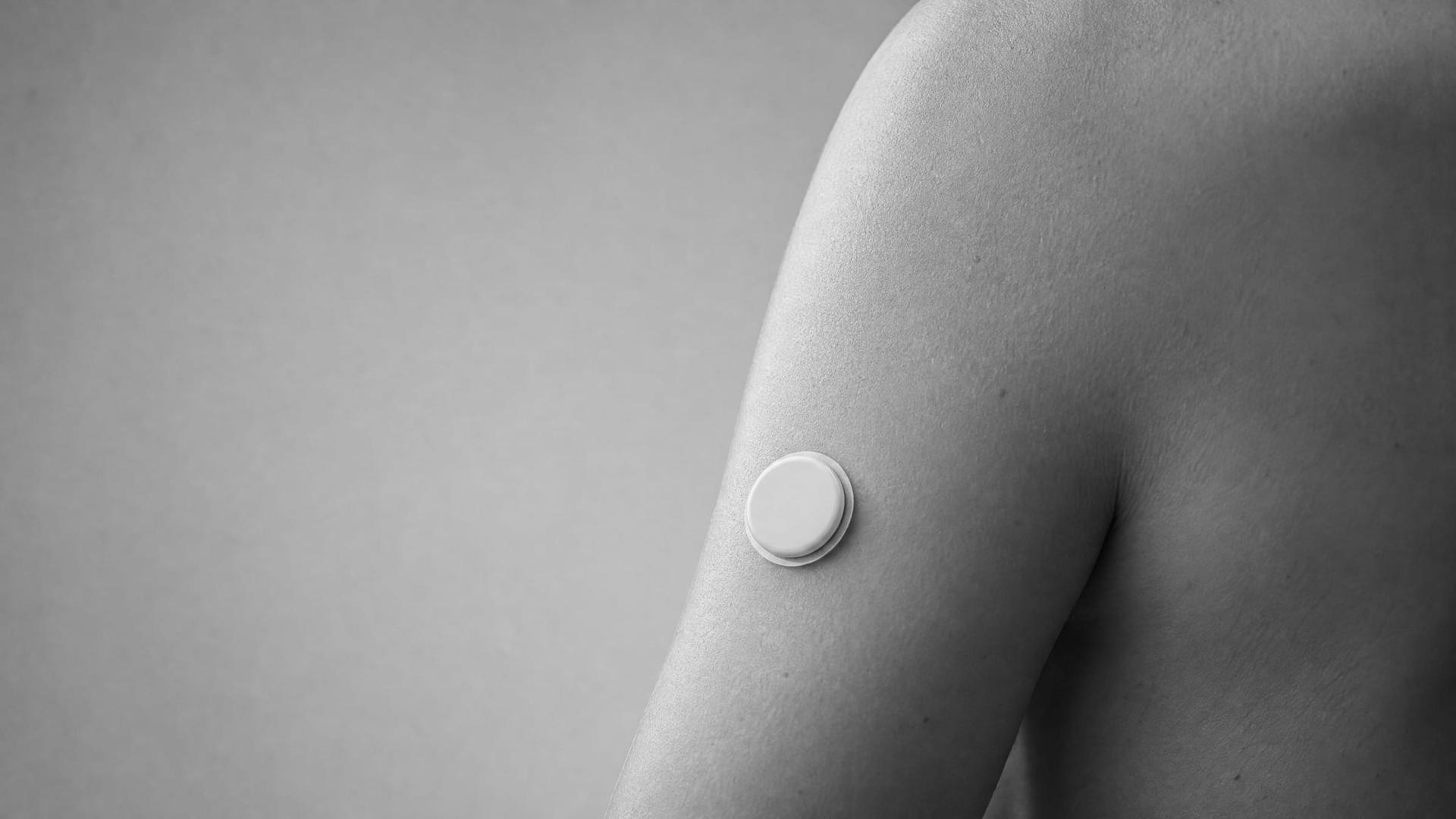
A CGM is a coin-sized sensor worn on the back of the upper arm, with a thin, flexible filament that sits under the skin. The filament reads glucose in interstitial fluid, the watery fluid between cells, rather than in blood, and sends a reading to a phone app every few minutes. Glucose reaches interstitial fluid several minutes after it rises in blood, so a CGM lags behind a fingerstick when glucose is moving fast, after a meal or during exercise. Each sensor lasts 14 or 15 days, and readings from the first day after insertion are the least settled.
Can you buy one without a prescription?
Yes. The FDA cleared Stelo on 5 March 2024 as the first over-the-counter CGM, for adults 18 and over who do not use insulin, and said it is not for people with problematic low blood sugar 1. Abbott announced FDA clearance of Lingo on 10 June 2024, for adults 18 and over who are not on insulin and want to track their general wellness 2. Prescription CGMs such as the Dexcom G7 and FreeStyle Libre 3 are built for people with diabetes and carry alarms for dangerous lows and highs.
Stelo or Lingo: the two over-the-counter CGMs
Users should not make medical decisions based on the device's output without talking to their healthcare provider.US Food and Drug Administration, on clearing Stelo, March 2024 1
What normal looks like on a CGM if you don't have diabetes
The best-known reference comes from a 2019 study in which 153 healthy people aged 7 to 80 wore a blinded Dexcom G6 for up to 10 days 3. Blinded means the volunteers could not see their readings, so they had no reason to eat differently to flatten the trace.
| CGM measure | Typical in healthy people 3 | Target set for people with diabetes (2019 consensus) 7 | What it means for a healthy reader |
|---|---|---|---|
| Average glucose | 98 to 99 mg/dL; 104 mg/dL over age 60 | No single number | An average near 100 mg/dL is ordinary, and slightly higher over 60 |
| Time between 70 and 140 mg/dL | 96% of the day | Uses 70 to 180 mg/dL instead, for more than 70% of the day | Most of a healthy day sits in a narrow band |
| Time above 140 mg/dL | About 2%, roughly 30 minutes a day | Not used | Short climbs over 140 after meals are part of a normal day |
| Time below 70 mg/dL | About 1%, roughly 15 minutes a day | Under 4% of the day | A brief dip below 70 with no symptoms is common, and can be a sensor artifact such as a compression low |
| Coefficient of variation (how widely glucose swings around its average) | About 17% | 36% or less | Healthy swings are about half the ceiling set for diabetes |
App showing mmol/L? 140 mg/dL is 7.8 mmol/L; convert any other number with the glucose converter.
The diabetes targets are the wrong yardstick for a healthy trace. The 2019 international consensus on time in range set 70 to 180 mg/dL for more than 70% of the day as a goal for people living with diabetes 7; almost every healthy person clears it without effort, so passing it says little. No guideline body has set CGM targets for people without diabetes. The reference studies describe what is typical in healthy volunteers, and whether a value outside that typical range raises anyone's long-term risk has not been tested.
Are my glucose spikes normal?
Usually, yes. A rise to 140 or 150 mg/dL within an hour of a meal, settling back toward your baseline within two to three hours, is common in people with normal lab results; the healthy volunteers in the 2019 reference study spent about 30 minutes a day above 140 mg/dL 3. The size of a rise varies widely between people: a study of 800 people found that identical meals produced very different rises from one person to the next 8. A Stanford study found that even people with normal standard tests spent about 15% of the time in the prediabetes range on a CGM, and 2% in the diabetes range 9; it did not follow them to see whether those readings predicted diabetes. The same person also varies from day to day with sleep, stress, illness, exercise and time of day.
Part of many CGM spikes can be the sensor. In one randomized crossover trial in 15 healthy adults, the CGM tested read about 0.9 mmol/L (about 16 mg/dL) higher than fingerstick blood, both fasting and after glucose and fruit test meals, and overstated the time spent above 140 mg/dL about fourfold; the gap differed from person to person 4. The authors' conclusion: "CGM overestimated glycemic responses in numerous contexts." Other sensors may differ, but a CGM reading of 150 mg/dL can match a fingerstick reading in the mid 130s.
What a CGM can't tell you
A CGM cannot diagnose prediabetes or diabetes. The American Diabetes Association diagnoses diabetes with an A1C of 6.5% or higher, a fasting glucose of 126 mg/dL or higher, a 2-hour glucose of 200 mg/dL or higher on an oral glucose tolerance test, or a random glucose of 200 mg/dL or higher with classic symptoms such as thirst and frequent urination; CGM readings are not among its criteria 6. The prediabetes and type 2 diabetes pages cover the cutoffs in full.
A CGM also cannot measure insulin. In early insulin resistance, the pancreas makes extra insulin to hold glucose in range, so a CGM trace can look calm for years while insulin runs high. Fasting insulin, and HOMA-IR worked out from fasting insulin and fasting glucose, can point to that stage, though insulin tests are not standardized between labs and there is no agreed cutoff; a CGM cannot see it at all.
Reading a healthy person's trace is also unsettled among specialists. When 18 expert clinicians looked at 20 CGM reports from people without diabetes, made with Dexcom G6 Pro sensors and shown alongside each person's A1C and fasting glucose, they often disagreed about who needed follow-up, and the authors rated their overall agreement as poor 5. When specialists split on a healthy trace, an app's color-coded score for the same trace deserves caution.
A flat trace is also a poor measure of a good diet. Fruit, oats and beans raise glucose for a while after a meal; fried bacon barely moves it. Judging food on the CGM trace alone would favor the bacon.
Why the numbers can be wrong
- Lag: interstitial glucose trails blood glucose by several minutes, so on a fast rise or fall a CGM and a fingerstick disagree.
- Compression lows: sleeping on the arm that wears the sensor presses fluid away from the filament and can show a false overnight low that recovers when you roll over.
- Vitamin C: for FreeStyle Libre sensors, the sensor's own leaflet lists ascorbic acid supplements as able to push readings falsely high, so check the leaflet of any Libre-based sensor.
- Medicines: Dexcom sensor leaflets list hydroxyurea, and high doses of acetaminophen (more than 1 gram every 6 hours), as interfering; your sensor's leaflet names the ones that matter for that model.
- The first day: readings in the first 12 to 24 hours after insertion are the least reliable.
- Sensor bias: as covered above, at least one CGM reads consistently higher than fingerstick blood in healthy adults.
Where your CGM meets your blood test
Is GMI the same as A1C? No. After 14 days, most CGM apps report a GMI, the glucose management indicator, which estimates A1C from the sensor's average glucose: GMI (%) = 3.31 + 0.02392 x average glucose in mg/dL 10. A 14-day average of 120 mg/dL gives a GMI of about 6.2%. GMI can differ from a lab A1C for the same person, because a lab A1C also depends on how long your red blood cells live. A healthy average of about 100 mg/dL works out to a GMI of 5.7%, the level where a lab A1C enters the prediabetes range 6, so a GMI is a rough estimate, not a diagnosis.
 CalculatorGMI calculatorEnter the average glucose from your app's 14-day report to see the GMI it implies.Work it out
Fasting glucose shifts from one morning to the next, as A1C vs fasting glucose explains for the lab side, and a CGM study measured by how much. Across 59,565 mornings in 8,315 adults aged 40 to 70 without diabetes, fasting glucose measured by CGM varied by about 7.5 mg/dL (one standard deviation) within the same person from day to day; of people whose first morning was normal, 40% landed in the prediabetes range and 3% in the diabetes range on a later morning 11. Part of that swing is sensor noise, so a lab test is the reference. One high fasting value, from a lab or from a CGM, is a reason to repeat the test on another morning, within a few weeks, before reading anything into it, which is the argument of why a trend beats a single reading.
Two lab markers cover windows that A1C smooths over. 1,5-anhydroglucitol falls when glucose repeatedly climbs above about 180 mg/dL, so it picks up large spikes, not the brief rises to 140 or 150 that are normal; it is unreliable with SGLT2 inhibitor medicines, kidney disease and pregnancy. Fructosamine reflects average glucose over the past two to three weeks. The blood sugar tests guide shows where each one sits on a panel.
If you try one: a 14-day plan that gives real answers
- 1Days 1 to 3: live normallyEat, sleep and move as you usually do, and don't judge the first day's readings. These days are your baseline.
- 2Days 4 to 7: test your usual breakfastEat your normal breakfast on two mornings and one swap on two others, for example eggs and toast against cereal. Compare how high glucose rises and how long it takes to settle.
- 3Days 8 to 10: add a walkRepeat one meal twice, once sitting afterwards and once with a 10 to 15 minute walk straight after. In a pooled analysis of 7 short trials, light walking breaks during long sitting lowered after-meal glucose more than sitting straight through 12; one walk after eating is a simpler version of the same idea.
- 4Days 11 to 13: one change at a timeTry eating the vegetables and protein of a meal before the starch, or note what a short night does to the next day's readings. Change one thing per test so you know what caused any difference.
- 5Day 14: stop and write it downList the two or three changes that made a clear difference. If you have risk factors, take that list to your next appointment along with your lab results, and ask whether an A1C, fasting glucose and fasting insulin are due.
Log every meal with a time in the app and compare like with like: the same meal, at the same time of day, on a similar night's sleep. Judge a food on its nutrition as well as its trace.
Who should skip it, or ask a doctor first
The blood tests that show where you stand
If you want to know whether you are heading toward diabetes or insulin resistance, a few lab results answer that more directly than two weeks of sensor data. A1C and fasting glucose are the diagnostic tests 6. Fasting insulin and HOMA-IR can point to insulin resistance before glucose rises, though neither has an agreed cutoff. If it hasn't been checked, you can ask your clinician whether fasting insulin is worth adding to your next fasting glucose draw (usually no food for 8 to 12 hours beforehand); the two together give a HOMA-IR. See fasting before a blood test. The triglyceride to HDL ratio, from a standard lipid panel, tends to climb with insulin resistance too.
The tests that show where you stand
If those numbers point toward prediabetes, the odds can still move. In the Diabetes Prevention Program, a lifestyle program aiming at 7% weight loss and 150 minutes of activity a week cut new cases of type 2 diabetes by 58% over about three years in high-risk adults 13. The prediabetes page covers what changes the odds.
 CalculatorHOMA-IR calculatorHave fasting insulin and fasting glucose from the same draw? Turn them into a HOMA-IR.Work it out Free, no accountRead your blood testAlready have an A1C, fasting glucose or insulin result? Read every line of your report, free.Read my results


Citations
- US Food and Drug Administration. FDA clears first over-the-counter continuous glucose monitor. Press announcement, 5 March 2024.
- Abbott. Abbott receives U.S. FDA clearance for two new over-the-counter continuous glucose monitoring systems. Press release, 10 June 2024.
- Shah VN, DuBose SN, Li Z, et al. Continuous glucose monitoring profiles in healthy nondiabetic participants: a multicenter prospective study. J Clin Endocrinol Metab. 2019;104(10):4356-4364.
- Hutchins KM, Betts JA, Thompson D, Hengist A, Gonzalez JT. Continuous glucose monitor overestimates glycemia, with the magnitude of bias varying by postprandial test and individual: a randomized crossover trial. Am J Clin Nutr. 2025;121(5):1025-1034.
- Spartano NL, Prescott B, et al. Expert clinical interpretation of continuous glucose monitor reports from individuals without diabetes. J Diabetes Sci Technol. 2026;20(3):727-735 (online February 2025).
- American Diabetes Association Professional Practice Committee. 2. Diagnosis and classification of diabetes: Standards of Care in Diabetes 2026. Diabetes Care. 2026;49(Suppl 1):S27-S49.
- Battelino T, Danne T, Bergenstal RM, et al. Clinical targets for continuous glucose monitoring data interpretation: recommendations from the International Consensus on Time in Range. Diabetes Care. 2019;42(8):1593-1603.
- Zeevi D, Korem T, Zmora N, et al. Personalized nutrition by prediction of glycemic responses. Cell. 2015;163(5):1079-1094.
- Hall H, Perelman D, Breschi A, et al. Glucotypes reveal new patterns of glucose dysregulation. PLoS Biol. 2018;16(7):e2005143.
- Bergenstal RM, Beck RW, Close KL, et al. Glucose management indicator (GMI): a new term for estimating A1C from continuous glucose monitoring. Diabetes Care. 2018;41(11):2275-2280.
- Shilo S, et al. Continuous glucose monitoring and intrapersonal variability in fasting glucose. Nat Med. 2024;30(5):1424-1431.
- Buffey AJ, Herring MP, Langley CK, Donnelly AE, Carson BP. The acute effects of interrupting prolonged sitting time in adults with standing and light-intensity walking on biomarkers of cardiometabolic health in adults: a systematic review and meta-analysis. Sports Med. 2022;52(8):1765-1787.
- Knowler WC, Barrett-Connor E, Fowler SE, et al. Reduction in the incidence of type 2 diabetes with lifestyle intervention or metformin. N Engl J Med. 2002;346(6):393-403.
Educational context only, not medical advice or a diagnosis. Always discuss your results with a clinician.