- 01The patch tracks insulin, while the standard diabetes tests track sugar
Acanthosis nigricans forms when insulin is high enough to act as a growth signal on skin cells 5. In insulin resistance the pancreas raises insulin to keep glucose normal, so the skin can change while fasting glucose and A1c still read normal: in a PRIME Net group without diabetes, people with the patch had higher insulin and more insulin resistance 2. A normal A1c beside acanthosis nigricans therefore does not clear insulin resistance. Fasting insulin and HOMA-IR (a score worked out from fasting insulin and glucose) can suggest it before sugar rises, though neither has a standard cut-off. In moderate-brown skin (Fitzpatrick type IV, the darkest type studied) the patch itself is a weaker signal 4, so the blood numbers decide.
If the skin on the back of your neck has turned darker, feels like velvet and does not change however hard you scrub, one common explanation is acanthosis nigricans (ak-an-THO-sis NIG-ri-kans), which a doctor can confirm by looking at the skin. The patch is skin reacting to insulin. When the body's cells respond weakly to insulin, the pancreas makes more of it, and at high levels insulin acts as a growth signal for skin cells 5. That is why the patch can show up before any blood sugar test turns abnormal, and why the useful tests measure insulin as well as sugar.
What does acanthosis nigricans look like?
Acanthosis nigricans is brown to grey-black skin that is thicker than the skin around it, with a soft, velvety or finely ridged feel. The back and sides of the neck are the most common site, then the armpits, groin, the skin under the breasts, and the knuckles, elbows and knees 5. Small skin tags often grow in or beside the patch. Some people notice mild itch or odor in the folds, where sweat and friction collect. The insulin-related form comes on slowly over months, so many people first hear about it from a doctor or a partner.
Skin tone changes how often acanthosis nigricans appears and how it looks. In a study of 62 adults with obesity, acanthosis nigricans was found in 78% of people with Fitzpatrick skin type IV (moderate brown), 52% with type III (light brown) and 19% with type II (fair) 4. On darker skin the patches tend to look deeper brown and more leathery. On the face it shows up as a dark, velvety band on the forehead, temples or cheeks, almost only in darker skin types 8.
The neck severity scale
Burke and colleagues in San Antonio built a 0 to 4 scale, now called the Burke scale, after two or more examiners checked five sites in 406 people. Only the neck scored consistently between examiners, and higher neck scores went with higher fasting insulin and higher BMI 3. A doctor can use it to record a starting point and track change.
| Burke score | What the back of the neck looks like |
|---|---|
| 0 | No acanthosis nigricans, even on close inspection |
| 1 | Visible on close inspection but not to a casual observer; the edges cannot be measured |
| 2 | Mild: limited to the base of the skull, not reaching the sides of the neck (usually under 3 inches wide) |
| 3 | Moderate: reaches the sides of the neck (usually 3 to 6 inches wide) but cannot be seen from the front |
| 4 | Severe: wraps forward and can be seen when the person is viewed from the front (usually over 6 inches wide) |
Is it dirt? How to tell it from look-alikes
Acanthosis nigricans does not wash off, and hard scrubbing makes it look worse by irritating skin that is already thick. A handful of other conditions also look like grime or dark patches, and each has a quick tell that a clinician can check in minutes.
| Condition | How it looks | The quick tell | What helps |
|---|---|---|---|
| Acanthosis nigricans | Velvety, thickened dark skin in folds, often with skin tags | Stays after rubbing with a 70% isopropyl alcohol pad | Treating the cause, usually high insulin |
| Terra firma-forme dermatosis | Brown, dirt-like, slightly scaly patches on the neck, ankles or belly, often in children and teens | Comes off completely with a 70% isopropyl alcohol pad | The alcohol rub itself |
| Tinea versicolor | Pale, pink or light brown patches with a fine scale on the upper back, chest and shoulders | Fine scale when the skin is scraped; yeast on a skin scraping | Antifungal treatment |
| Post-inflammatory hyperpigmentation | Flat dark marks where skin was irritated, for example after acne or eczema | Flat and smooth, following an earlier rash or injury | Treating the rash; fades over months |
| Erythrasma | Red-brown, slightly scaly patches in the armpits, groin or between the toes | Glows coral red under a Wood's lamp (ultraviolet light) | Antibacterial treatment from a clinician |
| Confluent and reticulated papillomatosis | Brown, slightly raised spots in a net pattern on the chest and back of teens and young adults | Net-like pattern spreading out from the middle of the chest or back | Prescribed antibiotics |
Why high insulin darkens the skin
How insulin resistance becomes acanthosis nigricans
The types of acanthosis nigricans and which one fits
Doctors sort acanthosis nigricans by cause, because the cause decides what happens next. The insulin-related form is by far the most common, and a review of treatment options lists diabetes, obesity, hormone disorders, drug reactions and internal cancer as the main associations 6.
| Type | Who it affects | How it starts | What usually happens next |
|---|---|---|---|
| Insulin-related | People with insulin resistance, obesity, prediabetes or type 2 diabetes | Slowly, over months, on the neck and in the armpits | Glucose, A1c and insulin tests; fades as insulin falls |
| Hormone-related | PCOS (including HAIR-AN: high androgens, the male-type hormones such as testosterone, plus insulin resistance and acanthosis nigricans), Cushing's syndrome, hypothyroidism, acromegaly, lipodystrophy (loss of body fat from some areas) | Alongside other signs such as irregular periods, extra hair, a rounder face or weight gain | Hormone tests matched to those signs |
| Drug-induced | People taking high-dose niacin, steroid tablets, birth control pills or testosterone, or injecting insulin (at the injection site) 7 | Weeks to months after the medicine starts | A talk with the prescriber; it usually improves after a change of medicine 7 |
| Autoimmune | People with lupus, Sjogren's syndrome or Hashimoto's disease | Sometimes suddenly, when the immune system makes antibodies against the insulin receptor (type B insulin resistance) 5 | Specialist review |
| Familial | Several members of one family | In childhood, sometimes spreading at puberty 5 | Often stops progressing after puberty |
| Acral | Mostly people with darker skin, often otherwise healthy | Knuckles, elbows and knees only | Often no internal cause is found |
| Unilateral | Anyone, often from childhood | On one side of the body only, like a birthmark | Usually no internal cause |
| Malignant | Middle-aged adults, often not overweight | Suddenly, over weeks, often with palms or mouth involved 5 | Urgent medical review |
Does acanthosis nigricans mean you have diabetes?
Not always, but it raises the odds enough to test. In the PRIME Net study, clinicians in a national US primary-care network examined 1,730 patients aged 7 to 65 and found acanthosis nigricans in 19.4% of them 2. In 11 matched pairs without diabetes, the patients with acanthosis nigricans had higher insulin and more insulin resistance than those without it 2.
Patients with AN likely have multiple diabetes risk factors and are more likely to have diabetes.Kong AS et al., PRIME Net study, Journal of the American Board of Family Medicine, 2010 2
In medium and darker skin the patch says less about insulin. In the same study of 62 adults, neck acanthosis nigricans in skin type II reliably pointed to insulin resistance, while in type IV it appeared in 78% of people, so its presence said much less; the authors concluded that "AN is a good marker for IR only in lower phototypes" 4, meaning lighter skin. The study covered types II to IV only, so with moderate-brown or darker skin, check the blood numbers rather than read the skin alone.
The blood tests that find the cause
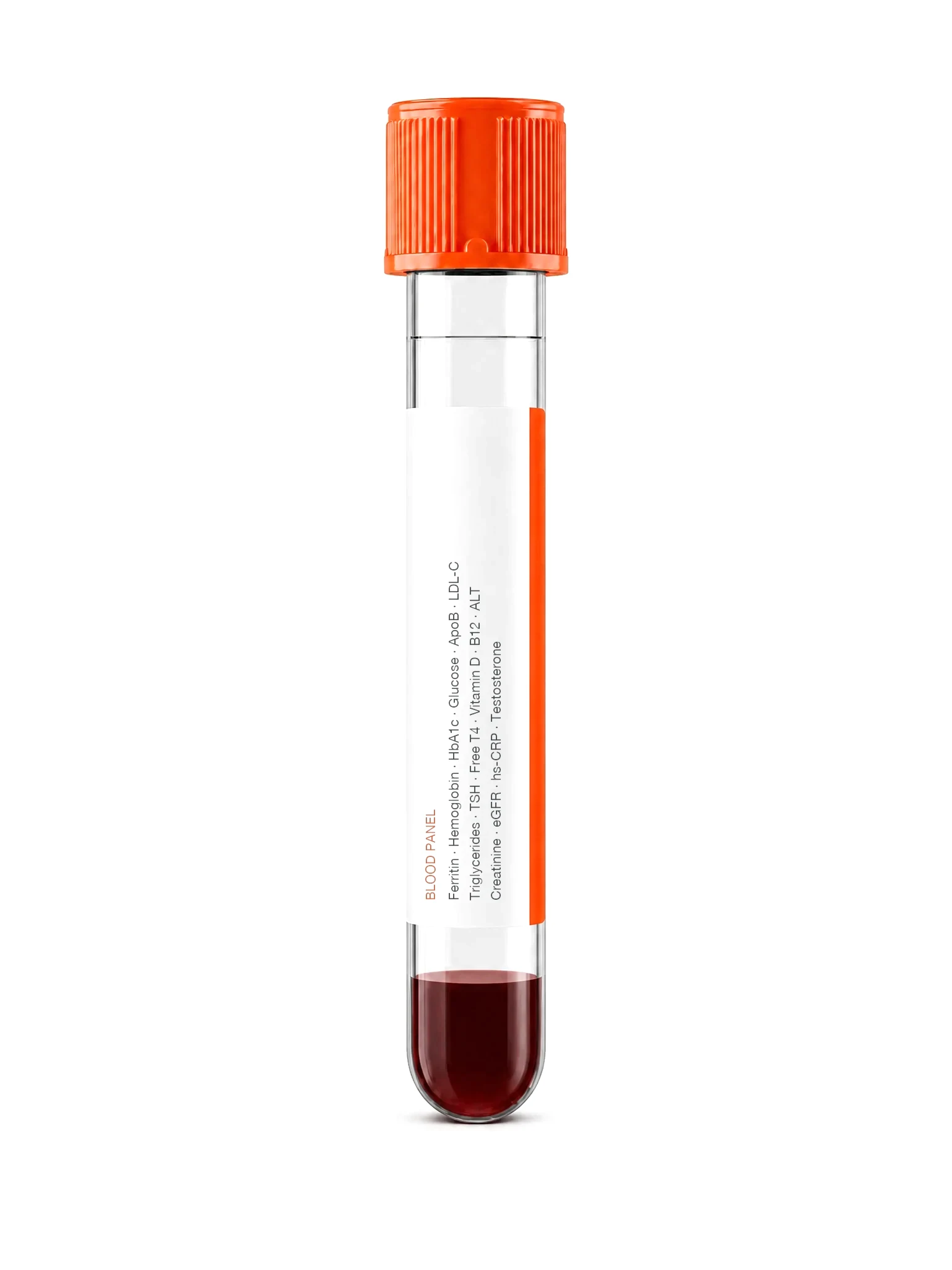
Fasting glucose and A1c are the standard diabetes tests, and both measure sugar, which is the last thing to rise in insulin resistance. Fasting insulin and HOMA-IR (an estimate of insulin resistance from fasting insulin and fasting glucose) can suggest the earlier stage, when the pancreas is working hard to keep glucose normal 9. The A1c vs fasting glucose comparison explains why the two sugar tests can disagree, the blood sugar guide covers the rest of the panel, and every blood sugar page is gathered under blood sugar.
| Test | What it shows beside acanthosis nigricans | What counts as raised |
|---|---|---|
| Fasting glucose | Blood sugar after at least 8 hours without food | 100 to 125 mg/dL is prediabetes; 126 mg/dL or more is the diabetes range 1 |
| HbA1c | Average blood sugar over about 3 months | 5.7% to 6.4% is prediabetes; 6.5% or more is the diabetes range 1 |
| Fasting insulin | How hard the pancreas works to hold glucose steady | No standard cut-off; insulin tests differ between labs, so read it against your lab's range |
| HOMA-IR | Fasting insulin × fasting glucose (mg/dL) ÷ 405, one estimate of insulin resistance 9 | No agreed cut-off; the HOMA-IR page covers how to read it |
| Triglyceride/HDL ratio | A lipid-panel stand-in for insulin resistance | Higher ratios go with insulin resistance and metabolic syndrome |
| ALT | A liver enzyme that rises when fat builds up in the liver | Above your lab's range; see fatty liver |
| hs-CRP | Low-grade inflammation, which often travels with insulin resistance | No cut-off specific to acanthosis nigricans; read it against your lab's range |
What to do next
- Book a routine visit with your GP or primary-care doctor and show them the patch. It is not urgent unless you have the warning signs further down this page.
- Ask for an A1c and a fasting glucose, and ask whether a fasting insulin can be added so HOMA-IR can be worked out. Fast for at least 8 hours beforehand, water only; the fasting guide explains what counts.
- If your A1c is 5.7 to 6.4% or your fasting glucose is 100 to 125 mg/dL, the ADA advises testing again at least once a year 1.
- If the sugar tests are normal but insulin is high, ask the doctor when to repeat it, so you can see whether changes are bringing it down.
Example: an A1c of 5.9% in someone with acanthosis nigricans%
 CalculatorHOMA-IR calculatorTurn a fasting insulin and a fasting glucose from the same blood draw into a HOMA-IR estimate.Work it out
If there are other signs
When the patch comes with other signs, doctors add hormone tests that match them.
| Other signs | Points toward | Tests |
|---|---|---|
| Irregular periods, extra facial or body hair (hirsutism), acne | PCOS | Total and free testosterone, SHBG, DHEA-S |
| Tiredness, feeling cold, slow weight gain | An underactive thyroid | TSH |
| A rounder face, purple stretch marks, easy bruising | Cushing's syndrome | Specialized cortisol testing arranged by a doctor |
| Growing hands, feet or jaw | Acromegaly | IGF-1 |
Markers to read beside acanthosis nigricans
When dark patches need a doctor quickly
Acanthosis nigricans itself is not cancer, but a rare form is a sign of one. Those features point to malignant acanthosis nigricans, which appears with an internal cancer; about 60% of cases are linked to a cancer of the stomach's gland cells (adenocarcinoma) 8. It tends to start abruptly in middle-aged adults who are not overweight, spreads fast and often itches. The mouth is involved in 25 to 50% of cases, and tripe palms carry about a 90% link to internal cancer 8. Schwartz's dermatology review calls this form a marker "for a highly malignant and rapidly fatal internal cancer" 5. If your patches came on slowly over months and you carry extra weight around the middle, this form is very unlikely; the insulin-related form is by far the most common. The skin often settles once the cancer is treated. Tumor marker blood tests cannot rule it out; the tumor markers guide explains why. New acanthosis nigricans after starting a medicine is worth raising with the prescriber at the next visit, without stopping the medicine first.
Acanthosis nigricans in children and teens
Acanthosis nigricans is not only an adult finding: the PRIME Net study found it in every age group it examined, starting at age 7 2. In a child or teen with overweight it is a reason to test for prediabetes and type 2 diabetes, on the ADA timing above 1.
- A child with overweight and new dark patches on the neck: ask the pediatrician whether A1c or fasting glucose testing fits 1.
- A lean child, or patches that appear suddenly: ask about an endocrine review, because hormone conditions and rare insulin receptor disorders are on the list.
- Patches present from early childhood in several family members: this can be familial acanthosis nigricans, which often stops spreading after puberty 5; the pediatrician can still check insulin and glucose.
- Talking to a teen about the patch: describe it as a skin signal about insulin with no link to hygiene, so washing harder will not change it.
How to get rid of acanthosis nigricans
Treatment targets the cause first and the skin second. The 2018 treatment review found mostly small trials and case reports, so the evidence for any single skin treatment is thin 6.
Fix the driver
For insulin-related acanthosis nigricans, the patches tend to fade as insulin falls, through weight loss, more daily movement and fewer refined carbohydrates 6. Fat around the middle is the usual driver; the waist-to-height ratio calculator shows where you stand and the visceral fat guide explains why it matters. Metformin, a prescription diabetes medicine, produced modest improvements in skin and insulin in small trials 6. Prescription weight and diabetes medicines such as tirzepatide (a GIP and GLP-1 medicine) are approved for the obesity and type 2 diabetes behind many cases; their main trials reported weight and A1c, not skin changes, and whether one fits is the prescriber's call. For PCOS, treating the hormone pattern helps, and for a drug-induced case the prescriber may change the medicine. Starting, changing or stopping a prescribed medicine goes through the prescriber.
Treat the skin
Dermatologists use topical retinoids (vitamin A creams), keratolytics such as urea, lactic, salicylic or glycolic acid that thin the thick outer layer, calcipotriol (a vitamin D cream), chemical peels, and lasers such as the long-pulsed alexandrite laser 6. Antibacterial or antifungal treatment helps when folds become sore, damp or smelly. Skin treatments soften texture and lighten color, but the patches tend to come back if insulin stays high.
Is acanthosis nigricans reversible, and how long does it take to fade?
Yes, in most insulin-related cases, but expect months. Thickness and texture usually soften before the color fades, and patches that have been there for years may not clear fully. Photos taken in the same light every month show change better than the mirror does.
| Time since the cause was treated | What the skin usually does | What the blood tests can show |
|---|---|---|
| 0 to 3 months | Little visible change; the skin may feel softer | A1c reflects about 3 months of glucose, so it needs that long to move |
| 3 to 6 months | Texture softens if insulin is falling | Fasting insulin or HOMA-IR, fasting and at the same lab, shows whether insulin has come down |
| 6 to 12 months | Color lightens, more slowly than texture | Compare with the starting results rather than one value alone |
| After a year | Faint patches may remain; they can return if weight or insulin rise again | Follow-up testing on the schedule the doctor sets |

A doctor or dermatologist should confirm the cause and should know every medicine and supplement you take, and no prescribed medicine should be started, changed or stopped without the prescriber. See a doctor within days if dark patches spread over a few weeks, appear in an adult who is not overweight, involve the palms, soles, lips or mouth, or come with weight loss you did not try for, early fullness, trouble swallowing or belly pain. Vomiting blood or passing black, tarry stools needs emergency care the same day.
Citations
- American Diabetes Association Professional Practice Committee. 2. Diagnosis and classification of diabetes: Standards of Care in Diabetes 2025. Diabetes Care 2025;48(Suppl 1):S27-S49
- Kong AS et al. Acanthosis nigricans: high prevalence and association with diabetes in a practice-based research network consortium, a PRImary care Multi-Ethnic network (PRIME Net) study. J Am Board Fam Med 2010;23(4):476-85
- Burke JP, Hale DE, Hazuda HP, Stern MP. A quantitative scale of acanthosis nigricans. Diabetes Care 1999;22(10):1655-9
- Lopez-Alvarenga JC et al. Influence of skin color on the diagnostic utility of clinical acanthosis nigricans to predict insulin resistance in obese patients. Arch Med Res 2006;37(6):744-8
- Schwartz RA. Acanthosis nigricans. J Am Acad Dermatol 1994;31(1):1-19
- Patel NU, Roach C, Alinia H, Huang WW, Feldman SR. Current treatment options for acanthosis nigricans. Clin Cosmet Investig Dermatol 2018;11:407-13
- Mourad AI, Haber RM. Drug-induced acanthosis nigricans: a systematic review and new classification. Dermatol Ther 2021;34(2):e14794
- DermNet. Acanthosis nigricans. DermNet NZ
- Matthews DR, Hosker JP, Rudenski AS, Naylor BA, Treacher DF, Turner RC. Homeostasis model assessment: insulin resistance and beta-cell function from fasting plasma glucose and insulin concentrations in man. Diabetologia 1985;28(7):412-9
Educational context only, not medical advice or a diagnosis. Always discuss your results with a clinician.