Sleep feels like a blackout because the brain turns down memory-making as you drift off, so the last thing you recall is lying down and the next is the alarm. In between, the brain is busy: it runs four distinct stages in repeating cycles, keeps an ear on the room, dreams, files the day's learning and times the hormones that will wake you.
Are you unconscious when you sleep?
No, not in the medical sense. Doctors use 'unconscious' for a state that ordinary sounds and touch can't reverse, such as a coma or general anesthesia. The textbook definition of sleep, written by sleep researchers Mary Carskadon and William Dement, puts reversibility at its center.
Sleep is a reversible behavioral state of perceptual disengagement from and unresponsiveness to the environment.Mary Carskadon and William Dement, Principles and Practice of Sleep Medicine
Perceptual disengagement means the brain stops passing most sights and sounds through to awareness. The brain still receives those signals, and it decides which ones are worth waking you for. In a 2010 review in the New England Journal of Medicine, Emery Brown, Ralph Lydic and Nicholas Schiff described general anesthesia as a drug-induced, reversible coma whose brain-wave patterns and brain circuits differ from natural sleep 1. A person under anesthesia can't be roused until the drug clears, and nobody builds up a need for anesthesia the way a long day builds up a need for sleep.
| Natural sleep | General anesthesia | Coma | |
|---|---|---|---|
| Can a voice or touch wake you? | Yes, usually within seconds | No, not until the drug is withdrawn | No |
| Brain-wave pattern | Cycles through N1, N2, N3 and REM | Drug-driven patterns that change with dose | Slowed or suppressed, with no normal cycling |
| Does a need for it build up? | Yes, pressure grows the longer you are awake | No | No |
| Do you remember anything? | Often a dream; rarely the moment of drifting off | Usually nothing | Usually nothing |
| How it ends | On its own, or when something wakes you | When the drug clears | Depends on the injury; recovery may be partial |
What your brain does through the night, stage by stage
A night of sleep runs as a loop. Adults pass through 4 to 6 cycles of roughly 90 to 110 minutes, each moving through light non-REM sleep (NREM), deep sleep and rapid eye movement sleep (REM, the stage with the most vivid dreams). The mix shifts across the night: deep sleep is packed into the first third, REM stretches out in the last third, and the share of deep sleep shrinks with age, according to Carskadon and Dement's chapter on normal human sleep.
| Stage | Share of an adult night | Brain waves | How easy to wake | Body and eyes |
|---|---|---|---|---|
| N1, drifting off | About 5% | Waking alpha rhythm gives way to slower theta | Very easy; people often deny they were asleep | Slow rolling eyes; hypnic jerks (sudden falling twitches) |
| N2, light sleep | About half | Sleep spindles and K-complexes | Fairly easy | Heart rate and temperature fall; eyes still |
| N3, deep sleep | About 15 to 20% in young adults, less with age | Large, slow delta waves | Hardest; you wake groggy | Biggest growth hormone pulse of the day; eyes still |
| REM | About 20 to 25% | Fast, close to waking | Moderate; you often recall a dream | Most muscles switched off; eyes dart; breathing irregular |
Sleep spindles are short bursts of fast brain waves, and K-complexes are single large waves; both appear in N2 sleep and help keep ordinary noise from reaching awareness. In REM sleep the brain's electrical activity looks close to waking while the body is held still, apart from the eyes and the breathing muscles. That pairing of an active brain and a paralyzed body explains most of what feels strange about sleep, from sleep paralysis to dreams you can steer. The stages have their own pages: deep sleep and what core sleep means.
 CalculatorSleep calculatorTimes a bedtime or an alarm to the end of a 90-minute cycle, when waking tends to feel least groggy.Work it out
Are you conscious of anything while you sleep?
Partly, and mostly in ways you won't remember. The sleeping brain keeps sorting sounds. In a 2018 study in NeuroImage, Christine Blume and colleagues played familiar and unfamiliar voices to sleepers and found that unfamiliar voices set off more K-complexes and micro-arousals (brief shifts toward waking that leave no memory) during N2 and deep sleep 2. The authors called this 'standing sentinel', a brain that keeps checking its surroundings without bringing them into awareness. The same kind of filtering helps explain why a parent can sleep through traffic and wake to a baby's cough.
The lucid dreaming study is the strongest modern evidence that some awareness survives in sleep. Konkoly's team ran 36 people across four labs in the US, France, Germany and the Netherlands, with sleep recordings confirming REM while dreamers signaled answers using left-right eye movements or facial muscle twitches 3. Dreams are not limited to REM either; people woken from NREM sleep also report dreams, less often and less vividly.
Most people can't remember the moment they fell asleep because the brain turns down memory-making at sleep onset, so the last few minutes before sleep often vanish. Feeling that you were out cold is a gap in memory, while the recordings show a brain working the whole night.
A night in your body, hour by hour
The body keeps its own overnight schedule, set partly by sleep and partly by the circadian clock (the roughly 24-hour timer in the brain). For someone who usually sleeps from 11 pm to 7 am, the night runs like this.
- 19 pm to 11 pmMelatonin starts rising about 2 hours before your usual bedtime. Bright room light pushes that rise later; light and sleep explains how.
- 211 pm to 1 amCore temperature starts falling, and the day's biggest growth hormone pulse arrives with the first stretch of deep sleep. Blood pressure and heart rate dip by roughly 10 to 20%, and the kidneys make less urine, so most adults sleep through without a bathroom trip.
- 31 am to 5 amCortisol sits at its lowest around midnight and starts climbing in the early hours. Core temperature bottoms out about 2 hours before your usual wake time.
- 45 am to 8 amCycles turn REM-heavy, so dreams cluster toward morning. Cortisol peaks, with an extra jump in the 30 minutes after waking, and core temperature climbs.
Night shifts and jet lag pull these rhythms apart. The circadian clock keeps its own timetable even when sleep moves to the daytime, which is part of why daytime sleep tends to be shorter and lighter.
Does your body temperature rise or drop when you sleep?
Core body temperature drops during sleep, by about 0.5 to 1 °C (1 to 2 °F) across the night. People often feel hot in bed because the body sheds that core heat through the skin of the hands and feet. In a 2000 study, Kurt Kräuchi and colleagues found that how fast the hands and feet warmed before bed predicted how fast people fell asleep, and predicted it better than core temperature did 4.
How heat leaves your body at night
In REM sleep the body barely regulates its own temperature, so a hot or cold room is more likely to wake you in the REM-heavy early morning. A 2019 meta-analysis by Shahab Haghayegh and colleagues found that a warm bath or shower 1 to 2 hours before bed shortened the time it took to fall asleep, probably by starting the heat dump early. Waking soaked, with sheets that need changing, is a different matter from normal temperature drift; night sweats covers the causes, and drenching sweats with fever or weight loss you can't explain need a doctor.
Do you burn calories when you sleep?
Yes, close to your basal metabolic rate (BMR), the energy the body uses at complete rest. For most adults sleep burns roughly 50 to 70 calories an hour, a few percent below lying quietly awake, lowest in deep sleep and a little higher in REM.
 CalculatorTDEE calculatorGives your own BMR; divide it by 24 for your hourly sleeping figure.Work it out
Staying awake makes a poor weight-loss plan. In a whole-room calorimeter (a sealed room that measures the energy you use), a night of no sleep raised 24-hour energy use by only about 7%, roughly 135 calories, in a 2011 study by Christopher Jung and colleagues in the Journal of Physiology. Markwald and colleagues then held people to about 5 hours of sleep for five nights: they burned about 5% more energy, ate more than that, mostly after dinner, and gained about 0.8 kg 5. Short sleep also lowers leptin, the fullness hormone, and raises ghrelin, the hunger hormone (Spiegel and colleagues, Annals of Internal Medicine, 2004). Losing sleep burns only a little extra energy, and the extra eating that follows outweighs it.
Can you cough, sneeze, yawn or cry in your sleep?
Most of these reflexes need a brain close to waking, so they happen at the surface of sleep rather than inside it.
| Can you...? | Answer | What's happening | When to pay attention |
|---|---|---|---|
| Sneeze | Almost never | The sneeze reflex needs a nearly awake brain, and REM switches off most muscles, so an irritant wakes you first | Waking to sneeze most mornings suggests bedroom allergens |
| Cough | Rarely while truly asleep | Cough is suppressed in sleep; a night cough usually comes with a brief arousal you may not remember | A night cough lasting more than 8 weeks, or with wheeze, fever or blood |
| Yawn | Only at the edges | Yawns come while drifting off or surfacing, not inside deep or REM sleep | Constant yawning with heavy daytime sleepiness |
| Cry | Yes | During upsetting dreams, at brief arousals, and in children with night terrors who don't remember it | Frequent night crying or nightmares tied to grief or trauma |
| Talk | Yes | About two in three people talk in their sleep at some point | Shouting, punching or kicking along with a dream |
The cough evidence goes back to a 1984 study by J.T. Power and colleagues in the American Review of Respiratory Disease. Patients with chronic bronchitis who complained of night cough were recorded with EEG (brain-wave monitoring), and their coughing was suppressed while they slept. Each night cough comes with surfacing toward waking, which is why a cough wrecks sleep; reflux, post-nasal drip and asthma are the usual drivers. Hypnic jerks, the sudden falling twitch at sleep onset, are common and harmless. Sleep talking has its own page.
Do your eyes roll back when you sleep?
Yes, in most people. When the lids close, the eyes turn up and slightly outward, a reflex called Bell's phenomenon that protects the cornea (the clear front of the eye). As you drift off the eyes make slow rolling movements, in deep sleep they go still, and in REM sleep they dart. Seeing the whites through a partly open lid is common and usually harmless, though sleeping with the eyes partly open can leave them dry and sore.
Is beauty sleep real?
Partly. In a 2010 BMJ study, John Axelsson and colleagues photographed people after normal sleep and again after 31 hours awake; untrained observers rated the sleep-deprived faces as less healthy, less attractive and more tired 6. A follow-up by Tina Sundelin's group found hanging eyelids, darker circles and redder, puffier eyes after sleep loss. Growth hormone peaks at night and cell repair runs then, but no trial shows that extra sleep reverses wrinkles.
- Strong evidence: sleep loss shows on the face within a day 6.
- Some evidence: skin barrier recovered better in good sleepers in one small, industry-funded study.
- Unproven: more sleep as an anti-aging treatment for skin.
What sleep does for your brain, memory and immune system
During deep sleep and REM the brain replays the day's learning, which helps lock it into long-term memory, as Susanne Diekelmann and Jan Born set out in a 2010 review in Nature Reviews Neuroscience.
The idea that sleep washes the brain comes from preclinical work. In 2013 Lulu Xie and colleagues reported in Science that the space between brain cells widened by about 60% during sleep and beta-amyloid, the protein that builds up in Alzheimer's disease, cleared faster. In people, a 2019 study led by Nina Fultz recorded slow waves of spinal fluid pulsing through the brain during deep sleep. A 2024 preclinical study by Miao and colleagues in Nature Neuroscience measured clearance a different way and found it fell during sleep. Whether sleep speeds brain clearance in humans is still an open question.
Sleep also shapes immune memory. Karine Spiegel and colleagues limited healthy young men to about 4 hours a night for six nights around a flu vaccination; 10 days later they had roughly half the antibody response of normal sleepers (JAMA, 2002). How short nights add up is covered in is 5 hours of sleep enough.
When the line between asleep and awake blurs
Sleep paralysis is waking while REM's muscle switch-off is still in place: you are aware, can't move for seconds to a couple of minutes, and may sense someone in the room. A 2011 review by Brian Sharpless and Jacques Barber estimated that about 7.6% of people have sleep paralysis at least once, rising to 28% of students. It is frightening and usually harmless.
Sleepwalking is a partial arousal out of deep sleep, in which the body wakes enough to move while awareness stays off. About 7% of people sleepwalk at some point, mostly as children (Stallman and Kohler, 2016). Sleepwalking that leaves the house or involves stairs, windows, driving or injury needs a doctor's assessment.
Acting out dreams is a separate problem. In REM sleep behavior disorder (RBD), the REM muscle switch-off fails, so people punch, kick or shout along with their dreams. In a 2019 study of 1,280 people with isolated RBD across 24 centers, Ronald Postuma and colleagues found that about 6% a year, and about 74% after 12 years, developed Parkinson's disease, dementia with Lewy bodies or a related condition 7. Those figures come from people already diagnosed with RBD in sleep clinics; an occasional twitch or a dream you talk through is not the same thing.
Sleep apnea causes repeated pauses in breathing that break up sleep without fully waking you. Loud snoring with gasping or pauses, morning headaches and heavy daytime sleepiness are the classic signs, and a sleep study confirms it. When nights feel broken for other reasons, can't sleep walks through the common causes.
What a blood test can and can't tell you about your nights
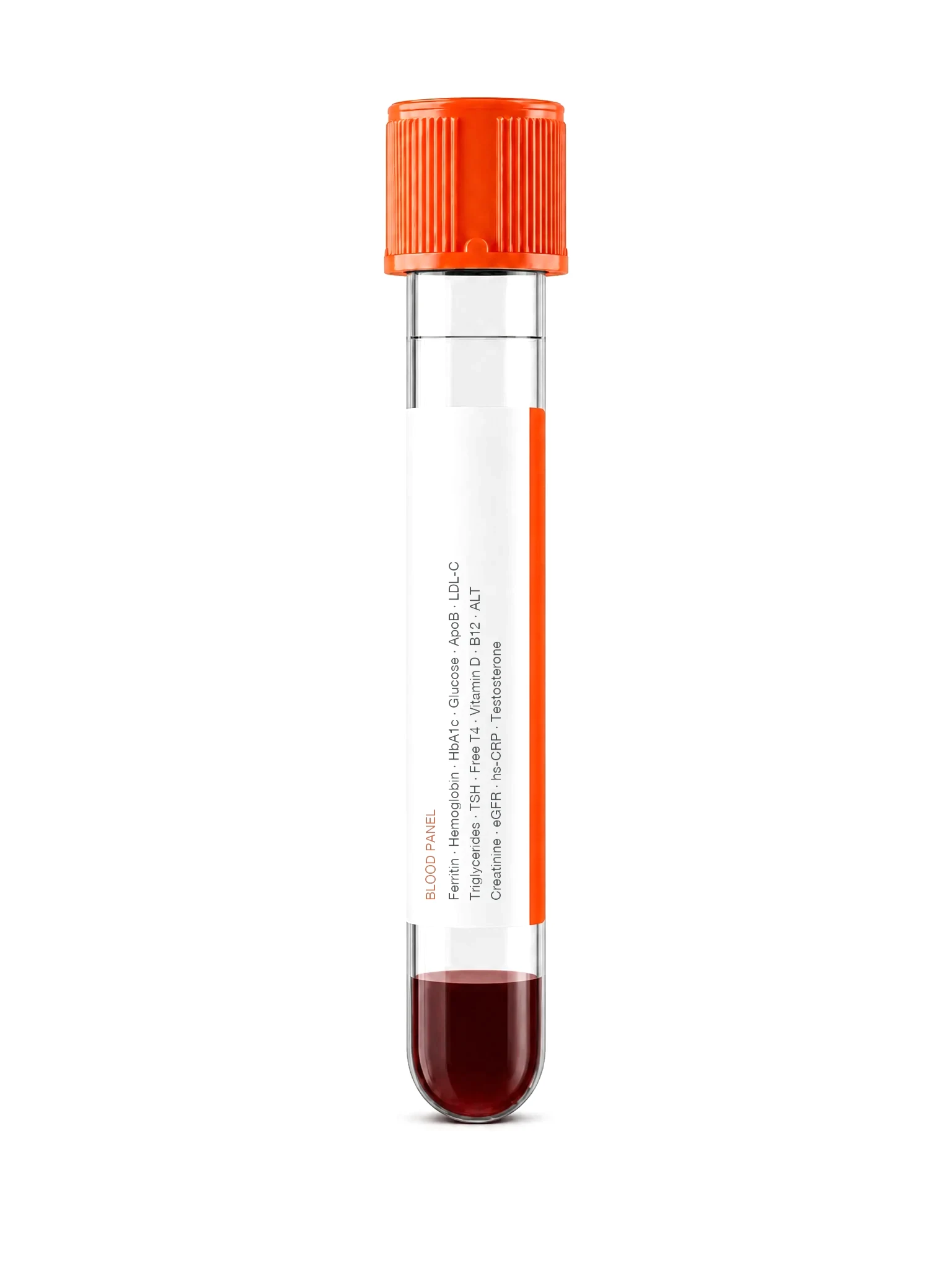
No blood test measures sleep stages or sleep quality. That takes a sleep study, or polysomnography, an overnight recording of brain waves, breathing and movement. Blood results can point to medical reasons nights go wrong. An overactive thyroid can leave a person hot, wired and waking (hyperthyroidism). Low iron stores sit behind many cases of restless legs. High blood sugar drives thirst and night-time urination, and short sleep itself nudges fasting glucose up. Morning cortisol reflects the awakening rise, so the time of the blood draw changes the number, and IGF-1 is the steadier read of the night's growth hormone. Results outside the range belong in a conversation with your doctor.
Results that explain bad nights
When to see a doctor
When to get help now
Most strange things that happen in sleep are harmless. These are the ones to act on.
- Eyes rolling back while awake with collapse, jerking or no response; call 911 if it lasts more than 5 minutes, repeats or causes injury
- Falling asleep while driving
- Sleepwalking that leaves the house or involves stairs, windows or driving
- Acting out dreams, or injuring yourself or a partner during sleep
- Loud snoring with pauses or gasping, morning headaches or heavy daytime sleepiness
- Falling asleep in conversation or at work
- Drenching night sweats, especially with fever or weight loss you can't explain
- A night cough lasting more than 8 weeks
- Frequent nightmares, panic or crying at night linked to trauma or grief
LifeFrom can't examine you or assess a symptom. If something feels seriously wrong, trust that and get care rather than waiting on a test.
- 01Dimmed and reversible versus switched off
Sleep turns awareness down and filters what reaches it, and a voice or a touch reverses it in seconds; anesthesia and coma can't be reversed by ordinary means. Sleep feels like being unconscious because memory-making switches down at sleep onset, so the night leaves a gap in memory while the brain keeps working.
Citations
- Brown EN, Lydic R, Schiff ND. General anesthesia, sleep, and coma. N Engl J Med. 2010;363:2638-50.
- Blume C, et al. Standing sentinel during human sleep: continued evaluation of environmental stimuli in the absence of consciousness. NeuroImage. 2018;178:638-48.
- Konkoly KR, et al. Real-time dialogue between experimenters and dreamers during REM sleep. Curr Biol. 2021;31:1417-27.
- Kräuchi K, et al. Functional link between distal vasodilation and sleep-onset latency? Am J Physiol Regul Integr Comp Physiol. 2000;278:R741-8.
- Markwald RR, et al. Impact of insufficient sleep on total daily energy expenditure, food intake, and weight gain. Proc Natl Acad Sci USA. 2013;110:5695-700.
- Axelsson J, et al. Beauty sleep: experimental study on the perceived health and attractiveness of sleep deprived people. BMJ. 2010;341:c6614.
- Postuma RB, et al. Risk and predictors of dementia and parkinsonism in idiopathic REM sleep behaviour disorder: a multicentre study. Brain. 2019;142:744-59.
Educational context only, not medical advice or a diagnosis. Always discuss your results with a clinician.