If coffee leaves you shaky, check the caffeine in the mug you usually finish. Two Four Sigmatic mushroom coffees differ twofold at the same cup size.1 If you would pay extra for better focus or digestion, look for a trial of the recipe on the bag. A lion’s mane tablet and your morning brew are different products.
What’s in mushroom coffee, and what does it taste like?
Mushroom coffee usually starts with roasted coffee, either grounds you brew or instant coffee you stir into water. The maker adds mushroom powder or extract. Roasted beans can still be the strongest flavor, especially in a dark roast. In an instant mix with cocoa, cinnamon or sweetener, those ingredients may be easier to taste than the mushrooms.
Some bags sold alongside mushroom coffee are coffee alternatives. Roasted chicory root tastes dark and toasty. Cacao tastes more like unsweetened chocolate. If you want brewed coffee, look for coffee on the ingredient list. If you want a caffeine-free drink, check tea and cacao blends too. Both can supply caffeine.
The fruiting body is the part of a fungus that makes spores, such as the familiar cap and stalk. Mycelium is the network of threads the fungus grows through wood or soil. An extract contains substances drawn out of the source material, often with water or alcohol. Four Sigmatic’s Protein Coffee label lists a six-to-one lion’s mane extract. That means the maker used six parts of mushroom to produce one part of extract. The label’s whole-mushroom equivalent describes the starting material.
How much caffeine is in the cup you finish?
| Four Sigmatic mushroom coffee | Serving in the manufacturer’s guide | Estimated caffeine |
|---|---|---|
| Balance Organic Half Caf Coffee | 12 fl oz, brewed | About 75 mg 1 |
| Think Organic Coffee, Ground | 12 fl oz, brewed | About 150 mg 1 |
| Calm Decaf Ground Coffee | One serving, cup size unspecified | Less than 5 mg 1 |
The two 12-ounce estimates let you compare the brewed blends directly. Four Sigmatic gives an estimate for one serving of decaf without specifying the cup size.1 Check how much coffee your travel mug holds. If you brew a double serving and drink it all, you get roughly twice the caffeine. If you add water to a single serving of instant coffee, it tastes weaker but the total caffeine stays the same.
Stirring mushroom powder into black coffee you already brewed leaves its caffeine in the mug. A recipe with less coffee, decaffeinated beans or a smaller prepared serving can explain why a swap feels gentler. Caffeine can disrupt sleep even several hours before bedtime, so consider when you usually finish your cup as well as how much caffeine it contains.
Caffeine blocks receptors for adenosine, one of the signals that makes you feel sleepy. In a coffee trial by Haskell-Ramsay and colleagues, 59 adults tried regular coffee, decaf and a placebo on different days. After regular coffee, they felt more alert and reacted faster on attention tests than after placebo. Even decaf increased reported alertness. In a separate trial of 44 young adults, people switched between tasks more accurately after caffeine and L-theanine together than after placebo.
How caffeine affects alertness and sleep

What happened when researchers tested the finished coffee?
Reputable Health randomly assigned healthy adults to Everyday Dose Mild Roast, regular coffee or decaf for eight weeks. The study answers a practical question about switching drinks. To test the mushrooms’ contribution, the comparison coffee would need the same caffeine, L-theanine and collagen as the mushroom blend, with only the mushrooms removed.23
The comparison includes only the 129 of 189 people who finished. The results could have been different if everyone had completed the study. Reputable Health describes the findings as preliminary. Most survey scores showed no clear difference between drinks.2 Everyday Dose also reports that a four-week pilot of its Medium Roast, with 50 people finishing, found no clear difference in sleep between groups.3
In a separate four-week trial, 1,195 people rated their own thinking. Everyday Dose reports no clear advantage over placebo on the main questionnaire after researchers accounted for the number of comparisons they made.3
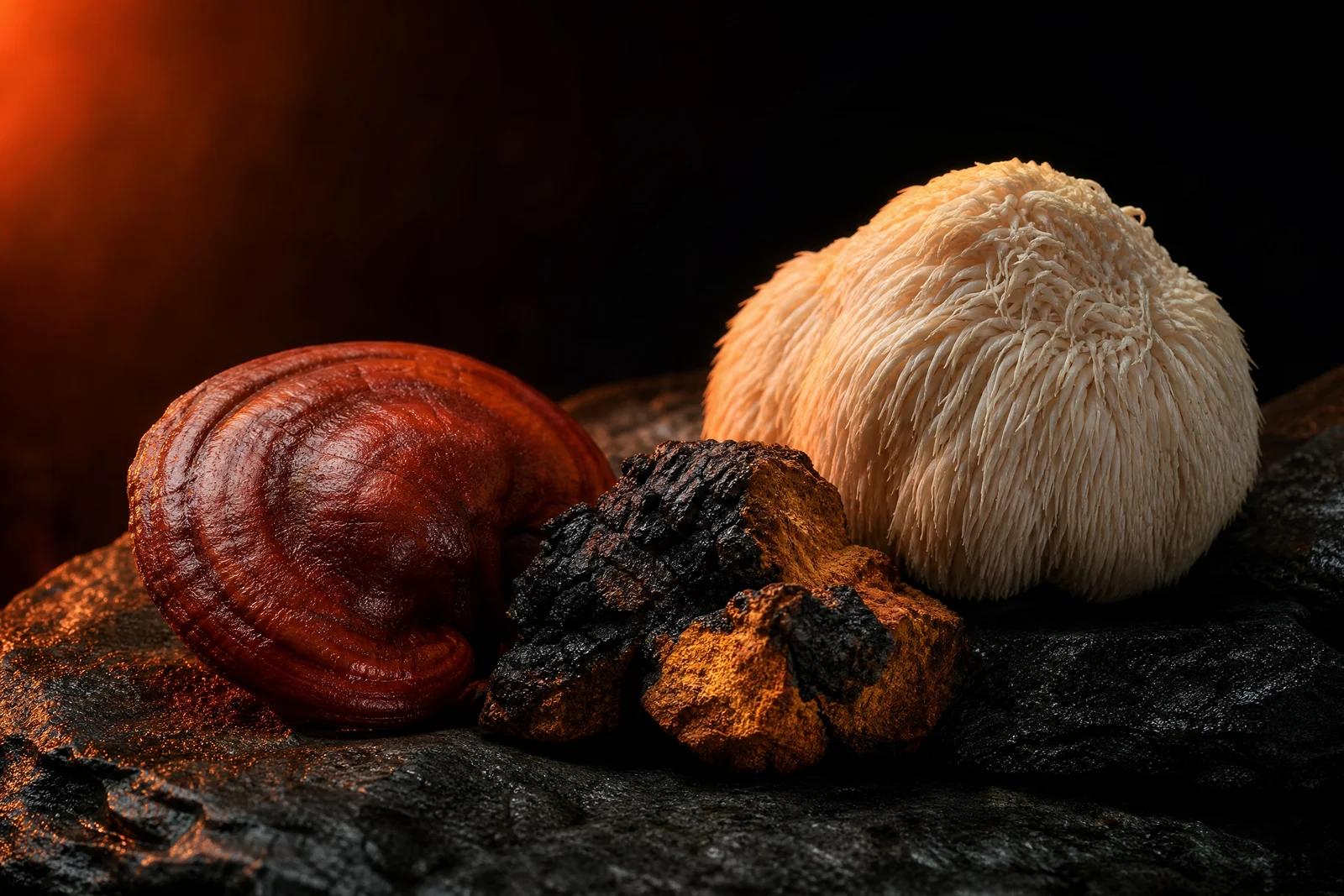
What do lion’s mane, cordyceps, reishi and chaga add?
| Ingredient and claim | What researchers found | What it means for your cup |
|---|---|---|
| Lion’s mane for memory or focus | In Mori’s trial, 30 adults aged 50 to 80 had measurable trouble with memory or thinking. The group taking lion’s mane tablets scored higher than the placebo group at weeks 8, 12 and 16. Scores fell after the tablets stopped. | A preclinical study found that an extract stimulated production of a protein involved in nerve growth. When Surendran and colleagues tested an extract in a lemon drink in 18 healthy younger adults, participants did better on one test of placing pegs in a board. Overall thinking and mood scores showed no clear advantage. |
| Cordyceps for stamina | In Chen’s 12-week pilot, older adults taking a cordyceps preparation called Cs-4 reached a higher oxygen uptake before their breathing rose steeply during cycling. Peak oxygen uptake stayed the same. The researchers found no clear overall difference from placebo across the exercise measures. | Parcell’s five-week trial found no endurance advantage for trained cyclists taking Cs-4. Check the species on the bag. An exercise study of Cordyceps militaris tested it in a blend with other mushrooms, so its individual effect is unknown. |
| Reishi for blood sugar, stress or immunity | In Klupp’s trial, 84 adults with type 2 diabetes and metabolic syndrome took reishi, reishi with cordyceps, or placebo. After 16 weeks, the two reishi groups combined showed no clear improvement over placebo in fasting blood sugar or A1c, a measure of average blood sugar. | A smaller trial by Chu also found no clear change in blood pressure. These trials leave open whether people who drink reishi coffee feel less stressed or catch fewer colds. |
| Chaga for antioxidants or immunity | In a preclinical experiment, researchers isolated compounds from a chaga extract and measured how they reacted with unstable molecules called free radicals. The compounds showed antioxidant activity. | The experiment measured a chemical reaction. To find out whether chaga coffee helps prevent infections, researchers would need to track how often people drinking it get sick. |
How to read a mushroom study
Does mushroom coffee make you poop or help you lose weight?
Mushroom coffee can send you to the bathroom if ordinary coffee already does. Brown and colleagues compared regular coffee, decaf and hot water in 14 people. In the eight who usually felt the urge to go after coffee, both kinds of coffee increased lower-colon activity within four minutes. The six others showed no such change.4 Coffee alone can explain a quick bathroom trip, even when it’s decaf.
Everyday Dose reports that its blend showed no clear advantage over placebo on the study’s main measure of digestive symptoms. Of the 187 people in the blend group, 11.8% reported an unwanted event during the study, compared with 20.5% of the 195 in the placebo group.3 Those figures alone cannot tell whether a drink caused a particular symptom.
These finished-coffee studies do not establish lasting weight loss.23 If mushroom coffee replaces a large latte with milk and flavored syrup, compare the added sugar and calories in the two drinks as you prepare them. Swapping the syrup for an unsweetened blend changes breakfast. Adding the same syrup and creamer back to your new coffee makes it a different swap.
Which ingredients have side effects?
Shaky hands, a racing heartbeat and difficulty sleeping are among the effects of too much caffeine. An upset stomach has several possible causes, including ingredients in the mix or the milk or creamer you add. Hives soon after a cup are more suggestive of allergy. Keep the ingredient list so you can tell a clinician exactly what you drank.
Chaga can contain oxalate, which can form crystals in the kidneys. Lee and colleagues reported kidney failure in a man who had taken chaga powder for years. A biopsy, a small sample of kidney tissue, showed oxalate crystals.5 One case gives no estimate of the risk from an occasional retail cup. If you have chronic kidney disease or a history of calcium oxalate kidney stones, ask your kidney clinician about the specific blend before trying it. They may use blood creatinine to estimate how well your kidneys filter blood, reported as eGFR. Seek urgent care if you are suddenly passing much less urine than usual.
There is no established liver benefit from reishi coffee. Tay and colleagues described a 19-year-old who developed jaundice, or yellowing of the eyes and skin, after a year of drinking premixed reishi extract coffee. His doctors also found liver scarring that they attributed to a previous hepatitis B infection. His doctors judged the drink a probable cause of liver injury that interfered with bile flow.6 Seek urgent medical care for new jaundice, even if you have no pain. Bring the ingredient list.
If you take a blood thinner such as warfarin or a medicine that keeps platelets from clumping, such as clopidogrel, show your pharmacist or prescriber the label before trying a blend containing reishi or chaga. Memorial Sloan Kettering flags a possible increase in bleeding risk with reishi. For chaga, the concern comes from preclinical evidence. If you vomit blood or have heavy bleeding that will not stop, call 911 or your local emergency number.
During pregnancy or breastfeeding, count caffeine from coffee, tea, chocolate and other sources together. A decaf label answers only the caffeine question. Many concentrated supplements have limited safety data during pregnancy or breastfeeding. Bring the full ingredient list to your maternity care team before trying a mushroom blend.
How to tell whether a switch is worth it
- Compare caffeine per prepared serving with the size of your usual mug. Plain half-caf or decaf gives you a comparison if fewer jitters are the goal.
- Look for a weight for each extract. One total for a four-mushroom blend leaves the amount of each unknown.
- Divide the bag price by the number of mugs you make. Include the milk or creamer you use and compare with your usual home brew or café order.
- Compare similar mornings. Keep mug size and drinking time about the same, and note the change you care about, such as shaky hands before lunch or waking overnight.
A before-and-after blood panel cannot identify a mushroom effect. Cortisol varies with time of day. High-sensitivity C-reactive protein (hsCRP) detects inflammation from many causes. Fasting glucose gives a snapshot of blood sugar at the draw, while A1c reflects roughly three months. If your report flags fasting glucose or A1c, ask how it compares with your earlier readings and whether it needs repeating. If fatigue persists or you notice new memory problems, tell your clinician when it started and how it affects your day.
Can you drink mushroom coffee before a fasting blood test?
LifeFrom’s guide to coffee before a blood test gives the usual instruction. “If your blood test is a fasting test, drink only plain water beforehand.” Save even black or decaf mushroom coffee for after the draw. If you already had some, tell the lab what you drank and when.
If your lab flags a result as abnormal, ask the clinician who ordered the test what it means for you. If the lab or clinician contacts you about a critical result, follow their instructions right away. When reading your report, use the reference range printed beside your result. Lab methods and ranges can differ.
Free, no accountRead your blood testRead your blood test results alongside your lab’s units and reference ranges.Read my results
Turning your results into a plan
One number says where you stand today. A plan says what you'll change, food, movement, sleep, and what to ask your doctor, and a retest shows whether it worked. Add your report and LifeFrom reads every marker on it, then builds the steps with you.

- 01Read it. Every marker on your report in plain words, against your lab's range and the guideline.
- 02Plan it. Turn it into steps you choose: food, movement, sleep, and what to ask your doctor.
- 03See it working. Retest, and LifeFrom puts both results side by side.
Citations
- Four Sigmatic. How much caffeine is in your products?
- Reputable Health. The Science Behind Everyday Dose. 2026.
- Everyday Dose. Mushroom Coffee Ingredients - What's In Everyday Dose?
- Brown SR, Cann PA, Read NW. Effect of coffee on distal colon function. Gut, 1990.
- Lee S et al. Development of End Stage Renal Disease after Long-Term Ingestion of Chaga Mushroom: Case Report and Review of Literature. Journal of Korean Medical Science, 2020.
- Tay YZ, Pan AF, Chiam KH. Cholestatic liver injury from Ganoderma lucidum coffee extract: a case report. AME Medical Journal. 2022.
Educational context only, not medical advice or a diagnosis. Always discuss your results with a clinician.