- 01Coffee on the day vs coffee as a habit
A cup on the morning of the test shifts fasting glucose, insulin and cortisol for a few hours. A long-run habit of unfiltered coffee raises LDL cholesterol over weeks. The morning cup affects one reading; the habit can shift your results across several tests.
If your blood test is a fasting test, skip coffee until after the draw, black or not. Fasting rules let your result be compared with a reference range built from people who arrived with an empty stomach. Black coffee has almost no calories, but its caffeine triggers a mild stress response that moves several of the most common fasting results. Two separate questions sit inside this one: the cup on the morning of the test, which can skew one reading, and your coffee habit, which can shift your results across months.
Juice, coffee, soda, and other beverages can get in your bloodstream and affect your results. But you can drink plain water.MedlinePlus, Fasting for a Blood Test (US National Library of Medicine) 1
MedlinePlus puts the usual fasting window at 8 to 12 hours 1. Blood work most often ordered fasting includes fasting glucose (fasting blood sugar), fasting insulin, and sometimes a lipid panel or a basic metabolic panel. If the order or the lab's instructions say "fasting", treat coffee as off the menu until after the draw. Our guide to fasting before a blood test covers the full fasting rules, and how to prepare for a blood test covers timing, medicines and supplements; this page covers coffee.
Why black coffee counts, even with almost no calories
Caffeine raises adrenaline. Adrenaline tells the liver to release glucose and tells fat tissue to release free fatty acids into the blood, and both make insulin work less well for a few hours (doctors call this lower insulin sensitivity). In a Diabetes Care study of healthy volunteers, caffeine at about 3 mg per kg of body weight cut insulin sensitivity by roughly 15%, and the authors linked the drop to the rise in adrenaline 2. Lower insulin sensitivity means a higher fasting glucose and a higher fasting insulin than you would have shown with water.
Caffeine also raises cortisol, the hormone a morning cortisol test measures. Lovallo and colleagues found the cortisol rise was smaller in daily coffee drinkers than in people who abstain, but it did not disappear 3. Caffeine raises blood pressure too: in a meta-analysis of studies in people with high blood pressure, 200 to 300 mg (about two to three cups of brewed coffee) raised it by about 8/6 mmHg for at least 3 hours 4, so mention your coffee if the nurse takes your blood pressure at the same visit. In healthy people these effects are small and short-lived; they matter mainly because they make the result harder to compare with the reference range.
How one cup of black coffee shifts a fasting result
Most of this evidence comes from small studies, many using pure caffeine, and studies of a single cup of black coffee have given mixed results. Labs ask for water only so that every fasting result is measured the same way, whoever you are and whatever you usually drink.
Which results coffee can move, and which barely notice
| Marker | Black coffee on the morning of the test | Why |
|---|---|---|
| Fasting glucose (fasting blood sugar) | Can read higher | Adrenaline releases liver glucose and lowers insulin sensitivity |
| Fasting insulin and HOMA-IR (an insulin resistance score worked out from fasting glucose and insulin) | Can read higher | The body needs more insulin to handle the same glucose |
| Morning cortisol | Can read higher | Caffeine stimulates cortisol release, more so in people who rarely drink it |
| Blood pressure (if taken at the visit) | Can read higher | The rise lasts at least 3 hours after 200 to 300 mg of caffeine |
| Triglycerides | Small change with black coffee; larger with milk, sugar or syrup | Free fatty acids rise; added milk and sugar are food |
| CBC, ferritin, vitamin D, TSH, A1C, creatinine | Little or no change | These reflect weeks or months, or do not respond to caffeine |
Milk, cream, sugar and flavoured syrups turn the cup into a small meal. A latte will push fasting glucose and triglycerides further than black coffee, so if you did drink something, the details matter when you tell the lab. A high fasting insulin is often read as a sign of insulin resistance, and our HOMA-IR calculator works the score out from your own numbers, so both are worth taking from a properly fasted sample.
Markers coffee can move on the day
Cholesterol tests often do not need fasting
Many people fast for a cholesterol test out of habit, yet the European Atherosclerosis Society and EFLM accept non-fasting panels for routine screening. Their consensus found that after ordinary meals, triglycerides rise by up to about 26 mg/dL (0.3 mmol/L) and LDL changes by about 8 mg/dL (0.2 mmol/L) or less 5. The 2018 AHA/ACC cholesterol guideline in the US also allows a non-fasting panel for a first check, and asks for a fasting repeat if triglycerides come back at 400 mg/dL or higher 6. A morning coffee before a routine lipid panel therefore matters little. Your clinician may still ask for fasting if your triglycerides were high before, or if your lab works out LDL from your other cholesterol numbers instead of measuring it directly. Our guide to reading your lipid panel walks through each line.
Coffee habit matters more for cholesterol than coffee on the day. Unfiltered coffee (French press, Turkish and boiled coffee, and in smaller amounts espresso) carries cafestol, an oil that raises LDL cholesterol over weeks of regular drinking. In controlled trials, boiled unfiltered coffee raised cholesterol and paper-filtered coffee did not, because the filter holds back most of the cafestol 7. If you switched from filter coffee to a French press between two tests, that switch can explain part of a rise in LDL.
 CalculatorLDL calculatorWork out LDL from your total cholesterol, HDL and triglycerides, and see how much a triglyceride shift changes it.Work it out
Decaf, tea, milk, sweeteners and energy drinks
What you can drink before a fasting blood test
MedlinePlus allows only plain water before a fasting test 1, so decaf, tea, cola, energy drinks and zero-calorie sweetened drinks all wait until after the draw. Decaf still carries a small amount of caffeine.
How long before the test to stop
Caffeine's half-life (the time your body takes to clear half of it) is a few hours in most healthy adults, but the range is wide: it runs longer with oral contraceptives and in liver disease, much longer in late pregnancy, and shorter in people who smoke 8. For most people, a last coffee in the early evening has largely cleared by a morning draw. The cup that matters is the one on the morning of the test, so move it to after the draw.
If you already had coffee before the test
- 1Tell the phlebotomistSay what you drank, how much, what was in it, and what time.
- 2Ask whether to go aheadFor fasting glucose, fasting insulin or morning cortisol, the lab may suggest rebooking. For a CBC, vitamin D or ferritin, coffee rarely matters.
- 3Read the result with that in mindA fasting glucose slightly above range after a latte is not a diagnosis on its own. Show the result to the clinician who ordered it, mention the coffee, and ask whether to repeat it properly fasted. A result far outside the range is not explained by one cup of coffee, so follow it up promptly. See what a high fasting glucose means.
Tips for daily coffee drinkers
Book the earliest slot, drink a glass or two of water in the hour before, which makes the vein easier to find, and bring a coffee for afterwards. A caffeine-withdrawal headache on the morning of the test is common and passes once you drink your coffee. Skip alcohol the evening before a fasting test, since it can raise triglycerides. If you take levothyroxine, coffee taken with it or soon after reduces how much your body absorbs, and Benvenga and colleagues found that spacing the two improved thyroid control 9. Ask your clinician whether to take your levothyroxine before or after a thyroid blood test. Supplements can skew results too, and biotin is the best-known case; see supplements that affect blood tests.
Keep it the same every time
For tracking, consistent conditions matter more than perfect ones. Test at the same time of day, in the same fasting state, with the same coffee choice, and note what you drank next to the result. Then a change between two results is more likely to come from your body than from what you drank. Our guide on why trends beat single readings explains how to compare results over time.
Free, no accountRead your blood testAlready have results from a morning when you had coffee? Read every line of your report, free, and see which markers that cup could have touched.Read my results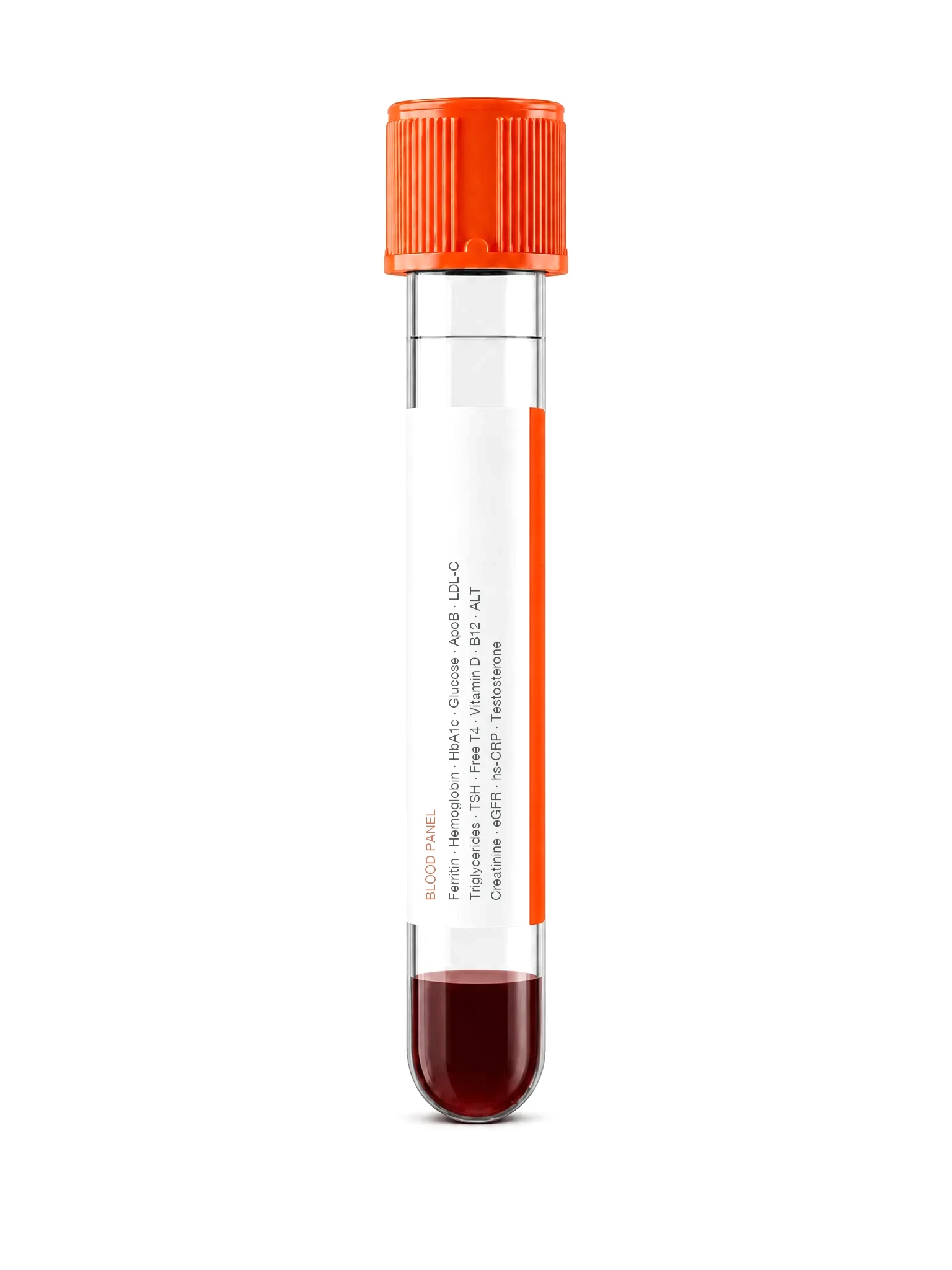

Citations
- MedlinePlus. Fasting for a Blood Test. US National Library of Medicine.
- Keijzers GB, De Galan BE, Tack CJ, Smits P. Caffeine can decrease insulin sensitivity in humans. Diabetes Care 2002;25(2):364-369.
- Lovallo WR et al. Caffeine stimulation of cortisol secretion across the waking hours in relation to caffeine intake levels. Psychosom Med 2005;67(5):734-739.
- Mesas AE et al. The effect of coffee on blood pressure and cardiovascular disease in hypertensive individuals: a systematic review and meta-analysis. Am J Clin Nutr 2011;94(4):1113-1126.
- Nordestgaard BG et al. Fasting is not routinely required for determination of a lipid profile. EAS/EFLM consensus. Eur Heart J 2016;37(25):1944-1958.
- Grundy SM et al. 2018 AHA/ACC Guideline on the Management of Blood Cholesterol. Circulation 2019;139(25):e1082-e1143.
- Urgert R, Katan MB. The cholesterol-raising factor from coffee beans. Annu Rev Nutr 1997;17:305-324.
- Nehlig A. Interindividual differences in caffeine metabolism and factors driving caffeine consumption. Pharmacol Rev 2018;70(2):384-411.
- Benvenga S et al. Altered intestinal absorption of L-thyroxine caused by coffee. Thyroid 2008;18(3):293-301.
- Killer SC, Blannin AK, Jeukendrup AE. No evidence of dehydration with moderate daily coffee intake: a counterbalanced cross-over study in a free-living population. PLoS One 2014;9(1):e84154.
Educational context only, not medical advice or a diagnosis. Always discuss your results with a clinician.