If you have a bowel movement most mornings but still have to strain, counting trips to the bathroom tells you only part of what you want to know. The psyllium trials measured both frequency and overall constipation relief.1 Antibiotic trials of the yeast Saccharomyces boulardii CNCM I-745 counted how many people developed diarrhea. Avoid this live yeast if you have a central line (including an implanted port), are critically ill, or have a weakened immune system, because it can cause a bloodstream infection.289
Seek medical care right away if constipation comes with constant abdominal pain, vomiting, inability to pass gas, fever, blood in the stool or unexplained weight loss.10 For persistent constipation, a clinician may first ask how much fiber meals provide. Sources include legumes such as lentils, whole grains such as oats, vegetables such as carrots, and fruit such as pears. When fiber intake is low, a clinician may suggest a gradual increase and discuss how much fluid is appropriate.118
Gut supplements by symptom
| Concern | Option studied | What people experienced | Safety and study limits |
|---|---|---|---|
| Persistent constipation without an identified cause | Psyllium husk | People taking psyllium averaged more bowel movements without a rescue laxative and were more likely to report relief. The studies were small, so the size of the benefit is uncertain.1 | Avoid psyllium if you have trouble swallowing. Powder taken with too little liquid can swell and cause choking. Get immediate medical help for chest pain, vomiting, or difficulty swallowing or breathing after taking it.11 |
| Preventing diarrhea while taking antibiotics | S. boulardii CNCM I-745, a specific strain (type) of live yeast | Some adult trials found fewer cases of diarrhea. A separate hospital trial of S. boulardii found no reduction.27 | Avoid this yeast if you have a central line (a tube into a large vein) or port, are critically ill, or have a weakened immune system. The yeast can cause a bloodstream infection.89 |
| Constipation, especially if you also feel bloated | Inulin or wheat bran | Evidence for constipation relief is limited for both. Inulin can increase gas.113 | Wheat bran is an insoluble fiber. Trials have found no clear improvement in overall irritable bowel syndrome (IBS) symptoms with bran.3 |
| IBS with diarrhea after an infection, plus increased intestinal permeability on a research test | L-glutamine | More people taking glutamine improved on an IBS symptom scale than those taking placebo.4 | This one trial excluded people who were pregnant or breastfeeding or who had liver disease or substantially impaired kidney function.4 |
| Pain with bowel movements in people with IBS | Coated sodium butyrate added to usual treatment | At four weeks, fewer people reported any pain during a bowel movement in the previous week.5 | One small trial tested this formulation. Pregnancy, breastfeeding and inflammatory bowel disease were among the exclusions.5 |
| Comfortable, regular stools | No supplement needed on the basis of a gut score | If you feel well, there may be no symptom you want to change. | A commercial microbiome score has no validated use for choosing a supplement.6 |
Can a stool or blood report help choose a supplement?
Many commercial microbiome reports show each microbial group as a share of the microbes identified in the sample. A small share alone cannot establish a deficiency. A low butyrate potential score, for example, cannot predict whether a capsule will ease pain during bowel movements. An international consensus panel found insufficient evidence for routine use of these tests in clinical care.6
A high level of a stool protein called fecal calprotectin can be a sign of inflammation in the bowel. Blood C-reactive protein (CRP) signals inflammation more broadly. When someone has ongoing diarrhea and possible IBS without warning signs, a clinician may use both results to help assess whether inflammatory bowel disease is likely. Blood in the stool or unexplained weight loss deserves prompt assessment even if an earlier test was reassuring.31015
Tests a clinician may use for ongoing diarrhea
High-sensitivity CRP measures smaller amounts of the same protein. Ferritin helps assess iron stores.1617 Neither value selects a gut supplement. If your lab flags calprotectin, CRP or ferritin, contact the clinician who ordered the test. If calprotectin is high and diarrhea continues, bring the report and ask, “What could explain this result, and do I need another test?”15
Which fiber helps when stools are hard to pass?
The American Gastroenterological Association and the American College of Gastroenterology reviewed fiber supplements for adults with persistent constipation without an identified cause. Psyllium had the clearest evidence among the fibers reviewed. Across three small trials, people taking a product containing psyllium averaged about two more bowel movements a week without a rescue laxative than people taking a comparison product. The estimate is uncertain, and one trial tested psyllium mixed with other ingredients.1
What the constipation trials found for psyllium and inulin
Straining and the number of days between bowel movements are both worth recording. If a clinician recommends psyllium, the powder’s mixing directions matter because taking it with too little liquid can cause choking. A pharmacist can check whether other medicines need to be taken at a different time.1011
The fiber studied for regularity
Why inulin can cause bloating
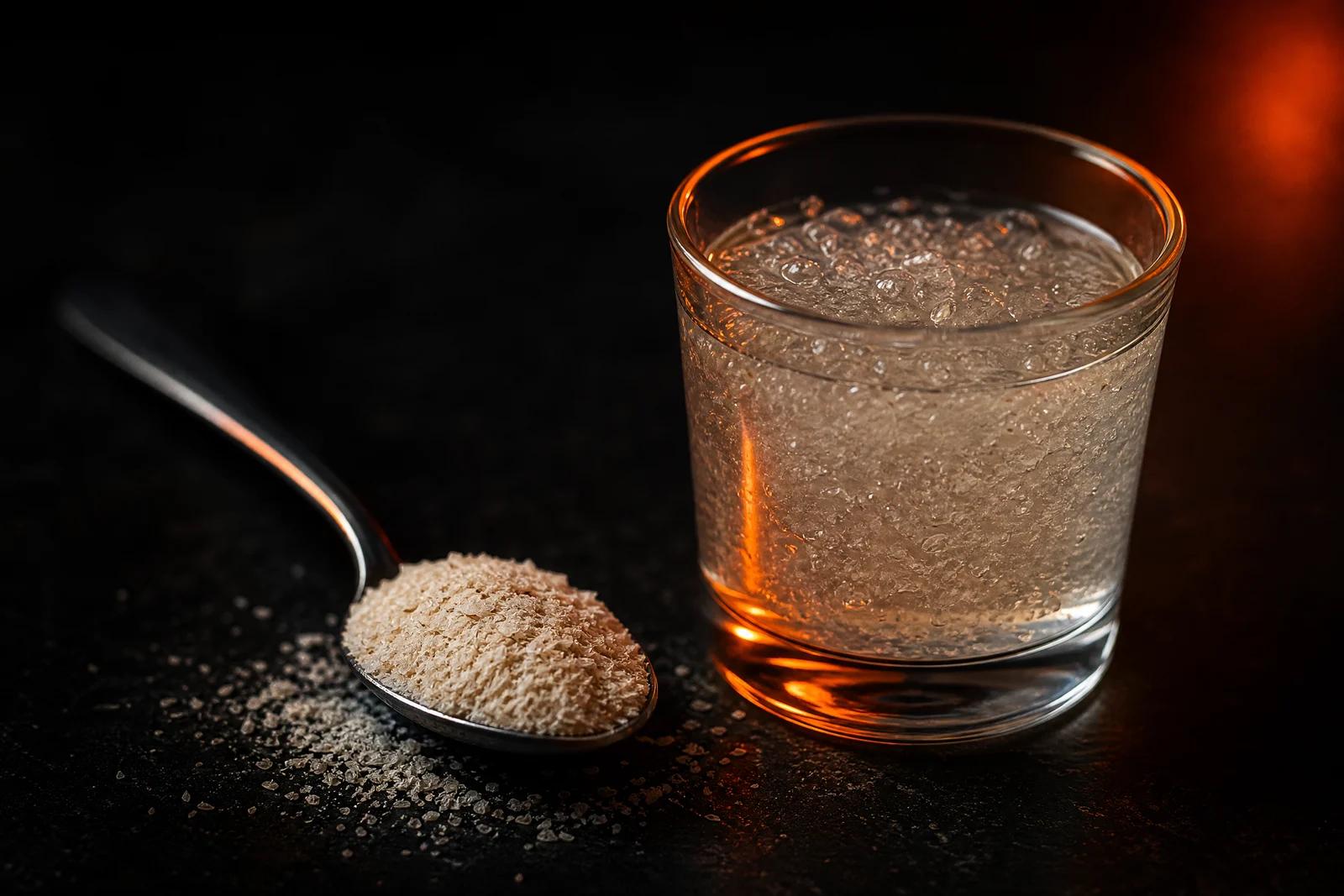
Gut bacteria break down inulin and produce gas. Inulin is a prebiotic, an ingredient that certain microbes use in a way that benefits the person consuming it. On a label it may appear as “chicory root fiber.” A cereal bar and a breakfast powder can both contain it, even if only one package uses the word “prebiotic.”1213
In a crossover study, 19 people with IBS tried different test drinks on separate visits. MRI scans showed the biggest rise in gas in the colon after inulin alone. Adding psyllium to the inulin reduced that rise. The scans followed gas for hours, so they leave open whether the combination makes someone feel less bloated over weeks.13
Recognizing a prebiotic on the label
What did probiotic trials find during antibiotics?
The World Gastroenterology Organisation cites evidence that S. boulardii CNCM I-745 can reduce the chance of diarrhea during antibiotic treatment. A trial in 15 German hospitals found similar numbers of cases with S. boulardii and placebo and stopped early because a benefit looked unlikely.27 If diarrhea starts during or after antibiotics, contact the prescriber promptly. A bacterial infection called C. diff is one possible cause.12 Seek medical care right away for bloody or black, tarry stools, severe abdominal pain, or signs of dehydration such as dizziness and urinating much less than usual.20
A probiotic supplies a live microbe with a demonstrated health benefit. LifeFrom’s comparison of prebiotics and probiotics describes a probiotic as “a named live microbe you add.” For a reader comparing probiotics, the most informative part of the name is often the string of letters and numbers at the end.2
| What to look for on a probiotic label | What it tells you |
|---|---|
| Saccharomyces boulardii | The name identifies the yeast. Saccharomyces is the broader group it belongs to. |
| CNCM I-745 | This strain code identifies the particular yeast listed in the guideline. If a package lists only the name, you cannot confirm the strain from that label.2 |
| Live count through expiration | If the label gives colony-forming units (CFU), the count estimates how many live microbes can grow under test conditions. Look for the count expected through the use-by date. A count at manufacture leaves open how many remain later.2 |
| Storage directions | Follow the instructions for that product. Refrigeration, a higher count or a longer list of strains cannot tell you whether people taking it experienced less diarrhea.2 |
Some strains compete with other microbes or help maintain the barrier formed by cells lining the intestine. Those mechanisms alone cannot predict how you will feel. The antibiotic studies counted cases of diarrhea in people receiving treatment. They do not establish that starting a probiotic after the last antibiotic pill will restore the community of microbes in your gut. For overall IBS symptoms, the American College of Gastroenterology suggests against routine probiotics because the evidence is very uncertain.237
Yogurt can supply live microbes. In the US, “contains live and active cultures” is an optional label claim. If the yogurt was treated after fermentation to inactivate the cultures, the label must say “does not contain live and active cultures.”19 To judge whether a trial result applies to a yogurt or capsule, a clinician would need to know the strain and the condition studied.2
Does an L-glutamine supplement help with gut health?
Intestinal cells use L-glutamine, an amino acid, for fuel. QiQi Zhou and colleagues tested it in adults whose IBS with diarrhea began after an intestinal infection. Everyone also had increased intestinal permeability. Researchers measured how readily two sugars crossed the intestinal lining by comparing the amounts that showed up in urine. Bloating alone would not have qualified anyone for the trial.4
| Symptom result after eight weeks | L-glutamine | Placebo |
|---|---|---|
| People who finished the trial and improved by at least 50 points on the IBS symptom severity scale | 43 of 54 (80%) | 3 of 52 (6%)4 |
The symptom score captured what people felt, including pain and how much IBS interfered with daily life. The researchers also repeated the permeability test. The glutamine group’s average result returned to the normal range, while the placebo group’s remained elevated. These findings apply to people with both features the researchers tested for. The trial leaves open whether glutamine helps healthy adults, people with ordinary bloating or people with inflammatory bowel disease.4
What would a butyrate supplement add?
Gut microbes make butyrate when they ferment fiber. Cells lining the colon use it for energy. A capsule can supply purified butyrate. You may see it described as a “postbiotic,” but the International Scientific Association for Probiotics and Prebiotics reserves that term for a preparation containing inactivated microbes or their components with a demonstrated health benefit. Purified butyrate alone falls outside that definition.514
Tomasz Banasiewicz and colleagues randomly assigned 79 adults with IBS to two groups. Their analysis included the 66 who finished the study. Both groups continued their usual treatment. One group added sodium butyrate with a coating intended to deliver it farther along the gut. The other added a placebo.5
At week four, about 18% of the butyrate group and 59% of the placebo group reported pain during a bowel movement in the preceding week. The questionnaire asked whether pain occurred at all. It did not count painful trips per person. At week 12, fewer people in the butyrate group also reported feeling an urge to go again after a bowel movement. Overall abdominal pain intensity did not differ significantly between groups.5
The researchers reported no adverse effects in either group. A study this small cannot estimate how often uncommon side effects occur. It tested one coated product, leaving open whether calcium-magnesium butyrate or tributyrin has the same effects. The trial did not compare different meal timings or establish how long to use a supplement.5
How to tell whether anything changed
Pick the symptom that interferes most with your day and describe it the same way each time. Record a change in meals, a new medicine or the end of an antibiotic course alongside it. If one symptom improves and another gets worse, include both when you discuss whether the change was worthwhile.
- Before the change. “I strained on four of the last seven days.”
- What changed. “I added psyllium on Monday. My meals and medicines stayed the same.”
- What I noticed. “I strained on two of the next seven days. My stools were easier to pass, but I felt more bloated.”
Citations
- Chang L, Chey WD, Imdad A, et al. American Gastroenterological Association-American College of Gastroenterology Clinical Practice Guideline: Pharmacological Management of Chronic Idiopathic Constipation. Gastroenterology. 2023.
- World Gastroenterology Organisation. Probiotics and prebiotics. Global guideline, 2023. Product labeling and adult evidence table.
- Lacy BE, Pimentel M, Brenner DM, et al. ACG Clinical Guideline: Management of Irritable Bowel Syndrome. American Journal of Gastroenterology. 2021.
- Zhou Q, Verne ML, Fields JZ, et al. Randomised placebo-controlled trial of dietary glutamine supplements for postinfectious irritable bowel syndrome. Gut. 2019. Table 2.
- Banasiewicz T, Krokowicz Ł, Stojcev Z, et al. Microencapsulated sodium butyrate reduces the frequency of abdominal pain in patients with irritable bowel syndrome. Colorectal Disease. 2013. Methods and Table 2.
- Porcari S, Mullish BH, Asnicar F, et al. International consensus statement on microbiome testing in clinical practice. Lancet Gastroenterology & Hepatology. 2025.
- Ehrhardt S, et al. Saccharomyces boulardii to Prevent Antibiotic-Associated Diarrhea: A Randomized, Double-Masked, Placebo-Controlled Trial. Open Forum Infectious Diseases. 2016.
- Rannikko J, et al. Fungemia and other fungal infections associated with use of Saccharomyces boulardii probiotic supplements. Emerging Infectious Diseases. 2021.
- European Medicines Agency. Saccharomyces boulardii: CMDh scientific conclusions and grounds for the variation, amendments to the product information and timetable for the implementation. PSUSA/00009284/201702. Annex II.
- National Institute of Diabetes and Digestive and Kidney Diseases. Symptoms & Causes of Constipation.
- DailyMed. Metamucil Therapy for Regularity, psyllium husk powder. US label warnings and directions.
- Centers for Disease Control and Prevention. About C. diff.
- Gunn D, et al. Psyllium reduces inulin-induced colonic gas production in IBS: MRI and in vitro fermentation studies. Gut. 2022.
- Salminen S, et al. The International Scientific Association of Probiotics and Prebiotics (ISAPP) consensus statement on the definition and scope of postbiotics. Nature Reviews Gastroenterology & Hepatology. 2021.
- National Library of Medicine. Calprotectin stool test. MedlinePlus.
- National Library of Medicine. C-reactive protein (CRP) test. MedlinePlus.
- National Library of Medicine. Ferritin blood test. MedlinePlus.
- National Institute of Diabetes and Digestive and Kidney Diseases. Eating, Diet, & Nutrition for Constipation.
- US Food and Drug Administration. 21 CFR § 131.200. Yogurt. Paragraph (f), Nomenclature.
- National Institute of Diabetes and Digestive and Kidney Diseases. Symptoms & Causes of Diarrhea.
Educational context only, not medical advice or a diagnosis. Always discuss your results with a clinician.