- 01
To understand a ketone result, check what the test measured, when you last ate and whether you feel ill. Trace ketones in urine can follow an overnight fast, even if you have never followed a keto diet. If you have diabetes, a high ketone result can need emergency care before you feel sick.1078
How can I tell if I’m in ketosis?
Start with the sample and the name of the ketone on the report. Most finger-stick ketone meters measure beta-hydroxybutyrate (BHB). Some lab tests labeled “serum ketones” detect acetoacetate instead. If the report gives a grade such as “small” in place of a number, check the test name before comparing it with a blood BHB cutoff.211
| Test | What it measures | How to read it |
|---|---|---|
| Blood BHB test | BHB in a finger-stick sample or blood drawn from a vein, in millimoles per liter (mmol/L). | This is the concentration at the time of the test. Clinicians prefer blood BHB when they suspect DKA because it measures the main ketone that builds up early.2 |
| Urine strip | Acetoacetate in urine, graded by color. Labels include trace, small, moderate and large, or plus signs. | A urine grade of 2+ cannot be converted to a blood BHB of 2 mmol/L. If you have diabetes and the strip reads “moderate,” call your diabetes team right away. Seek emergency care if you cannot reach them promptly, if the strip reads “high” or “large,” or if emergency symptoms appear.289 |
| Breath ketone test | Acetone in exhaled air, often reported in parts per million. | Breath acetone can rise later than blood BHB. Acetone can give breath a fruity smell, but the odor gives you no concentration. If you have diabetes and develop fruity breath, seek emergency care.18 |
A blood ketone reading in someone at risk of DKAmmol/L
What “trace ketones” means on a morning urine report
Suppose you feel well, have no known diabetes and gave a urine sample before breakfast after an early dinner. “Trace” means the strip detected a small amount of acetoacetate. The term for ketones in urine is ketonuria. An overnight fast is one possible explanation. A single sample cannot establish when the ketones appeared or how high blood BHB reached overnight.510
Tell the clinician who ordered the test when you last ate. You can ask, “Does fasting explain this trace result, or would you like a repeat sample?” Follow up if a positive result keeps coming back or has no clear explanation.
On your urinalysis
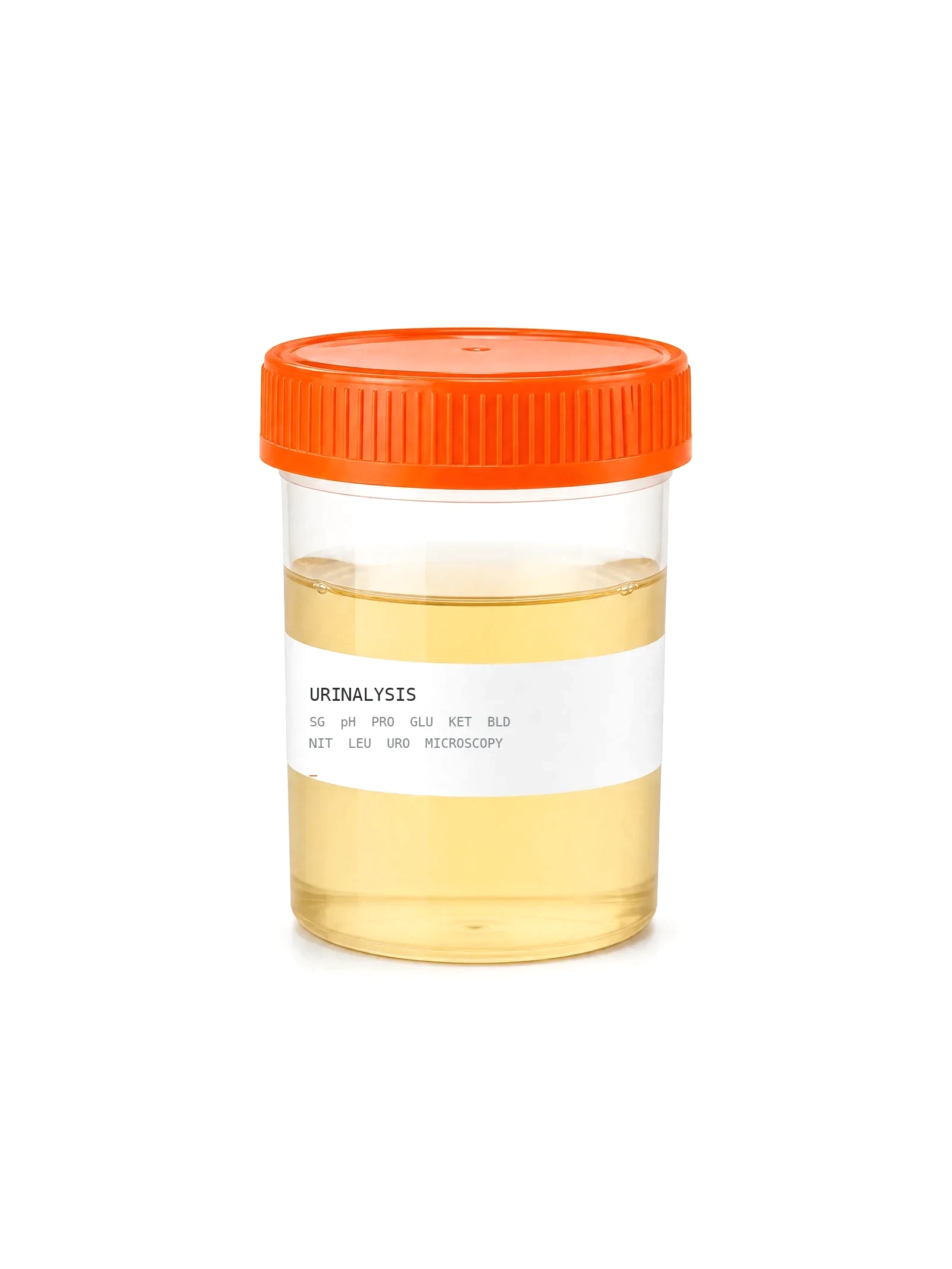
A negative strip can miss mild nutritional ketosis. Alice Gibson and colleagues compared 263 pairs of fasting blood and urine samples from 50 women before, during and after a very low calorie diet. Among samples with blood BHB at or above 0.5 mmol/L, the urine strips detected ketones only 52% of the time.5 That study tested dietary ketosis. In early DKA, urine can also understate the ketone buildup because BHB rises before much acetoacetate appears in urine.2
When do high ketones need emergency care?
If you have diabetes and are checking at home, a blood BHB of 2.0 mmol/L is already above the ADA’s emergency threshold. Go to the emergency department now, even if you feel well. Bring the ketone and glucose readings if you have them. DKA symptoms often develop over about 24 hours and can come on faster.718
In nutritional ketosis, enough insulin usually remains to keep ketone production in check and blood acidity in its usual range. In DKA, too little effective insulin allows acids to accumulate. An infection or missed insulin can trigger it. Heavy alcohol use followed by vomiting and little food can cause another form of ketoacidosis that also needs urgent assessment.2
About 1 in 10 people who present with DKA have blood glucose below 200 mg/dL. Clinicians call this euglycemic DKA. Reduced food intake and SGLT2 inhibitors are among the causes. A glucose reading gives no ketone or blood acidity result.2
How clinicians diagnose DKA in adults
Clinicians look for all three findings below when they diagnose DKA in adults. The 3.0 mmol/L blood BHB criterion helps them interpret results in the hospital. Waiting at home to reach that number can delay treatment.27
| Finding | Adult consensus criterion |
|---|---|
| Diabetes or high glucose | A prior diabetes diagnosis at any current glucose level, or blood glucose of at least 200 mg/dL (11.1 mmol/L).2 |
| Excess ketones | Blood BHB of at least 3.0 mmol/L, or urine ketones of 2+ or higher.2 |
| Acidosis (blood that is too acidic) | Blood pH below 7.3, bicarbonate below 18 mmol/L, or both. Bicarbonate helps buffer acids in the blood.213 |
On a chemistry panel, look for “total CO2” if you do not see “bicarbonate.” Most of the CO2 measured in blood is bicarbonate. Clinicians also calculate the anion gap from electrolytes on the panel. The gap can widen as acids build up. Blood BHB gives a more direct measure of the ketones involved.213
On your blood chemistry panel
How the liver makes ketones
Between meals, the body uses several fuels at once. The liver supplies glucose, the sugar that circulates in blood. As less carbohydrate comes in and insulin levels fall, fat tissue releases more fatty acids into the bloodstream. The liver can turn some of those fatty acids into ketones.112
How fat becomes fuel for the brain
How long does it take to get into ketosis?
Nutritional ketosis can develop within the first few days of a ketogenic diet. Cliff Harvey and colleagues used fasting blood BHB of 0.5 mmol/L as their cutoff. Average BHB reached that level on day two in the group taking medium-chain triglyceride (MCT) oil and day four in the group taking sunflower oil.3 Individual participants reached ketosis on different days. When the researchers compared those times, they could not establish that MCT oil shortened the wait.3
With intermittent fasting, even the meal before the fast matters. Elizabeth Gipson and colleagues studied 24 adults over 50 who had overweight or obesity and did little regular exercise. Each person completed two 24-hour fasts, starting once with a lower-carbohydrate shake and once with a higher-carbohydrate shake. The shakes supplied the same calories. At 12 hours, average blood BHB was 0.54 mmol/L after the lower-carbohydrate shake and 0.32 mmol/L after the higher-carbohydrate shake.4 For people taking an SGLT2 inhibitor, prolonged fasting can raise the risk of DKA. A clinician who knows their medications can help decide whether fasting is safe.2
How long does it take to deplete glycogen stores?
Glycogen is stored glucose. The liver draws on its supply to help maintain blood sugar between meals. In a human fasting study, researchers used magnetic resonance to track liver glycogen. During the first 22 hours, newly made glucose accounted for about 64% of total glucose production. The liver was still drawing on stored glycogen over that interval. There is no fixed hour of depletion you can read from a glucose or ketone meter.12
Muscles also keep glycogen for their own work. In an exercise study, working one leg lowered glycogen in that leg while the resting leg’s stores stayed steady.14 Gipson’s fasting study measured blood BHB. It did not measure how much glycogen remained in the liver or muscles at 0.5 mmol/L, or test how long someone could sustain exercise. Crossing the cutoff tells you little about how your muscles have adapted to endurance training.4
Does a higher ketone reading mean more body-fat loss?
A higher blood ketone reading alone cannot show that body fat is coming off faster. Fat used for energy can come from food you ate recently or from body fat. A meter cannot separate those sources. In Brianna Stubbs’s experiments, volunteers’ blood BHB rose after a ketone drink while circulating free fatty acids fell. The drink itself supplied ketones that the meter detected.1
Kevin Hall and colleagues studied 17 men who lived on a research ward. The men ate a higher-carbohydrate diet for four weeks, then ketogenic meals with the same calories and protein for four weeks. They burned a greater share of fat for fuel after the switch. Their energy expenditure, measured in a special room that tracked oxygen use and carbon dioxide production, rose by about 57 calories a day. Body-fat loss did not speed up.6
If you are wondering whether ketosis can account for losing 10 pounds of fat in two weeks, a ketone reading and two scale weights cannot establish that. Hall’s team measured body composition separately to find out how much of the weight change came from fat.6
What should I follow if ketosis continues?
A clinician can use blood sugar tests to assess glucose control over time. Blood BHB can change within hours. The A1C test (HbA1c) reflects average blood glucose over roughly three months. A lipid panel can show changes in LDL cholesterol and triglycerides that a ketone meter cannot detect.11516
In the Keto-Med trial, people with prediabetes or type 2 diabetes tried ketogenic and Mediterranean-style diets for 12 weeks each. Their HbA1c results were similar after the two diets. Triglycerides fell more on the ketogenic diet, but LDL cholesterol was higher and participants ate less fiber. Both diets included nonstarchy vegetables. The Mediterranean-style meals also included beans, fruit and whole grains.16
For meal choices and therapeutic uses, see the keto diet guide. When a specialist supervises a ketogenic diet for a child with drug-resistant epilepsy, the family tracks seizure frequency to see whether the treatment helps.17 Two people can have the same morning BHB even if one eats leafy vegetables, nuts, seeds and fish and the other eats mostly cheese, butter and meat. The reading cannot tell you how much fiber either person ate.
Citations
- Stubbs BJ et al. On the Metabolism of Exogenous Ketones in Humans. Frontiers in Physiology. 2017.
- Umpierrez GE et al. Hyperglycemic Crises in Adults With Diabetes: A Consensus Report. Diabetes Care. 2024.
- Harvey CJD et al. The Effect of Medium Chain Triglycerides on Time to Nutritional Ketosis and Symptoms of Keto-Induction in Healthy Adults: A Randomised Controlled Clinical Trial. Journal of Nutrition and Metabolism. 2018.
- Gipson EZ et al. The effects of initiating a 24-hour fast with a low versus a high carbohydrate shake on glycemic control in older adults: a randomized crossover study. Nutrition & Metabolism. 2025. Table 2.
- Gibson AA et al. Urine dipsticks are not accurate for detecting mild ketosis during a severely energy restricted diet. Obesity Science & Practice. 2020.
- Hall KD et al. Energy expenditure and body composition changes after an isocaloric ketogenic diet in overweight and obese men. American Journal of Clinical Nutrition. 2016.
- American Diabetes Association. DKA: Signs, Symptoms, and Treatment.
- Centers for Disease Control and Prevention. Diabetic Ketoacidosis.
- Memorial Sloan Kettering Cancer Center. Diabetic Ketoacidosis (DKA) and Ketone Urine Testing.
- Joo NS et al. Ketonuria after fasting may be related to the metabolic superiority. Journal of Korean Medical Science. 2010.
- Sacks DB et al. Guidelines and Recommendations for Laboratory Analysis in the Diagnosis and Management of Diabetes Mellitus. Diabetes Care. 2023.
- Rothman DL et al. Quantitation of hepatic glycogenolysis and gluconeogenesis in fasting humans with 13C NMR. Science. 1991.
- National Library of Medicine. Carbon Dioxide (CO2) in Blood. MedlinePlus.
- Hingst JR et al. Exercise-induced molecular mechanisms promoting glycogen supercompensation in human skeletal muscle. Molecular Metabolism. 2018.
- Centers for Disease Control and Prevention. A1C Test for Diabetes and Prediabetes.
- Gardner CD et al. Effect of a ketogenic diet versus Mediterranean diet on glycated hemoglobin in individuals with prediabetes and type 2 diabetes mellitus: The interventional Keto-Med randomized crossover trial. American Journal of Clinical Nutrition. 2022.
- Neal EG et al. The ketogenic diet for the treatment of childhood epilepsy: a randomised controlled trial. The Lancet. 2008.
- National Health Service. Diabetic ketoacidosis.
- Owen OE et al. Brain metabolism during fasting. Journal of Clinical Investigation. 1967.
- Balasse EO. Kinetics of ketone body metabolism in fasting humans. Metabolism. 1979.
Educational context only, not medical advice or a diagnosis. Always discuss your results with a clinician.