- 01Where the fat sits matters more than which hormone you blame
The health risk in a bigger belly comes from visceral fat, the deep layer packed around the liver and gut. Cortisol is one of several things that feed that layer, and usually a small one. A tape measure tells you whether you carry too much of it; a cortisol test almost never does.
Stress and short sleep do feed visceral fat, the deep layer packed around your organs that raises heart and diabetes risk, but they are two of several causes and usually not the main one. Where the fat sits matters more than which hormone you blame, and a tape measure tells you more about that risk than any cortisol test, in under a minute and for free.
What people mean by cortisol belly, stress belly and hormonal belly
Cortisol belly and stress belly mean the same thing online: fat around the middle that someone blames on cortisol, the main stress hormone made by the adrenal glands. Hormonal belly is the wider umbrella, covering insulin, the fall in estrogen at menopause, low testosterone in men, an underactive thyroid and the higher androgens (male-type hormones such as testosterone, which women make in smaller amounts) of PCOS. Adrenal body type comes from the same feeds as the adrenal fatigue idea. Each label points at a hormone, and each of those hormones has a proper test.
| Label | Hormone it blames | What the evidence shows | The test that checks it |
|---|---|---|---|
| Cortisol belly, stress belly | Cortisol | A real but weak link with visceral fat; most people with a bigger waist test normal | Only with Cushing's signs: late-night saliva, 24-hour urine or overnight dexamethasone test |
| Hormonal belly (insulin) | Insulin | Strong: insulin resistance and visceral fat travel together | Fasting insulin with glucose (HOMA-IR), A1C (average blood sugar), triglycerides |
| Menopause belly | Estrogen | Fat gain speeds up and shifts toward the middle across the transition | Usually none; age and periods tell the story |
| Hormonal belly in men | Testosterone | Two-way: low testosterone favors belly fat, and belly fat lowers testosterone | Morning total testosterone, repeated |
| Thyroid belly | Thyroid hormone | Modest weight gain, much of it fluid; rarely the whole story | TSH (thyroid-stimulating hormone) |
| PCOS belly | Androgens and insulin | Central fat is common in PCOS and tracks insulin resistance | Testosterone, cycle history, glucose and insulin |
| Adrenal body type, cortisol face | Cortisol | Trend names with no clinical definition | None for the label itself |
Each hormone in the table has its own page: insulin resistance, menopause and perimenopause, low testosterone, hypothyroidism and PCOS.
Cortisol face is the same trend applied to a puffy face. A round, red face with fat at the cheeks is a real sign of long-term steroid use or Cushing's syndrome, and it comes with the body signs listed further down. A face that is puffy after a short night, a salty meal or alcohol is fluid, not a cortisol sign. Cortisol face or a puffy face? covers the difference.
Visceral and subcutaneous fat: which belly fat matters
Belly fat sits in two layers. Subcutaneous fat lies under the skin, in front of the abdominal muscles; it is the fat you can pinch. Visceral fat lies behind the muscle wall, packed around the liver, gut and kidneys, and it spills into the liver itself. A position statement from the International Atherosclerosis Society found that visceral and liver fat predict heart disease and type 2 diabetes independently of BMI, so two people at the same weight can carry very different risk 3.
| Subcutaneous fat | Visceral fat | |
|---|---|---|
| Where it sits | Under the skin, in front of the muscle wall | Behind the muscle wall, around the organs and in the liver |
| What it feels like | Soft, pinchable, often the lower belly pooch | A firm, rounded middle; you cannot pinch it |
| Health risk | Lower; a fairly neutral store | Higher; linked to insulin resistance, fatty liver and heart disease |
| How it responds | Slower to shift | Falls with exercise even when weight barely moves 5 |
A fairly flat stomach can still hide too much visceral fat, especially in people with slim limbs and a fuller middle. The soft lower belly pooch that many women ask about is mostly subcutaneous fat, the less risky layer.
How stress hormones push fat to your middle
From a stressful month to a bigger waist
How strong is the link?
The best-known study is small. In 2000, Elissa Epel and colleagues put 59 premenopausal women through repeated lab stress tests; lean women with more fat around the waist released more cortisol than women who stored fat on the hips and thighs 1. The largest study used hair cortisol, which records roughly two months of cortisol exposure. In 2,527 adults aged 54 and over in the English Longitudinal Study of Ageing, higher hair cortisol went with a larger waist and with obesity that lasted over four years, but the correlation with waist size was weak, at r = 0.08 2.
Chronic exposure to elevated cortisol concentrations, assessed in hair, is associated with markers of adiposity and with the persistence of obesity over time.Jackson SE, Kirschbaum C, Steptoe A, Obesity, 2017 2
Both studies show association, and the arrow can point both ways: visceral fat makes some of its own cortisol, so a bigger middle may raise cortisol as well as follow it. Neither shows that lowering cortisol on its own shrinks a waist. So the fixes are the ones trials have tested on visceral fat directly: sleep, exercise, a modest calorie deficit and less alcohol.
| Claim | Evidence | What it means for you |
|---|---|---|
| Visceral fat carries more health risk than fat elsewhere | Strong 3 | Measure your waist, not only your weight |
| Exercise reduces visceral fat even without weight loss | Strong 5 | Keep moving even when the scale stalls |
| Short sleep raises evening cortisol and worsens blood sugar | Moderate (mostly small lab studies) | Sleep is a real lever for belly fat |
| Long-running stress predicts a bigger waist | Weak to moderate 2 | A real link, smaller than diet, drink and movement |
| Supplements that lower cortisol shrink belly fat | Weak | No trial shows visceral fat loss |
| You can spot high cortisol from body shape alone | Weak | Only Cushing's has a typical shape, with other signs |
Is it cortisol, or something else?
A belly grows for many reasons, often several at once. Read both lists and count which one sounds more like the last year of your life.
Points to stress and sleep
- The waist grew during a hard stretch: a new job, caring for someone, grief, a new baby.
- Sleep has been under 7 hours, broken, or shifted by night shifts (see can't sleep).
- Evening snacking, sweets or more alcohol to wind down.
- Tired but wired at night (see fatigue), with no other new symptoms.
Points to something else to check
- Periods changing or stopping, hot flashes, age 40 to 55: the menopause transition moves fat toward the middle (perimenopause).
- In men, low sex drive, fewer morning erections, low energy: check low testosterone.
- Darker velvety skin at the neck or armpits, high triglycerides or creeping blood sugar: insulin resistance.
- Irregular periods, acne or extra facial hair: PCOS.
- Feeling cold, constipation, dry skin, slow thinking: hypothyroidism.
- Steroid tablets, inhalers at high dose, or joint injections in the past months.
- The belly is flat in the morning and swollen by evening: that pattern is usually bloating (gas or fluid), not fat. See a doctor promptly if bloating is there most days for more than three weeks, especially with feeling full quickly, pelvic or tummy pain or needing to pass urine more often, or if your belly grows quickly while you lose weight elsewhere, or comes with swollen legs or yellow skin.
- A ridge or gap down the midline after pregnancy, worse when you sit up: diastasis recti, a separation of the abdominal muscles, which is common after birth and is assessed by a physical therapist.
Women and men tend to arrive at a bigger middle by different routes. In women, the menopause transition is the largest single shift, because fat gain speeds up and lean muscle falls across those years. In men, belly fat and testosterone drag each other down: low testosterone favors visceral fat, and visceral fat converts testosterone to estrogen, which lowers testosterone further.
When belly fat is a sign of Cushing's syndrome
Cushing's syndrome is the medical condition of too much cortisol for months. When the body makes the excess itself, from a pituitary or adrenal tumor, it is rare. The most common cause of Cushing's features is a steroid medicine such as prednisone, which is why the Endocrine Society guideline asks doctors to take a full medicine history, including tablets, inhalers, creams and injections, before any cortisol test 4.
Testing for Cushing's uses tests that capture cortisol when it should be low: a late-night saliva cortisol, a 24-hour urine free cortisol, or a 1 mg overnight dexamethasone test, with an abnormal result confirmed by a second test 4. A single morning blood cortisol can neither diagnose Cushing's nor show chronic stress, because morning cortisol is naturally at its peak and swings with sleep, timing and the stress of the blood draw itself. The morning cortisol page explains how to read one if you already have it.
Measure your waist instead of weighing yourself
Your waist-to-height ratio is your waist divided by your height, in the same units. It tracks visceral fat better than BMI, and NICE, the UK guideline body, advises measuring it alongside BMI in adults with a BMI under 35 6. NICE advises keeping your waist below half your height.
- 1Find the spotFeel for your lowest rib and the top of your hip bone; the tape goes midway between them, which is often a little above the belly button.
- 2Breathe outStand relaxed, breathe out normally, and measure without pulling the tape tight or sucking in.
- 3Divide by heightWaist 34 inches and height 66 inches gives 34 / 66 = 0.52.
- 4Repeat monthlySame spot, same time of day, before eating. Waist changes show up sooner than scale changes.
Waist-to-height ratio: an example readingratio
If you prefer a single number for the tape, a waist of 102 cm (40 in) or more in men and 88 cm (35 in) or more in women is the common cutoff for a raised waist, and it is the one the hair cortisol study used 2. Lower cutoffs apply to South Asian and East Asian adults, which is one reason the height ratio travels better.
A DEXA scan (a low-dose X-ray body scan) or MRI can measure visceral fat directly, if you have access to one. Bathroom scales that estimate body fat by bioimpedance (a weak electric current through your feet) are rough for total fat and poor for visceral fat, so treat their visceral fat score as a trend at best.
The blood tests that show whether your belly is metabolic
Visceral fat shows up in the blood well before it shows up as disease. Ask for fasting glucose with fasting insulin, which together give HOMA-IR, a score for insulin resistance, plus A1C, a lipid panel for triglycerides and HDL, hs-CRP and ALT. Add TSH if thyroid symptoms fit, and in men a morning total testosterone.
Three or more of waist, triglycerides, HDL, blood pressure and glucose out of range is metabolic syndrome, and a raised ALT can point toward fatty liver. Take any result outside its reference range to your doctor rather than reading it alone: a raised ALT, for example, also has other causes, including medicines, alcohol and hepatitis, that need ruling out.
Markers to read beside your waist
 CalculatorHOMA-IR calculatorTurn your fasting glucose and fasting insulin into a HOMA-IR score.Work it out
Cortisol belongs on the list only when the warning signs above are present, and then as one of the timed Endocrine Society tests rather than a random blood draw.
Free, no accountRead your blood testHave a panel with insulin, A1C, lipids and ALT? Read every line of it together.Read my results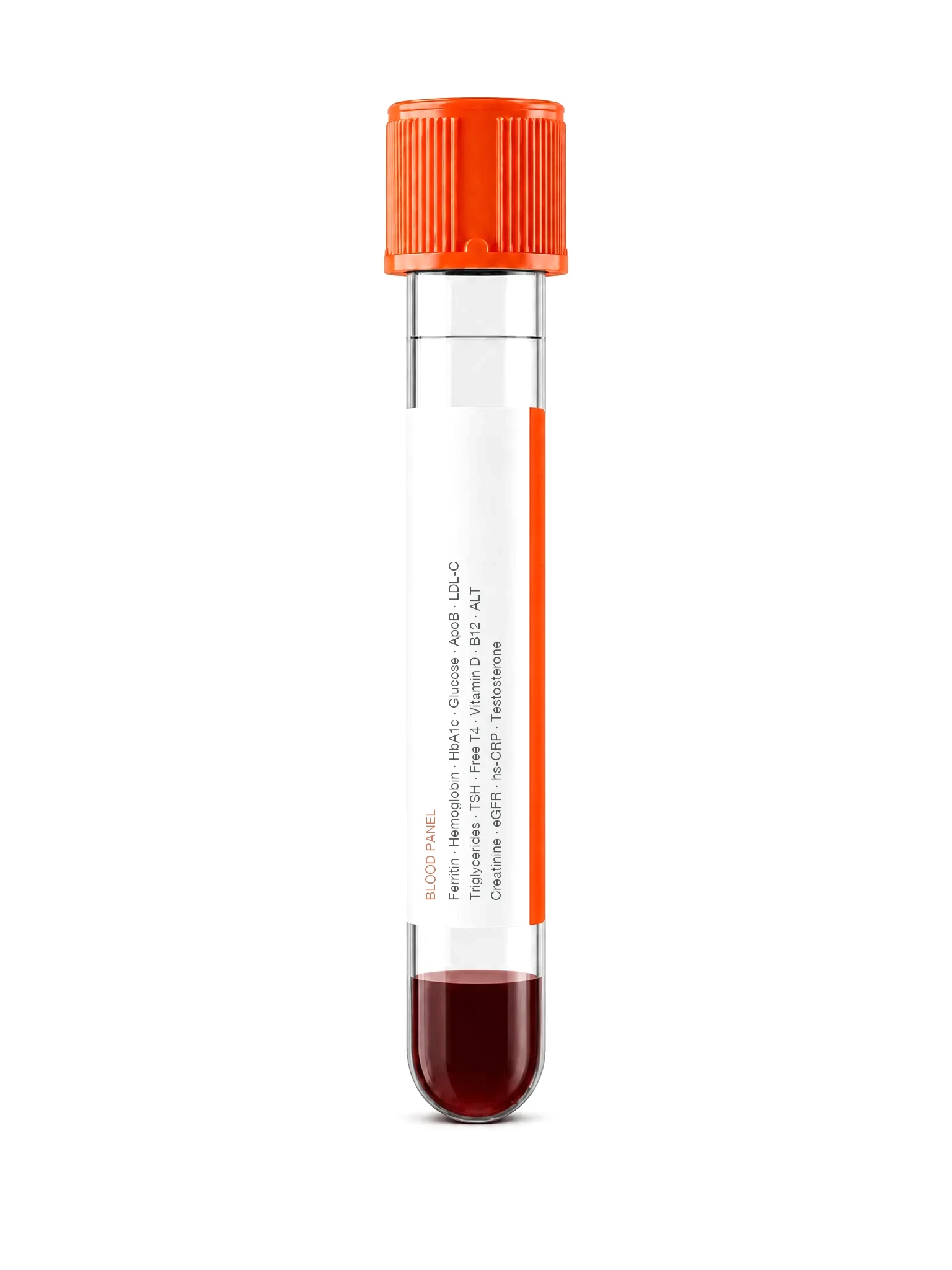
How to get rid of a cortisol belly
The levers below are ranked by how well they shrink visceral fat, and none of them depends on knowing your cortisol level.
- Sleep 7 to 9 hours on a regular schedule. Short nights raise evening cortisol and appetite the next day; deep sleep explains what a good night is made of, the sleep calculator helps you set a regular bedtime, and better sleep has the full plan.
- Do aerobic exercise most days. A meta-analysis of 117 studies and 4,815 people in Obesity Reviews found that exercise cut visceral fat by about 6% even when weight did not change, while diet without weight loss barely moved it 5. Brisk walking, cycling and swimming all count.
- Add strength training two or three times a week to keep muscle, which matters most after 40 and through menopause.
- Eat a little less, steadily. A modest deficit with protein and fiber at each meal beats a crash diet, which costs muscle and is hard to keep up. The TDEE calculator gives the calories that hold your current weight. Pregnancy and breastfeeding are not the time for a deficit.
- Cut back on alcohol. It adds calories, worsens sleep and loads the liver, the organ where visceral fat does the most harm. As for foods that trigger cortisol, no ordinary food raises it in a way that matters; large doses of caffeine and alcohol nudge it a little, and alcohol also breaks up sleep.
- Use one stress practice you will keep up: mindfulness, CBT, time outdoors or exercise itself. These lower felt stress; effects on the waist are small and come through sleep and eating.
- Skip the crunches as a fat-burner. Sit-ups strengthen the muscle under the fat; they do not burn the fat on top of it.
Intermittent fasting works for belly fat when it helps you eat less overall; it has no special effect on cortisol. If you take medicine that lowers blood sugar, check with your clinician first, as fasting can push sugar too low. If insulin resistance, menopause symptoms or low testosterone turn up in your labs, those have their own treatments, which a clinician can talk through. More on a whole weight-loss plan sits at weight loss.
Do supplements help?
Some supplements lower measured cortisol a little in trials. None has a good trial showing it shrinks visceral fat, and products sold as cortisol blockers for belly fat have no evidence for that claim. The cards below summarize what was found.
Supplements studied for stress and cortisol



If you try magnesium, which form matters for sleep and the gut.
How long does it take?
With steady changes to sleep, movement and eating, many people see the waist start to move within a few months, though it varies. Visceral fat can fall before the scale or the mirror shows much, so your health markers can improve while the pinchable layer lags 5. Change is slower after menopause and with age, because muscle loss lowers the calories you burn.
Your next step
- Measure your waist and divide by your height; above 0.5 is worth working on.
- Ask your clinician for fasting glucose and insulin, A1C, a lipid panel, hs-CRP and ALT.
- Pick the sleep and exercise levers above, measure your waist monthly, and ask about repeating those blood tests after about three months.
- If any sign in the red box above fits, book a doctor's visit and ask whether a late-night saliva or 24-hour urine cortisol test makes sense.

Citations
- Epel ES, McEwen B, Seeman T, et al. Stress and body shape: stress-induced cortisol secretion is consistently greater among women with central fat. Psychosomatic Medicine, 2000;62(5):623-632.
- Jackson SE, Kirschbaum C, Steptoe A. Hair cortisol and adiposity in a population-based sample of 2,527 men and women aged 54 to 87 years. Obesity, 2017;25(3):539-544.
- Neeland IJ, Ross R, Despres JP, et al. Visceral and ectopic fat, atherosclerosis, and cardiometabolic disease: a position statement. Lancet Diabetes & Endocrinology, 2019;7(9):715-725.
- Nieman LK, Biller BMK, Findling JW, et al. The diagnosis of Cushing's syndrome: an Endocrine Society Clinical Practice Guideline. Journal of Clinical Endocrinology & Metabolism, 2008;93(5):1526-1540.
- Verheggen RJ, Maessen MF, Green DJ, et al. A systematic review and meta-analysis on the effects of exercise training versus hypocaloric diet: distinct effects on body weight and visceral adipose tissue. Obesity Reviews, 2016;17(8):664-690.
- National Institute for Health and Care Excellence. Overweight and obesity management (NICE guideline NG246), 2025.
Educational context only, not medical advice or a diagnosis. Always discuss your results with a clinician.