- 01The look of foam cannot tell you if protein is leaking
Heavy protein leaks make lasting foam, but many people who notice foam have no significant protein, and early leaks usually make no foam. A urine ACR is the test that answers it.
Most foamy urine is air and speed. A full bladder emptied hard into a toilet traps bubbles, and plain urine lets them burst within seconds. The foam doctors pay attention to sits on the water like the head on a beer, because protein in urine behaves like a mild soap and holds the bubbles in place 1.
When to get help now
Foam on its own is rarely urgent. These signs with it are.
- New swelling of the ankles or legs or around the eyes with foam: see a doctor the same day.
- Passing much less urine than usual, or feeling breathless: get urgent care.
- Red, brown or cola-colored urine: see a doctor the same day.
- Dark urine with pale stools or yellow eyes or skin, especially with fever or upper right belly pain.
- In pregnancy, a headache, blurred vision, upper belly pain or sudden swelling of the face or hands needs urgent care, with or without foam 7.
- Foam that is still there on most days after 1 to 2 weeks of the home check.
- Any persistent foam if you have diabetes, high blood pressure or a family history of kidney disease.
- A home urine protein dipstick that reads trace or 1+.
- Foam with heavy thirst and frequent urination, to check blood sugar.
- Foam in pregnancy: mention it at your next prenatal visit.
LifeFrom can't examine you or assess a symptom. If something feels seriously wrong, trust that and get care rather than waiting on a test.
Is foamy urine normal?
Some bubbles are normal in everyone, and bubbly urine on its own means little. The pattern that deserves a test has three parts: the foam is thick and white, it is still sitting on the water after 2 to 3 minutes, and it happens on most days rather than once after a long night. The table below sets the two side by side.
| Ordinary bubbles | Foam worth testing | |
|---|---|---|
| Size | Large, clear, uneven | Small, tight, white, like a beer head |
| How long it lasts | Gone in seconds | Still there after 2 to 3 minutes |
| How often | After a full bladder or a fast stream | Most days, whatever you drink |
| What else you notice | Nothing | Sometimes puffy eyes or ankles, or less urine |
Why urine foams at all
The stream hitting the water whips air into the bowl. Pure water and ordinary urine have high surface tension, so those bubbles collapse fast. Anything that lowers surface tension, called a surfactant (the same property that makes soap foam), lets a thin film form around each bubble and keeps it standing. In urine, the main surfactant is protein, mostly albumin, the most common protein in blood. Bile salts and leftover toilet cleaner do the same job 1.
Healthy kidneys hold almost all protein back. The filters, called glomeruli, let water and small molecules through and keep large proteins like albumin in the blood.
Common causes of foamy urine
Most foam is mechanical or chemical and settles once the cause is gone; protein leaking from the kidneys is the cause worth testing for.
- 01Full bladder, fast stream
Emptying a full bladder hard, or from standing, whips air into the bowl. The bubbles are large and gone in seconds.
- 02Concentrated urine
Dark yellow urine in the morning or after sweating holds bubbles a little longer. The foam fades once you drink and urine turns pale.
- Urine Specific Gravity
- A high value means concentrated urine, the common morning pattern
- 03Toilet cleaner or soap
Cleaner residue lowers surface tension and makes urine foam in one bathroom and not another 1. Flush twice, or pee into a clean clear cup.
- 04Temporary protein after exercise or illness
Hard exercise, fever, an acute illness or being upright (orthostatic proteinuria) can make protein show up once and clear on a repeat 3.
- Urine Protein (Dipstick)
- A first positive that is often temporary; repeat before anything is decided
- 05Semen in urine
The first pee after sex or ejaculation can look cloudy and clears by the next one. Retrograde ejaculation makes urine cloudy after orgasm and is not a kidney problem.
- 06Diabetes
A leading cause of chronic kidney disease. Raised albumin is often the first kidney sign, years before creatinine moves 5.
Can be linked with Diabetes
- Urine Albumin/Creatinine Ratio
- Whether albumin is leaking, and how much
- Hemoglobin A1c
- The blood sugar side
- 07High blood pressure
It damages the kidney filters and is made worse by kidney disease.
Can be linked with High blood pressure
- Urine Albumin/Creatinine Ratio
- Whether albumin is leaking
- Estimated Glomerular Filtration Rate
- How well the kidneys filter, separate from leakage
- 08Bile in urine
Bile salts make urine foam 1. Dark, tea-colored urine with pale stools or yellow eyes points to the liver or bile ducts.
- Urine Bilirubin
- Bilirubin spilling into urine
- Total Bilirubin
- The same check from the blood side
- 09Glomerular disease (nephrotic syndrome)
Conditions such as IgA nephropathy, FSGS, minimal change disease and membranous nephropathy injure the filters directly. Heavy loss gives lasting foam with swelling 6.
- Urine Protein/Creatinine Ratio
- Total protein loss, used for glomerular disease
- Albumin, Serum
- Drops when heavy protein loss outpaces the liver
- 10Lupus nephritis
Lupus can inflame the kidneys and let protein through.
Can be linked with Lupus
- Urine Red Blood Cells (Microscopy)
- Red cells and casts when the filter is inflamed
Rarer causes of protein in urine include multiple myeloma, whose light chains a dipstick cannot see 4, and pre-eclampsia after 20 weeks of pregnancy 7.
The everyday causes (usually nothing)
Most foam has a mechanical or chemical cause that you can check at home. Each of these settles once the cause is gone.
| Cause | What you notice | How to tell |
|---|---|---|
| Full bladder, fast stream | Foam after holding it for a long time, or first thing | Next time, go sooner; the foam is lighter |
| Standing and a long fall | Men notice it more than women | Sit, or aim for the side of the bowl |
| Concentrated urine | Dark yellow urine, morning or after sweating | Foam fades once you drink and the urine is pale |
| Toilet cleaner or soap | Foam in one bathroom and not another | Flush twice, then pee into a clean bowl or a clear cup |
| Semen in urine | The first pee after sex or ejaculation looks cloudy | Clears by the next void; see the FAQ on retrograde ejaculation |
Concentration shows up on a routine urinalysis as specific gravity: a high value means less water per amount of waste, which is the common morning pattern and nothing more.
When foam means protein in your urine
Protein in urine, called proteinuria, means the filters are letting through something they normally keep back. The amount matters. Visible froth that persists usually goes with heavy protein loss. Small early leaks, in the range a urine ACR flags as moderately raised, make no foam you could see 1. So foam is a weak sign of kidney disease, and clear urine does not rule it out.
The main causes of real proteinuria in adults are:
- Diabetes, a leading cause of chronic kidney disease. Raised albumin is often the first kidney sign, years before creatinine moves 5; HbA1c shows the blood sugar side.
- High blood pressure, which both damages the filters and is made worse by kidney disease.
- Glomerular diseases, a group of conditions that injure the filters directly: IgA nephropathy, focal segmental glomerulosclerosis (FSGS), minimal change disease and membranous nephropathy 6.
- Lupus, which can inflame the kidneys (lupus nephritis).
- Multiple myeloma, a blood cancer whose small proteins (light chains) leak into urine. A standard dipstick cannot see them 4. Doctors usually think of it in people over 50 with protein in urine plus bone pain, anemia or a high calcium, and check with blood and urine tests built to find those proteins.
- Pre-eclampsia: new high blood pressure after 20 weeks of pregnancy, usually with protein in urine, though it can be diagnosed without protein when other warning signs are present 7.
Foam plus swelling of the ankles or legs or around the eyes is the classic pattern of nephrotic syndrome: more than 3.5 g of protein a day in urine, low serum albumin (under 3.0 g/dL) and swelling, often with high cholesterol 6. It needs a doctor the same day.
Protein that comes and goes
A single positive protein result is common and often temporary. Carroll and Temte list the usual reasons a first result is positive and a repeat is clear 3:
- Hard exercise in the previous day or two.
- Fever or an acute illness.
- Orthostatic proteinuria: protein while upright that disappears lying down, common in teenagers and young adults and usually harmless. A first-morning sample, taken before you have been upright for long, avoids this.
- Very concentrated urine, which makes a dipstick read higher 4.
For this reason a raised result is repeated before anyone calls it kidney disease. For albumin, the American Diabetes Association asks for 2 of 3 samples raised over 3 to 6 months 5.
Other things foam can point to
Dark, tea-colored urine can mean bilirubin is spilling into urine, which points to the liver or bile ducts, especially with pale stools or yellow eyes. A urinalysis shows it as urine bilirubin, and a blood bilirubin test checks the same thing from the blood side. Cloudy, strong-smelling urine with burning usually means infection, and the foam is incidental. Foam alongside heavy thirst and frequent urination is a reason to check blood sugar; see always thirsty. Some medicines, long-term anti-inflammatory painkillers (NSAIDs) among them, can strain the kidneys, so bring a list of what you take to the appointment.
A fair home check before you worry
A few days of careful looking separates the everyday causes from the pattern that deserves a test.
- 1Clean the bowlFlush twice to clear cleaner residue, or pee into a clean clear cup instead.
- 2Pee normallyAvoid holding it for hours first, and sit if you usually stand.
- 3Look at 2 to 3 minutesBig bubbles that have popped are ordinary. A white head still there is the pattern to note.
- 4Repeat on 3 or more daysInclude a sample in the afternoon after you have been drinking well, when urine is pale.
- 5Note what comes with itSwelling, color, how much urine you pass, and whether you exercised hard or were ill.
Home urine protein dipsticks exist. A reading of trace or 1+ is a reason for a proper lab test; it diagnoses nothing on its own, and a negative strip misses early leaks.
The tests that sort it out
The single most useful test is the urine ACR, which divides albumin by creatinine in the same sample so that how much you drank cancels out. It is the test kidney guidelines use to grade albumin loss 2.
What to ask for: a urine ACR on a first-morning sample (your report may call it microalbumin or microalbumin/creatinine ratio), plus a blood creatinine and eGFR (estimated glomerular filtration rate, a measure of how well the kidneys filter). If the ACR is 30 mg/g or more, ask to repeat it in about 3 months before anything is decided.
Foam that keeps coming back calls for a urine ACR, not only a dipstick
| Test | The question it answers | Usual normal |
|---|---|---|
| Urine ACR | Is albumin leaking, and how much? | Under 30 mg/g |
| Urine PCR | How much total protein, including non-albumin? | Under 150 mg/g |
| 24-hour urine protein | Exact daily loss; confirms nephrotic range | Under 150 mg a day |
| Serum albumin | Is protein loss pulling blood levels down? | About 3.5 to 5.0 g/dL |
| Creatinine, eGFR, cystatin C | How well the kidneys filter | eGFR 60 or more |
| Urine red cells and casts (tiny tube-shaped clumps formed inside the kidney) | Is the filter inflamed (glomerulonephritis)? | 0 to 2 red cells per microscope field |
| Serum free light chains and protein electrophoresis (a test that separates proteins by type) | Are myeloma light chains present? | No abnormal band |
Filtration and leakage are separate questions, so a normal creatinine does not settle foam. As our chronic kidney disease page puts it, "A normal eGFR does not rule CKD out, and one low reading does not rule it in." Cystatin C vs creatinine explains when the second filtration marker is worth adding, and kidney function explained walks through the whole renal panel.
Read these beside foamy urine
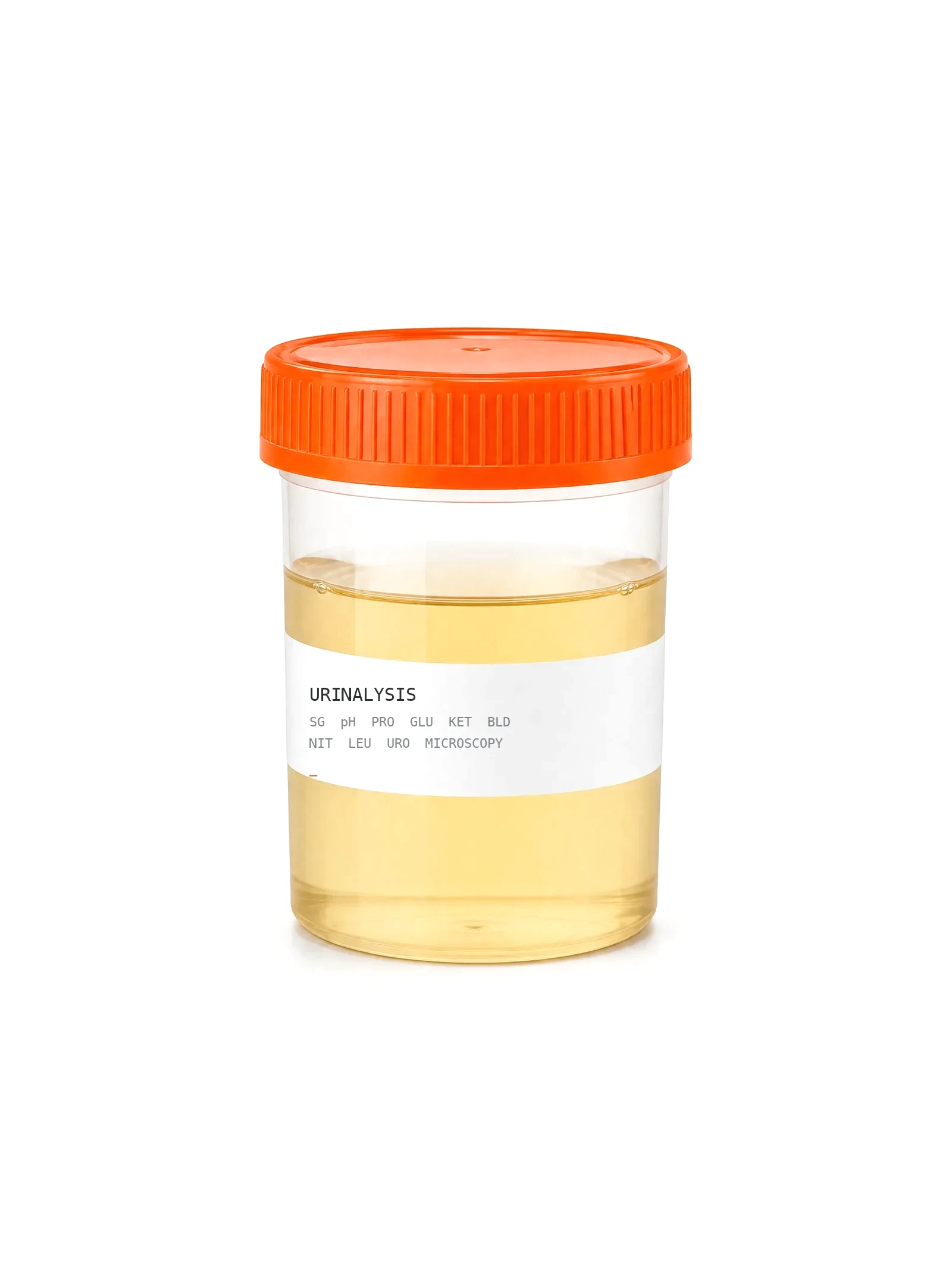
Reading your urine protein numbers
KDIGO, the international kidney guideline group, grades albumin loss in three categories by ACR 2. Labs in the US report mg/g; many others report mg/mmol.
| Category | ACR (mg/g) | ACR (mg/mmol) | PCR (mg/g) | Plain meaning |
|---|---|---|---|---|
| A1 | Under 30 | Under 3 | Under 150 | Normal to mildly raised |
| A2 | 30 to 300 | 3 to 30 | 150 to 500 | Moderately raised; no visible foam |
| A3 | Over 300 | Over 30 | Over 500 | Severely raised; foam becomes more likely |
Where an example urine ACR of 45 mg/g sitsmg/g
Chronic kidney disease is defined by how long a problem lasts. An ACR of 30 mg/g or more, or an eGFR under 60, counts only when it is still there after 3 months. The guideline wording is short 2:
Abnormalities of kidney structure or function, present for >3 months, with implications for health.KDIGO 2024 Clinical Practice Guideline, definition of chronic kidney disease 2
So a person with a normal creatinine and an ACR of 80 mg/g, repeated, meets the definition of CKD even with no symptoms. The stage is A2 for albumin, and G1 or G2 for filtering depending on eGFR (G1 means filtering is normal, G2 mildly reduced). The chronic kidney disease page covers the stages. If you have a creatinine result, the calculator below turns it into an eGFR.
 CalculatoreGFR calculatorTurns a creatinine result, age and sex into the filtration number that sits beside your ACR.Work it out
When to worry about foamy urine, and how soon to see a doctor
If you have type 2 diabetes, the American Diabetes Association recommends a urine ACR and eGFR at least once a year from diagnosis, and from 5 years after diagnosis in type 1 5. Foam is a reason to make sure that check has happened.
What helps
Ordinary foam needs nothing beyond drinking enough to keep urine pale, flushing cleaner out of the bowl and not holding a full bladder for hours.
Real proteinuria is treated through its cause, with a doctor. For diabetes and high blood pressure that means blood pressure and blood sugar control, and often prescription medicines that lower the pressure inside the filters: ACE inhibitors or ARBs (blood pressure tablets such as ramipril or losartan), and SGLT2 inhibitors (diabetes tablets such as empagliflozin) for many people with type 2 diabetes and CKD 2. These are prescription decisions made with your doctor, and they are the reason a confirmed raised ACR is worth finding early. Cutting salt helps the blood pressure side. Glomerular diseases have their own treatment, guided by a kidney specialist and sometimes a biopsy 6.
Do not cut protein intake on your own: very low protein diets are a specialist decision for advanced kidney disease. Creatine is a separate trap for the blood test. It raises blood creatinine, which lowers a creatinine-based eGFR without harming healthy kidneys 8; our chronic kidney disease page notes that "creatine supplements can push it down without kidney damage." Tell whoever orders your test, or ask for cystatin C, and if you already have kidney disease, ask your doctor before taking it. Supplements that affect blood tests lists the others.
The supplement that moves a kidney number

Citations
- Khitan ZJ, Glassock RJ. Foamy urine: is this a sign of kidney disease? Clin J Am Soc Nephrol 2019;14(11):1664-1666
- KDIGO 2024 Clinical Practice Guideline for the Evaluation and Management of Chronic Kidney Disease. Kidney Int 2024;105(4S):S117-S314
- Carroll MF, Temte JL. Proteinuria in adults: a diagnostic approach. Am Fam Physician 2000;62(6):1333-1340
- Simerville JA, Maxted WC, Pahira JJ. Urinalysis: a comprehensive review. Am Fam Physician 2005;71(6):1153-1162
- American Diabetes Association Professional Practice Committee. 11. Chronic Kidney Disease and Risk Management: Standards of Care in Diabetes 2025. Diabetes Care 2025;48(Suppl 1):S239-S251
- KDIGO 2021 Clinical Practice Guideline for the Management of Glomerular Diseases
- American College of Obstetricians and Gynecologists. Gestational Hypertension and Preeclampsia: ACOG Practice Bulletin No. 222. Obstet Gynecol 2020;135(6):e237-e260
- Antonio J, Candow DG, Forbes SC, et al. Common questions and misconceptions about creatine supplementation: what does the scientific evidence really show? J Int Soc Sports Nutr 2021;18(1):13
Educational context only, not medical advice or a diagnosis. Always discuss your results with a clinician.