- 01A description, not a diagnosis
Hormonal imbalance is a description, not a diagnosis: the named condition behind it (thyroid disease, PCOS, low testosterone, high prolactin) only shows on a test drawn at the right hour or cycle day, such as testosterone on a fasting morning sample 2.
Tiredness after a full night, weight that creeps up without a change in eating, irregular periods, a drop in sex drive and skin breaking out like it did at 16 are the usual signs people put down to hormones. Hormonal imbalance is a description of those symptoms. The conditions doctors find behind it are a short list: thyroid disease, PCOS, low testosterone, insulin resistance, high prolactin and the swings of perimenopause. Each has a specific blood test, and most of those tests only read true when drawn at the right time of day or the right day of the cycle.
What a hormonal imbalance is
Hormones are chemical messages made by glands and carried in the blood. Androgens are the male-type hormones, mainly testosterone, that women also make in smaller amounts. Most of the hormones people mean by hormonal imbalance run on the same chain of command: the hypothalamus, a control center at the base of the brain, signals the pituitary gland just below it, the pituitary sends a messenger hormone to a target gland (the thyroid, ovaries, testes or adrenals), and the target gland's hormone travels back up to turn the signal down. Doctors call that loop negative feedback, and it is why one hormone that moves drags others with it.
How one gland's problem shows up in two results
Plenty of hormone movement is normal. Cortisol peaks soon after waking and falls through the day, estradiol and progesterone rise and fall across each menstrual cycle, and puberty, pregnancy and perimenopause reset the whole system. A hormonal disorder is a level, or a response, that falls outside those expected swings and causes symptoms. Test sellers often use the word imbalance for both, so a normal cycle swing can be presented as a problem.
Which symptom points to which hormone
The table joins each common symptom to the hormone systems usually behind it and the first tests a doctor tends to order. SHBG (sex hormone binding globulin) is the protein that carries testosterone in the blood, DHEA-S is an androgen made by the adrenal glands, and A1C shows average blood sugar over about three months. Several rows also have causes that are not hormonal at all, such as low iron for tiredness and hair shedding, so each linked page covers the full list.
| Symptom | Hormones usually behind it | First tests | Read more |
|---|---|---|---|
| Tiredness | Underactive thyroid; low testosterone in men; rarely cortisol | TSH, free T4 (plus ferritin for iron) | Always tired |
| Weight gain | Underactive thyroid, insulin resistance, menopause; rarely cortisol excess | TSH, fasting glucose and insulin | Insulin resistance |
| Irregular or missed periods | PCOS, high prolactin, thyroid, perimenopause | Pregnancy test, TSH, prolactin, testosterone, FSH, LH | Irregular periods |
| Acne, facial or body hair | Excess androgens, usually from PCOS | Total testosterone, SHBG, DHEA-S | PCOS |
| Hair thinning | Thyroid, androgens, after pregnancy or menopause | TSH, ferritin, testosterone in women | Hair loss |
| Low libido | Low testosterone, high prolactin, menopause | Morning testosterone, prolactin | Low libido |
| Hot flashes, night sweats | Perimenopause, overactive thyroid; low testosterone in men | TSH; FSH only under 45 | Hot flashes |
| Mood swings, anxiety, low mood | Thyroid, perimenopause, sensitivity to normal cycle changes | TSH, plus a two-cycle symptom diary | PMS |
| Brain fog | Underactive thyroid, perimenopause | TSH, free T4, B12 | Brain fog |
| Always cold | Underactive thyroid | TSH, free T4 | Hypothyroidism |
| Racing heart, weight loss, shaky hands | Overactive thyroid | TSH, free T4, free T3 | Hyperthyroidism |
| Trouble sleeping | Perimenopause, overactive thyroid | TSH | Can't sleep |
| Erection problems | Low testosterone, diabetes, blood vessel disease | Morning testosterone, glucose or A1C | Erectile dysfunction |
Hormonal weight gain most often comes from an underactive thyroid, insulin resistance or menopause. Hormonal anxiety and mood swings most often track thyroid disease or the menstrual cycle itself, and an overactive thyroid can feel like constant anxiety with a racing heart. If you feel cold, slow and heavy, the always cold page covers the other causes.
Signs of hormonal imbalance in women
Cycle change is the clearest hormonal sign in women. Cycles that run shorter than 21 days or longer than 35, vary by more than a week from month to month, or stop altogether usually mean ovulation is not happening on schedule, and the main causes are PCOS, thyroid disease, high prolactin, under-eating or heavy training, and perimenopause. The irregular periods page works through them in order, and blood tests for women covers the wider set.
PCOS (polycystic ovary syndrome) is the most common hormone disorder in women of reproductive age, affecting about 10 to 13% of them 1. The 2023 international guideline diagnoses it in adults with two of three features: irregular or absent ovulation, signs of excess androgens (acne, facial or body hair, scalp thinning, or a raised testosterone on a blood test), and polycystic ovaries on ultrasound or a raised AMH (anti-Mullerian hormone, a marker of how many egg follicles the ovaries hold) 1. Other causes of the same picture, such as thyroid disease and high prolactin, are ruled out first.
From the early 40s, perimenopause brings irregular cycles, hot flashes, night sweats, broken sleep, low mood and brain fog, sometimes years before periods stop; perimenopause and menopause each have their own page. High prolactin, made by the pituitary, can stop periods and cause a milky nipple discharge when not breastfeeding; the high prolactin page covers what raises it. Thyroid disease runs far more often in women than men, and an underactive thyroid can make periods heavier and more frequent. Trouble getting pregnant can be the first sign of PCOS, thyroid disease or high prolactin, and vaginal dryness and painful sex are common hormonal signs in perimenopause and after menopause.
Signs of hormonal imbalance in men
In men, most hormone questions come back to testosterone, and low testosterone has its own page. The European Male Ageing Study followed more than 3,000 men aged 40 to 79 and found that three sexual symptoms tracked low testosterone most closely: fewer morning erections, low sexual desire and erectile dysfunction 3. Tiredness, low mood and losing muscle were far less specific. Late-onset hypogonadism, defined by those three symptoms plus low total and free testosterone, affected about 2.1% of the men 3, about 1 in 50 men in that age range.
We recommend diagnosing hypogonadism in men with symptoms and signs of testosterone deficiency and unequivocally and consistently low serum total testosterone and/or free testosterone concentrations (when indicated).Bhasin S et al., Endocrine Society Clinical Practice Guideline, 2018 2
Unequivocally and consistently means a single low testosterone reading does not settle it. The Endocrine Society asks for a fasting sample taken in the morning and a repeat to confirm 2, because testosterone dips after poor sleep, illness, a heavy training block or a large meal. The guideline uses about 264 ng/dL as the lower limit for healthy young men 2.
Example: a morning total testosterone of 300 ng/dLng/dL
Men also get high prolactin, which lowers testosterone and libido, and raised estradiol, usually from extra body fat or from taking testosterone; the high estradiol page covers both. Thyroid disease shows up in men as in women, with tiredness, weight change and feeling cold or hot. Obesity lowers SHBG, which pulls total testosterone down even when the free, usable fraction is fine; the male hormone panel guide shows how to read the set together.
 CalculatorFree testosterone calculatorTotal testosterone near the line with an unusual SHBG? This estimates the free fraction from both numbers.Work it out
What causes hormones to go off
The causes fall into three groups. Medical conditions come first: thyroid disease (most often Hashimoto's), PCOS, type 2 diabetes and insulin resistance, and less often pituitary tumors that raise prolactin, Cushing's syndrome and Addison's disease. Life stages come second: puberty, pregnancy, the months after birth, perimenopause and menopause. The third group pushes levels without any disease:
- Short sleep: in a small study of 10 young men, one week of five-hour nights lowered daytime testosterone by 10 to 15% 8.
- Large weight gain or loss, under-eating and heavy endurance training, which can stop periods and lower testosterone.
- Regular heavy drinking.
- Medicines: steroid tablets and inhalers, opioids, the contraceptive pill, some antipsychotics and anti-sickness drugs, and anabolic steroids.
Some chemicals in plastics and packaging, such as BPA and some phthalates, act on hormone receptors in lab and population studies. No blood test measures their effect on a person's symptoms, so cutting exposure is reasonable but will not show up on a hormone panel.
Stress raises cortisol, and long-running stress disturbs sleep, appetite and cycles. Stress does not wear the adrenal glands out, though. Adrenal fatigue appears on many supplement sites, and the evidence against it is summarized on our own page:
No test can diagnose adrenal fatigue, and a 2016 systematic review of 58 studies concluded the condition has no scientific basis [[7]].
Which blood tests check for hormonal imbalance, and when to take them
A sensible first round for most adults (which blood tests to get goes wider) is TSH, with free T4 added when TSH is out of range 11, plus fasting glucose or A1C. Women with cycle changes, acne or extra hair usually add prolactin, total testosterone, SHBG, FSH and LH; men with sexual symptoms add morning total testosterone, SHBG and prolactin. The female hormone panel guide and the male hormone panel guide go marker by marker. Timing changes these results more than almost anything else:
| Test | When to draw it | What throws it off |
|---|---|---|
| TSH, free T4 | Any time of day; keep repeats at the same time | High-dose biotin; a recent acute illness |
| Total testosterone (men) | 7 to 10 a.m., fasting; repeat if low 2 | Short sleep, illness, heavy training, opioids; obesity lowers SHBG |
| Testosterone, SHBG (women) | Early in the cycle, day 2 to 5, if cycles are regular | The combined pill raises SHBG and lowers free testosterone |
| FSH, LH, estradiol | Day 2 to 5 of the cycle | The pill suppresses all three; perimenopause makes them swing |
| Progesterone | About 7 days before the next period (day 21 of a 28-day cycle) | Irregular cycles make the right day hard to hit |
| Prolactin | Morning, rested, not straight after exercise | Stress of the draw, some medicines, underactive thyroid, pregnancy 9 |
| Cortisol | 8 to 9 a.m. | The pill and pregnancy raise total cortisol; steroid medicines |
| Fasting insulin, glucose | After an 8 to 12 hour fast | A late meal or sugary drink |
 CalculatorHOMA-IR calculatorHave a fasting insulin and fasting glucose from the same draw? This turns the pair into a HOMA-IR insulin resistance score.Work it out
High-dose biotin, sold for hair and nails, can push many hormone tests falsely high or falsely low, thyroid tests included: in a study of healthy adults taking 10 mg a day, several common lab tests gave misleading results that could point toward a hormone problem that was not there 6. Tell the person ordering the test about any biotin, and ask whether to pause it first; how to prepare for a blood test covers the rest. Results taken on the pill read differently again, explained on birth control and blood tests.
Hormone markers to read side by side
Why a normal result may not settle it
A normal hormone test rules out some causes and leaves others standing. PMS is the clearest case. In a 1998 NIH study, researchers switched off the ovaries with medication and then added estradiol or progesterone back: symptoms returned only in women with a history of PMS, while their hormone levels matched those of women without it 5. The study concluded that PMS symptoms come from an abnormal response to normal hormone changes, so a blood test in PMS usually looks fine. A symptom diary over two cycles diagnoses PMS; the PMS page explains how.
Perimenopause tricks tests in a different way. FSH can sit in the normal range one month and the menopausal range the next, so NICE advises diagnosing perimenopause and menopause in women over 45 from symptoms alone, without an FSH test, and keeps FSH for younger women 4.
Single readings mislead elsewhere too. One high morning cortisol does not mean Cushing's syndrome, which needs dedicated screening tests 10 (see high morning cortisol); one low testosterone needs a repeat 2; and a mildly high prolactin is checked against the stress of the draw and any medicines, often with a repeat, before anyone orders a scan 9. A result can also sit inside the reference range and still be a real change for you, which is why trends beat single readings.
The symptoms are worth chasing even when the first test looks fine, because the causes behind them carry long-term risks. Periods that stay absent for months mean low estrogen, which thins the bones over time. PCOS raises the risk of type 2 diabetes and of thickening of the womb lining 1. Untreated thyroid disease affects the heart rhythm and cholesterol.
What helps
Treatment follows the named cause and is decided with a doctor: thyroid hormone for an underactive thyroid, PCOS care aimed at cycles, skin and metabolic risk, hormone therapy for menopause symptoms when a doctor and patient decide the benefits outweigh the risks (see menopause), treatment for sleep apnea, and a prescription workup for confirmed low testosterone. In women with PCOS who carry extra weight, losing 5 to 10% of body weight can restore ovulation and improve insulin resistance and androgen levels 1.
The everyday habits that support hormone health are plain ones: seven or more hours of sleep 8, losing excess weight 1, strength training, eating enough to cover heavy training, and keeping alcohol low. How to increase testosterone and how to lower cortisol go into each.
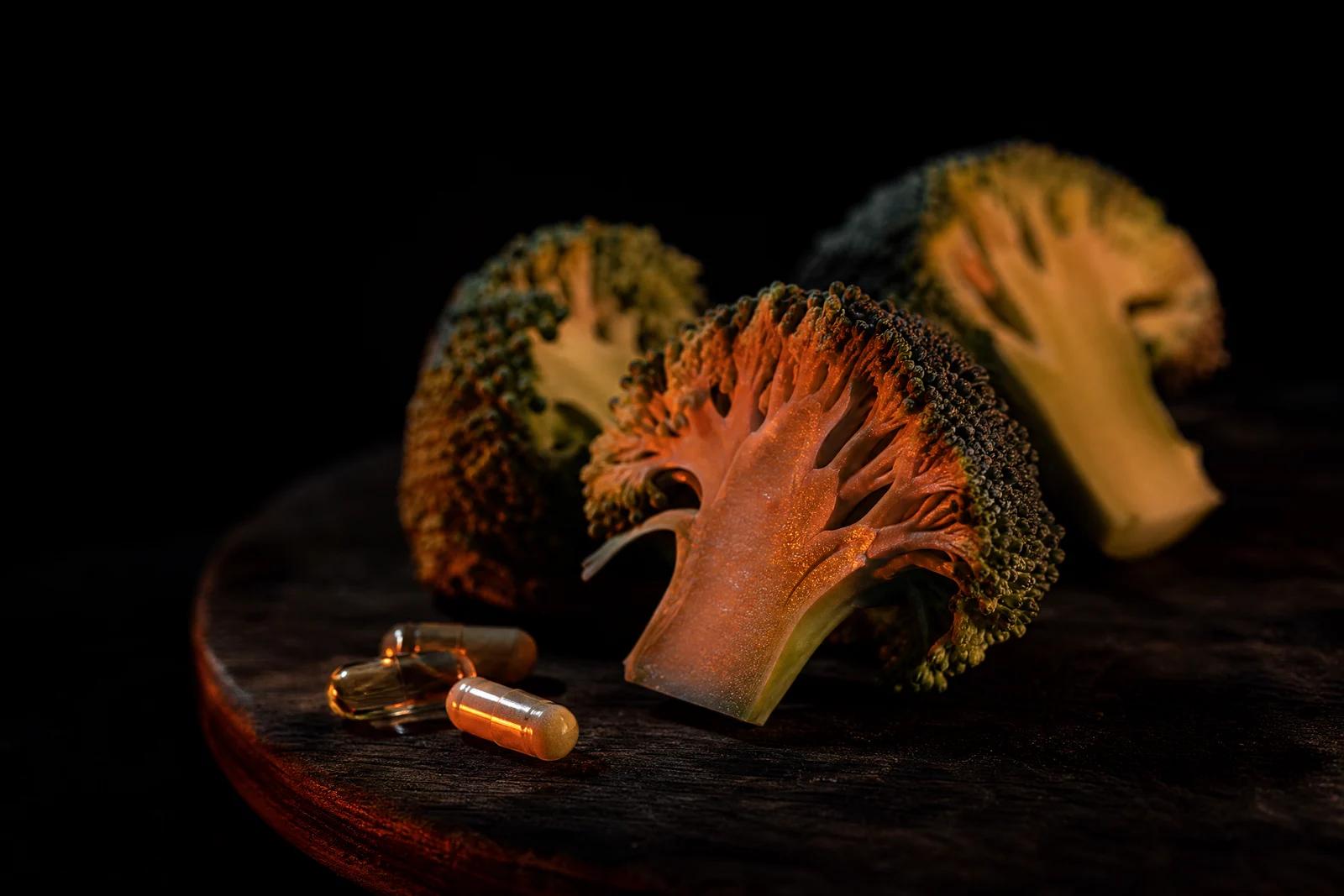
Supplements sold for hormone balance have thin evidence. Small ashwagandha trials report modest drops in stress scores and morning cortisol, and small testosterone rises in men 13. DIM (diindolylmethane, from broccoli and cabbage) changes how estrogen is broken down, but there is little trial evidence that it eases symptoms. Ashwagandha has been linked to rare liver injury, can shift thyroid levels and is not advised in pregnancy or with an overactive thyroid 13, so check with a doctor or pharmacist before taking it alongside thyroid or other medicines. Do not stop or change thyroid medicine, steroids, the pill or hormone therapy because of a symptom list; ask your prescriber first.
Supplements marketed for hormone balance

When to see a doctor quickly
- No period for three months or more, and not pregnant.
- Milky discharge from the nipples when not breastfeeding.
- New headaches with blurred vision or loss of side vision, which can mean a pituitary growth. A sudden, severe headache with sudden vision loss is an emergency.
- Facial hair, a deepening voice or a growing clitoris that develop over weeks or months, which can mean an androgen-making tumor.
- New erection problems with low libido, or a breast lump in a man.
- Weight loss with a racing heart, tremor and heat intolerance.
- Heavy thirst, passing a lot of urine and weight loss, which can mean very high blood sugar: get a blood sugar check within a day or two (see type 2 diabetes).
These signs need a doctor within days to weeks. Go to the emergency department the same day for: vomiting, fainting or confusion with severe weakness; a sudden, severe headache with sudden loss of vision or double vision; a racing or irregular heartbeat with fever, confusion or chest pain; or heavy thirst and urination with vomiting, deep fast breathing or drowsiness.

Citations
- Teede HJ et al. Recommendations from the 2023 International Evidence-based Guideline for the Assessment and Management of Polycystic Ovary Syndrome. J Clin Endocrinol Metab, 2023;108(10):2447-2469
- Bhasin S et al. Testosterone Therapy in Men With Hypogonadism: An Endocrine Society Clinical Practice Guideline. J Clin Endocrinol Metab, 2018;103(5):1715-1744
- Wu FCW et al. Identification of late-onset hypogonadism in middle-aged and elderly men. N Engl J Med, 2010;363:123-135
- NICE guideline NG23. Menopause: identification and management (updated 2024)
- Schmidt PJ et al. Differential behavioral effects of gonadal steroids in women with and in those without premenstrual syndrome. N Engl J Med, 1998;338:209-216
- Li D et al. Association of biotin ingestion with performance of hormone and nonhormone assays in healthy adults. JAMA, 2017;318(12):1150-1160
- Cadegiani FA, Kater CE. Adrenal fatigue does not exist: a systematic review. BMC Endocr Disord, 2016;16:48
- Leproult R, Van Cauter E. Effect of 1 week of sleep restriction on testosterone levels in young healthy men. JAMA, 2011;305(21):2173-2174
- Melmed S et al. Diagnosis and treatment of hyperprolactinemia: an Endocrine Society clinical practice guideline. J Clin Endocrinol Metab, 2011;96(2):273-288
- Nieman LK et al. The diagnosis of Cushing's syndrome: an Endocrine Society clinical practice guideline. J Clin Endocrinol Metab, 2008;93(5):1526-1540
- NICE guideline NG145. Thyroid disease: assessment and management (2019)
- Jonklaas J et al. Guidelines for the treatment of hypothyroidism: prepared by the American Thyroid Association task force on thyroid hormone replacement. Thyroid, 2014;24(12):1670-1751
- NIH Office of Dietary Supplements. Ashwagandha: fact sheet for health professionals
Educational context only, not medical advice or a diagnosis. Always discuss your results with a clinician.